Monthly Archives: October 2018

Episode #128: Claude Lamoureux, “When You Have to Make A Decision, Always Make the One That Will Let You Sleep Better, Not Eat Better”
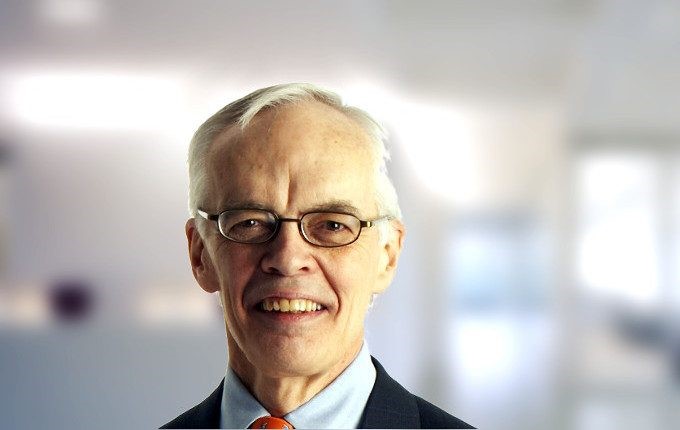
Episode #128: Claude Lamoureux, “When You Have to Make A Decision, Always Make the One That Will Let You Sleep Better, Not Eat Better”

Guest: Claude Lamoureux. Claude is an actuary by training, and from 1990 to 2007, he was President and Chief Executive Officer of the Ontario Teachers Pension Plan. Prior to 1990, Claude spent 25 years as a senior financial executive with Metropolitan Life in Canada and the U.S., heading the company’s operations in Canada from 1986 to 1990.

Date Recorded: 10/30/18

Run-Time: 50:44

To listen to Episode #128 on iTunes, click here

To listen to Episode #128 on Stitcher, click here

To listen to Episode #128 on Pocket Casts, click here

To listen to Episode #128 on Google Play, click here

To stream Episode #128, click here

Comments or suggestions? Email us Feedback@TheMebFaberShow.com or call us to leave a voicemail at 323 834 9159

Interested in sponsoring an episode? Email Jeff at jr@cambriainvestments.com

Summary: In Episode 128, we welcome pension fund expert, Claude Lamoureux. We start with Claude’s background, which took him from Met Life to running the Ontario Teachers Pension Plan.

When Claude took over the pension, the fund was invested in just Canadian debt, and the size of the pension obligation was underestimated. Claude decided to use derivatives to diversify the portfolio. He expanded into the S&P, recruited an investment department, and within three years, had successfully reallocated the fund into the broad asset classes they wanted.

Meb asks how investing is different for a pension allocator versus an individual investor managing his own portfolio. Claude tells us that in the pension world, people don’t want to take responsibility. He wanted to do the opposite. He wanted to create a culture where people become entrepreneurial.

This dovetails into a conversation about valuations. Claude is a big believer in having a realistic valuation of liabilities and potential returns. He mentions that today, many U.S. pensions are expecting around 7% returns, which he finds unrealistic. Claude says people should earn the money before they spend it.

The conversation eventually turns toward Claude’s general market approach. Claude had a somewhat traditional policy portfolio, yet used lots of derivatives to diversify into stocks and non-Canadian bonds. He mentions how when you have a large deficit, you must go heavily into equities. He also liked private equity and real estate. And there was a great deal of leverage.

The conversation turns toward problems in the U.S. pension system. Claude gives us his take on the issue. In short, many pension liabilities here in the States aren’t measured properly. He also mentions interest rate assumptions and the fees of outside managers. Finally, Claude points toward politicians and how they don’t want to face the facts.

There’s plenty more in this pension-themed episode: the importance of being a student of the market history…the Canadian Coalition for Good Governance…the sage advice of “when you have to make a decision, always make the one that will let you sleep better, not the one that will let you eat better”…and of course, Claude’s most memorable trade.

All this and more in Episode 128.

Links from the Episode:

  • 0:50 – Welcome and a look at Claude’s career history
  • 2:54 – How his career change happened
  • 10:26 – Biggest difference between how a pension allocator thinks about markets vs other investors
  • 11:27 – Fortune and Folly: The Wealth and Power of Institutional Investing – O’Barr
  • 16:56 – How Claude’s investment approach developed
  • 23:30 – Looking at the Ontario fund allocation strategy
  • 28:25 – The state of US pension funds and what can be done to help
  • 35:59 – Global Investment Return Yearbook (GIRY) – Credit Suisse
  • 36:04 – Elroy Dimson Podcast Episode
  • 36:30 – Advice to investors based on lessons learned
  • 40:06 – How Claude’s investing viewpoint has changed over his career
  • 43:18 – The co-founding of the Canadian Coalition for Good Governance
  • 46:44 – Reaction to a quote from an interview in which he said “when you have to make a decision, make the one that will help you sleep better, not eat better.”
  • 48:37 – Most memorable investment

Transcript of Episode 128:

Welcome Message: Welcome to “The Meb Faber Show,” where the focus is on helping you grow and preserve your wealth. Join us as we discuss the craft of investing and uncover new and profitable ideas all to help you grow wealthier and wiser. Better investing starts here.

Disclaimer: Meb Faber is the co-founder and chief investment officer at Cambria Investment Management. Due to industry regulations, he will not discuss any of Cambria’s funds on this podcast. All opinions expressed by podcasts participants are solely their own opinions and do not reflect the opinion of Cambria Investment Management or its affiliates. For more information, visit cambriainvestments.com

Meb: Welcome, podcast listeners. Today, we have a great show for you. Our guest was the first CEO of the Ontario Teacher’s Pension Plan Board, which he turned into one of the most successful pension funds in the world. He’s also co-founder of the Canadian Coalition for Good Governance. We’re happy to have him on the show. Welcome, Claude Lamoureux.

Claude: Welcome, Meb, to you too.

Meb: It’s great to have you on. So Claude, we’ve got lots to talk about today, but I figured a good jumping in point for lots of discussion was it’s interesting to hear your background because it’s a little atypical, I feel like for some, but an interesting, interesting background nonetheless, but you were at Metropolitan Life doing some work before moving into the pension world. Could you tell us a little bit about that before you got…what laid the groundwork for your eventual career in the pension fund world?

Claude: I started at the Metropolitan Life and it was a great experience. I had fabulous bosses and, you know, a few that I learned not what to do, but most of them were excellent, the first one in particular. And eventually, I worked 12 years in New York and 12 years in Ottawa, Canada where the head office was located, and at the end, I was responsible for all the Canadian operations and we were diversifying. But eventually, we decided to go our separate ways and that’s when I went into the pension business, taking over what was up to that point, to all the Ontario Teacher’s Superannuation Fund. Ontario is the largest province in Canada with a population of about 12 million people. And in 1990 when I went there, you had about 160,000 active teachers and 40,000 retired.

Meb: It’s one of my favorite games to play with a good Canadian friend of mine is to try to ask my American friends how many Canadian provinces and territories they can name. Most people can get about three. I’m usually up there. I can almost get them all. So we’re talking to you today from Montreal. So talk to us like what, how did that career change happen? Was it something where you had this chance to take the reins? What did the state of the pension look like at the time you took it over? I believe this would’ve been around 1990.

Claude: The firm was started in 1970, and up to 1990 it only invested in one class of asset, Ontario government debenture that were non-marketable, non-assignable, non-negotiable. So when we took over, there was a new board that was named. You know, up to that point the board was mainly mid-level civil servants and, you know, union member. And you know, I think in terms of investment, there was not too many risks. But in 1990, they decided to create a totally independent…from an organization independent from the government.

And the first person that was named as the chair was a fellow by the name of Gerry Bouey [SP], who had been governor of the Bank of Canada for 14 years. He had a stellar reputation and he then proceeded to recruit a board with the government and the teachers and convince everybody that you should have experienced people on this board. There was $16 billion of assets. The big problem was what’s the deficit because everybody knew there was a deficit. The government had calculated the deficit of roughly $4 billion, but it turned out to be more like $8 billion when we did the work. And the government had promised that they were gonna, you know, pay the deficit over a period of 30 years.

But in 1990, you know, we were able to use the derivative because these allegations were non-marketable. Everybody thought that we were gonna only invest the new cash flow. But the person I hired, a CIO, a person by the name of Bob Bertram, who did an outstanding job, came up with different ideas and one of them was, why don’t we use derivative to diversify the portfolio? And this had, you know, quite a number of advantage for us so rapidly. I remember our first big investment was a swap from Ontario debenture to U.S. S&P 500 of a billion.

So everybody on the board was kind of, “You guys really know what you’re doing?” And I think we demonstrated to them that we knew a little bit. There was no investment people up to 1990. So my job mainly, initially, was to recruit an investment department and that’s how I recruited Bob Bertram. And we proceeded to build an investment organization. At the same time, the board had told me, “Well, don’t worry about the administration because we want you to focus on creating a good investment department.” But I wasn’t there a month that I realized that they were huge problems with the administration and the teachers were not happy, or essentially, the clients were not happy with the service. So, you know, I also started to worry about the administration and we decided that this was something that we had to invest money in. So, you know, I spent a lot of time on the investment but also making sure that we could provide better service and what was done up to that point by the teachers.

So our first big investment that is, you know, a billion dollar, you know, swap. And then we proceeded to use derivative to diversify the portfolio fairly rapidly. I’d say that within probably three years we were pretty much the type of asset mix that we wanted in terms of broad asset classes. But from day one, my idea was that I wanted an organization that would manage about 80% of the money internally and, you know, use outsiders in the area of specialization initially in the private equity. And, you know, the board, I think that I was able to convince the board that this made sense that we could build a good organization as long as we hired good people, that we had a decent compensation plan so there would be no huge turnover of the investment people. And that’s the premise, you know, that I took the job. And I remember Mr. Bouey asked me, “How are you gonna run this?” And I said, “Like a corporation.” And you know, one of his question was, “Well, what does that mean?”

So I explained to him my idea and he never flinched when I mentioned to him compensation that we would have incentives, that we would pay probably the type of compensation…Nothing necessarily initially that an insurance company…I don’t think we had to be as high as some of the banks in Canada, but we certainly had to be competitive. And that was the idea from the start and we were able to do that. Then, you know, as I’ve told many people, the board delivered even more than I ever expected because every time I would come up with a new idea, they essentially would, “Yeah, let’s do it,” or they would ask questions, but you know, having a good board made a huge difference. And even today the board is mainly business people. The teachers, historically, have only had one or two people that you can call teachers or retired teachers. So, and you know, I think the union, although they were not that thrilled by the type of salary I was paying, they understood that that was necessary to be competitive and to attract good people and also to retain the same people.

So we were an early user of derivative at the time that the Orange County was going bankrupt and that bad things were happening with derivatives. So the journalists were all worried about what we were doing. So we spent a lot of time explaining to journalists, Bob Bertram and myself, what we were doing, how we were doing it, the kind of control we had. And you know, I don’t think that we have…To me, the press is very important and, you know, you really have to tell them what you’re doing. And if you do, at the end of the day, I think that they’re not there to just look at the bad things. But once they understood what we were doing, they never wrote really a negative article on this stuff that we did although we made mistakes along the way. But I think they were intended to be supportive and that help us also with the clients, the teachers. And at the same time, in parallel, we were working to improve the service. And over a period of years, we made it one of the best service organizations in the pension world and probably even in the financial service industry.

Meb: I think you’ve hit on a couple…

Claude: I’ll stop there.

Meb: No, it’s good. I was gonna save this question for later, but I think it’s really appropriate now as you hit upon the importance of structure. And we’ve seen in the U.S., particularly in the endowment world, a lot of the challenges of having a culture or competing interests and conflicts. You know, a good example has been a lot of the turmoil going on at the Harvard Endowment for the past decade. And so maybe before we get into like a lot of investment stuff, maybe I’d love to hear a little context for the listeners on kind of theoretically…you know, most of our listeners, it’s a pretty broad spectrum of individual to institution. But kinda what do you see as the biggest differences in how a pension allocator thinks about, you know, the portfolio and the markets and competing interests versus, you know, anyone else who’s just simply managing a portfolio? Because it’s a problem that has many layers of challenges and complexity.

Claude: I think that the challenge in the investment business, and I don’t know if you’ve ever read the book called “Fortune and Folly” by two anthropologists. And, you know, it’s an interesting book and it was published in fact in the early ’90s and somebody probably gave me a copy or I bought a copy. And my idea was I think that the conclusion that these anthropologists gave is that in the investment business, they look at 10 to 12 pension funds, institutional investors in the U.S. and they realized pretty quickly that people didn’t want to take responsibility. My idea was the opposite. You know, I remember talking to Bob Bertram many times and saying, “If we mess up here, we are out of a job, so don’t worry about it. I think we got to do a good job.”

And so you gotta hire good people. You gotta give them responsibilities. You gotta create a culture where people become entrepreneurial. And that’s what we tried to do. And you know, we had a fairly broad mandate from the board. So we were able to get into, initially, for instance, we hired different people, one person to do private equity, another one to do real estate, and we asked them to build a team that would be a first-class in their area. And over time we were able to do that. If you take real estate, the fund today is the owner of the largest real estate company in Canada called Cadillac Fairview. And Cadillac Fairview stayed…we kept it independent. It used to be owned by 40 pension funds. It went bankrupt. And we were able to buy it with the KKR and Blackstone and eventually we bought the whole company. But the board was worried, “What do you know that KKR and Blackstone doesn’t know?” And you know, our answer was simple, we’re here for the long term, this is a great glass of assets. And that’s how we got into it.

With private equity, we asked, you know, a lot of the partners that we had and we wanted to have co-investment. And in 1990 everyone that we…in early ’90s…because this didn’t happen in 1990 exactly, more like ’92, ’93…everybody laughed at us. Well, you asked for co-investment, but everybody does it, but nobody is able, when the time comes, to invest that money. We said, “Well, try us.” And I think one of the initial co-investment was with BC Partner and we were able to reply to them probably in less than a week. And that got us on…you know, I mean, they were very surprised that we were able to do that. But, you know, as I said, the board was very helpful in, you know, approving these things and supporting us. And to me, having the right culture makes a big difference in any organization. And, you know, as I said, when I was reading “Fortunate and Folly,” I wanted to do the opposite of “Fortunate and Folly.” We have to take responsibility, we have to do a good job, and you know, the rest will come as we go.

The other thing that I’m a great believer in pension plan is to have a realistic valuation of your liabilities. And again, you know, there was this deficit at the beginning that we, you know, multiplied by two. But we told people these are realistic assumptions. And for a while, we were probably one of the most aggressive pension funds in terms of return in the early ’90s. But today, if you look at the fund, they’re using assumptions that are nominal term, probably below 5%. Whereas, you know, I remember reading an article in “The Wall Street Journal” where, you know, a lot of U.S. pension funds were using assumptions where to median was certainly above 7%.

Again, you have to discuss this with, you know, the clients, which are the teachers and the government, and you have to make them realize that realistic assumptions, you know, are there and we should earn the money before we spend it. And we explained our assumptions. We had a terrific actuary who made, you know, probably a 10th of presentations and probably over a 10-year period, 50, 60 presentation to the government and the teachers. So they would realize that the assumptions we were using made sense and we were always transparent with them. And in the end, I think this pays because people realize that you’re trying to do a good job and not just try to accumulate assets or a surplus that doesn’t make sense.

Meb: I think you’ve hit upon a really important topic here in the U.S., particularly about what we would consider to be unrealistically aggressive return expectations, and we can weave that in as we talk. I’m curious to how your investment approach was developed. You know, is it something when you started at Ontario that you had in your mind an idea of where you want it to be? You said it took about three years to transition some of these concepts. And you know, the portfolio looks a little more traditional today versus the rest of the world. But in the early ’90s it certainly probably was not the standard. How’d you kind of arrive at this policy portfolio that you guys have developed? And maybe outline a little bit about your framework for investing and kind of the main asset classes and targets if there was any, but how’d you guys arrive there?

Claude: Well, the board before we arrived, there was anybody in the investment that hired a consultant who did the traditional asset allocation study. And I remember explaining to the board the kind of asset classes that were there, what made a lot of sense, how to maximize your return and minimize your risk, and risk here was defined in terms of volatility. So this is a traditional type of study. The one thing that always struck me, coming from a life insurance background was, you know, nobody took into account the liabilities. And it took about four or five years before we created our own research organization and we took into account that the liabilities and how they behave under certain circumstances. And, you know, but initially, we were looking at the traditional classes of asset, as I said, with a wrinkled thrown into it because a lot of our actual assets were not marketable.

So we were using a lot of derivative to diversify and stocks and to diversify it in bonds other than Ontario. But we had enough bonds that that was not so much the concern. The concern was, how do we get into stocks, how do we get into private equity? We bought a few buildings before we bought Cadillac Fairview. And again, with the idea of these were good assets to match the liabilities of pension funds. And don’t forget, the liabilities were also indexed to inflation. So we needed assets that would respond to inflation. And when Canada started real return bonds, we were probably the largest buyer of real return bond because we felt that this was a good asset class for us.

Again, you know, many pension funds took awhile before they got into this. But you know, Bob Bertram was the type of person that new things did not…he was not afraid of new things. And we were able to convince the board, again, I think the right board, you’re able to convince them that this makes sense. So over time we migrated from, you know, the traditional, efficient frontier, looking only at assets to a more pension-like investment frontier including liabilities. And our riskless asset was really a long, long-term real return bonds. And so we were a big fan of these real return bonds. And that’s why, you know, real estate also fits that bill too because, again, you can increase your rent if inflation comes back. So we were looking at these.

And because we were different than a lot of pension funds, you needed the board that understood what we were trying to do and was supportive of that, otherwise you cannot go anywhere. You know, real estate in the early ’90s was not a very popular asset class, but we were looking at the long, long term and we felt, at the time, that a lot of the real estate was…it could get an 8% or 9% return…the cap rate was around 8% or 9%, not the return, the cap rate was around 8% or 9%. So we felt very good about these assets, and over time, it turned out to be a fabulous investment.

On the private equity fund, we were able to invest on our own. We invested with partners, but also once we started the operation, we invested on our own. And again, that has worked out very well. If you look at the history of teachers in private equity, after expenses, we’ve done better than what we got from our partners that invest, you know, the traditional private equity group. So this has been a good decision over time. But again, when you do these things and you’re the only one, or one of the only ones doing it, you know, you need somebody that supports you and that’s where a good board comes in.

Meb: That’s a great investing setup. And I was thinking in my head, you know, one of the most often asked questions we get from particularly individuals that are putting new cash to work or putting cash to work for the first time. And I imagine it was probably something similar for you as you’re transitioning from a pension fund that held really only one type of asset to a much more diversified active allocation that has all sorts of different strategies and asset classes. So many people have the challenge of saying, “Do I invest at all now or do I slowly transition over time?” And if so, at what time period? And it’s a question we get if not daily then certainly weekly and every month. But having a good board or having a good understanding investor base is pretty key to that decision because otherwise you get into the problem of hindsight bias and obviously everything is pretty obvious in retrospect where you said, “Oh man, I should have just waited until next year to implement that. I’ll put private equity on three years from now.”

But having a good, understanding board is certainly crucial and I see a lot of problems where it’s not a good alignment. Just the policy allocation of the Ontario fund and pension, when it was under your helm, is it a pretty similar allocation strategy? Meaning, you know, X amount of equity, X amount in fixed income, X amount in absolute returns, and other striated [SP] private equity. And it looks like it has a little bit of leverage as well. Is that accurate or is that a different policy portfolio then the whole time when you were there?

Claude: No, no, it has leverage. That’s when the thing that we started before I left in the last few years. I think today probably, the fund, if I look at…you know, I think I was looking at the 2017 annual report, you’re looking at borrowing close to, I think, around $40 million. So, you know, when you can borrow at a very low rate and we started that, if I remember, in Japan where at that time we could borrow essentially at, you know, two-tenths of 1% and invest in stocks where the dividends were, let’s say, 2%. So that’s how we got into the leverage business. But at the same time, over time, we expanded that to really have a program of borrowing and, you know, if rates go way up, obviously, this program will be closed. But as I said, last year the fund probably was around $40 billion, what they borrowed.

And again, you need a board that understands why you’re doing that. You also need good controls in case thing change overnight. If rates were to spike very quickly, you gotta be able to close, you know, these positions. Otherwise, it may not be a smart move. But this is something that we started…you know, as I said, I left in 2007 and we were borrowing at the time, but they’ve expanded the program since. So the asset classes, they are similar to what we had, you know, pretty much all along. But today, it’s much more geared…you know, when you have a deficit, it doesn’t matter. You gotta go heavily into equity, especially if you look at the long, long term. But today they are much more in-tune to looking at the risk versus the kind of return they can get, their risk of the liabilities so that they match the asset and that’s what they’ve been able to do.

The other thing that my successor, Jim Leach, was able to do was to convince the teachers that the retirees should participate in the risk. So the inflation protection on future service is not guaranteed. You know, there has to be a surplus so that people could get the inflation protection. And again, this is something that Jim Leach was able to sell. We had started to do that. But I think that over time this will prove to be a very wise decision on the part of the government and the teachers to go along with this because it permits you to keep a defined benefit plan in perpetuity. Whereas if you only rely on the active, you know, chances are that the over time demography, that that’s one of the things. You know, in 1970, you had about 10 active teachers for 1 retiree. When I started, we had four for one.

So you know, if, if you had a hiccup, you know, like 10% losses in your asset, you could increase contributions. But as the plan matured, today you’re looking more at one-and-a-half active for every retired. I think that, you know, this is not sustainable unless the retirees participate in the risk. And that’s one of the things that the plan has and that’s an asset and they’re worried that you can count on, essentially, extra contributions or a decrease in benefit that helps you match your assets and your liabilities. But, you know, coming back to your statement, I think a lot of the asset mix that exists there, it’s more refined. They’ve done a very good job of finding the various…I think we were in into commodities early, but today they have a much bigger program so that there’s different classes of assets that they’ve gone into much more than we ever did.

Meb: It’s very Canadian of you. All my Canadian friends love natural resources and stocks more than most American investors I talk to. Talk to me a little bit, all right, you got a perch up there in Canada at what’s going on south of the border in the U.S. where despite a 10-year monster bull market run in equities where the U.S. has outperformed most, if not all, equity markets around the world. You still have a lot of problems with unfunded pension funds and underfunded by, in some cases, a lot. Do you have any commentary in general on the state of the pension fund world down here? What’s going on? Any possible fixes for the situation and any projections as to what you think could be the future for a lot of these funds that aren’t in great shape?

Claude: I think that they’re not in great shape for a number of reasons. One, you start with the liabilities. Many funds don’t measure them properly and many governments don’t seem to want to even know what’s a proper liability. And in fact, in some states it’s illegal to, or you have to go to the states to get approval for the kind of interest rate assumptions that you’re gonna make in your evaluation. So as a result, you look at, you know, Illinois, a lot of pension funds are in bad shape. Everybody knew this. It was easy to predict. At the same time, when you rely on outsiders to manage a lot of the money, when you have private equity managed by an outsider, you have to think that at this cost, not the 2%, but you’re looking more like at 4% or 5% fee on your investment.

So that’s one thing that a plan like teachers and a lot of the Canadian plans too, they are similar to teachers. When you manage more of the money in-house, you know, if you get an extra half a percent, 1% over time, it makes a huge difference. The other thing that we were able to, because of transparency, convince the union that, you know, contributions in the early ’90s had to go up because it didn’t make sense to ask young teachers to pay for, you know, Cadillac pension for retirees. So, we preach a lot of solidarity. So everybody’s in defined…if you have a defined benefit plan, over time it’s gonna give you a better pension than defined contributions. But everybody has to be aware of the risk and everybody has to be supportive of having the right contributions and making sure that, you know, everybody realizes this has to be done.

The other advantage we had is that we were an independent organization so we could make our calculations on liabilities and tell the government this is the way it is. And you know, for them, they could not just postpone the inquiries or things like that. They realized that some of these increase in the ’90s were necessary. They realized that the insulation protection could not be guaranteed forever unless the retirees participated in the risk. And so, you know, in a way we had maybe a bit of luck, but at the same time, we were able to convince politicians and union member that a realistic valuation was to the benefit of everybody and it helped us being more aggressive on the investment side. And if you can be more aggressive on the investment side, over time you will have better return.

But with better return comes volatility and everybody has to be conscious that volatility could mean risk and how you prevent some of these risks. And I think that we’ve been, in a way, lucky, but at the same time, we’ve followed some of the work that had been done in Europe, especially in the Netherlands. For instance, the idea of having the retirees take the risk of the inflation protection is not an original idea. It’s something that we borrowed from the Dutch. And, you know, again, we had people that realized everywhere in government and in the union that these things were…you know, you had to be realistic in your valuation.

When I see…I’ve mentioned earlier that a number of the U.S. land…this was an article from “The Wall Street Journal,” but it came out from a study by two or three academics. When you see a pension fund using 8% return, and some of them are as high as 9% and 10% return, this thing doesn’t make sense. You know, on a worldwide basis, there’s a great book called “The Triumph of the Optimists” that has been updated, and on a worldwide basis, nominal return on stocks of 7% that probably the best, you know, are the average that we’ve seen from 1900 to 2016, chances are that going forward these returns will be tough to match because a lot of the easy oil has been found, a lot of the easy metals have been found. So I question how…you know, I think the U.S. has probably some of the smartest people in pension and investment, but how the people got in trouble, it’s a lot of politicians didn’t want to face the facts.

And you know, I’m reading Michael Lewin’s [SP] book and I can tell you what I took from the book is that you have three departments where, again, a lot of times people don’t wanna face facts. I mean, it’s kind of interesting, how can smart people make decisions that don’t make sense? And that’s what has been happening in the pension industry. I won’t say in every state because there are some states where the investments are done better and where the assumptions are realistic. But in too many of the states, these assumptions have not been realistic at all.

Meb: Yeah, I was on this soapbox yesterday on Twitter where there’s survey after survey, if you look at investors all around the world, and the number they almost always come up with for what do they expect to improve portfolio returns to be is around 10%. And there’s a full 20% of the people, 1 in 5, that expect their portfolio returns to be 20% or more. So, you know, it’s kind of the ostrich problem, put their head in the sand. But it’s funny you mentioned that book because I often have quoted it on this podcast. That’s my single favorite investing book. And listeners, it’s expensive. It’s like 100 bucks, but it’s a gorgeous coffee table book. You can get free yearly updates if you Google “Credit Suisse Global Investing Returns Yearbook,” they put out about 10 updates that are shorter but still beautiful to the book. We actually had the professor on the show, Professor Dimson, a few months ago. So listeners, check that one out if you haven’t.

But a lot of problem for people too on that is it’s sort of like going to the doctor or getting weight loss advice, like you know, it’s take your medicine, you know what to do, but a lot of people just don’t wanna hear it. So going back to a lot of the concept of having buy-in from everyone around. So you had this luxury of having a great board and a great team. Now, of course, if you did very poorly and did dumb stuff, you wouldn’t have had that luxury because you would have been fired. But you had a buy-in from everyone. So let’s say most investors listening to this podcast, if you’re an individual, their board consists of their husband or wife and that’s about it. They have no investment team. Or even if you’re a professional investor, you know, the traditional advisor here, and essentially their clients, they have their clients, which hopefully are educated and have an understanding of what the plan is. Are there any good takeaways from your time spent in Ontario that could be broad-based, sort of, advice for people on…it could be on the investment theory, that the biggest one you probably already mentioned is expectations being somewhat realistic. Any other thoughts come to mind as to how people could have some takeaways from your experience at the helm of Ontario for a couple of decades?

Claude: Well, I think in the investment business, one of things you always have to do is study history, and I think I’ve mentioned this book, “Fortunate and Folly.” If you look at returns, this is a great place to start. John Bogle has written a lot about this. You know, I think the takeaway, you start there, you look at what returns have been over time, in the past, and you look where you are today and I think that you have to make projections. But you know, to me, it’s having good people, you know, decent compensation, making sure that you’re totally transparent. I mean, one of the things we tried to explain in the annual reports for years was why we were doing what we were doing. Having annual meetings. I think the annual meeting of the Ontario Teacher’s Pension Plan, sometimes the questions had been as long as two hours. And to me, you gotta be transparent.You’ve gotta explain what you’re doing, you gotta explain to the politicians why you’re doing different things. And at the end, you know, this is what you need, in my mind, to run not just a pension plan but a decent organization of any kind, of any kind. And you know, I don’t think there’s any secret in what we’ve done.

I think in Canada, most of the pension plans, maybe we were there a little bit earlier than they were, but a lot of them have the model that…you know, a similar model to Ontario teachers. And some of them, hopefully, I’ve improved on that, and I think that the secret is having total transparency with the right people. I think U.S. has probably some of the best people in the world of investment, but it doesn’t show in the way that the pension funds are run because I think that the politicians, a lot of times, have very little interest in what’s gonna happen in the future. And that’s what you have to look in pension funds. You have to look not at this week, but you have to look at 50 years from now. And I think that that’s where teachers spend a lot of money today in having stochastic model showing that, demonstrating what will happen, what the risks are, and hopefully that, you know, enters into the decisions that people make. You know, to me, it’s not more complicated than that.

Meb: Yeah. And so as you look back on the last few decades, I mean, is there anything, upon reflection, where it’s kind of today’s different, or you know? And it could be any number of topics, it could be the challenge of high fee portfolio managers in a world where indexing has become more prevalent. It could be, hey, you know what, private equity is too hard these days. Or you say, “You know what, I still love managed futures. I didn’t like them five years ago.” Anything possible? Anything in particular you’ve changed your mind on over the years or come to any sort of different belief today then you may have had 5, 10, 20 years ago.

Claude: I think you have to adjust you a belief. You know, I think we had a heck of a nice run, especially in the U.S. in terms of returns. This cannot last forever, so you gotta take that into account when you look at the future and be a little bit conservative. So you know, I think I mentioned earlier, I’m a great believer in making the money before you spend it. When you look at the future, you have to be somewhat conservative and make sure that you’re not promising more than you can deliver because people will be disappointed. And demography, that’s the other thing that we don’t pay enough attention in the pension business and even in managing healthcare is that demography is a very powerful thing. And when you have a lot of young population, it’s very easy to correct mistakes, but as the population ages, it is much tougher to correct your mistakes. And you have to take that into account when you manage a plan, when you manage almost anything where, you know, you gotta look at the 50 and 100 years forward.

In some ways, I think we were able to do that,. And to this day, I think people accept that, you know, here’s how much a plan costs and, you know, there’s just so much you can get out of return. If you look at the kind of return that we’ve obtained since 1900 to 2016 on bonds, real rate is less than 2%. Nominal rate, you’re looking at 4%. You know, it’s hard to predict that you’re going to do much better than that than the next 100 years, same thing on stocks. You know, when I look at private equity and infrastructure, which a lot of people say, “Oh, there’s magic there,” there’s no magic. Over time, these returns will come back similar to what we see in the stock market and probably may not be as good because a lot of the easy returns have been a pain. I mean, you can restructure a company just so many times.

Meb: Well, but see, they can just keep selling it to each other and then taking it private and then re-leveraging it up and buying it out again and then going public. But that’s very sober, thoughtful advice. And it’s spoken like someone who’s done it but also been a student of history as well. So Claude, post-Ontario, I know you’ve kept busy, you’ve been doing a bunch of boards, but also we saw that you co-founded something called the Canadian Coalition for Good Governance. Maybe you could tell us a little bit about what that is and what the purpose is.

Claude: I think that when you invest, for instance, initially we invested a lot in index fund. So the old story goes is that you really have to care about governance of you index an index fund. One of the things that…the coalition was founded by a good friend of mine, Steven Kozlowski, who was a fabulous a investor, and you know, he called me one day and we invited a group of pension funds and we decided that we were the owner of the Canadian company. So we had to make our views known and one of the early views that we had is that we wanted to separate chair and CEO. And we were able to convince Canadian companies that this made sense that these were two jobs and today this is accepted. So the coalition today regroups all the institutional investors in mutual funds, pension funds, there are maybe even some foundations there. You know, I’m not as up-to-date, but the idea was to regroup everybody and make our views known in terms of good governance in my view leads to good results over time.

And we’ve seen that and I think that we were able to convince companies of making changes and many…but the biggest changes we were able to do is to separate chair and CEO. And in many companies, especially in the U.S., the same person wears two hats when we felt that this was, you know, two separate things. But we’ve also…I think the coalition has been there to represent the investors when regulations or a law changes. And this is a voice that the people take seriously. We’re not there…you know, we’re there to help essentially the companies do a better job. I think at the end of the day, what the coalition is trying to do is make sure that getting in companies and today, you know, because these similar institution that exists around the world, that the corporations do a better job because everybody benefits if the corporations do a better job.

Meb: Yeah. It is interesting and it’s becoming very topical in the U.S. The media has really been starting to pick up on it because you have a lot of these very large of passive institutions. I think I just saw…and I get this wrong, so I apologize if I do. But there is now a company stock in the U.S., I think it’s REIT…REITs, in particular, have a very large passive ownership here that’s majority owned by passive investors. And you know, that’s a somewhat atypical situation and there’s a pretty wide spectrum of beliefs as to what sort of responsibility those institutional investors have to governance. And I think you’re on the right side of this. I think it’s challenging for a lot of people though. But an interesting takeaway, you had a great quote in an interview that we could probably weave in here that I just love. It says, “When you have to make a decision, always make the one that will let you sleep better, not the one that will let you eat better.” You have any more thoughts on that? Do you remember saying that?

Claude: Well, the quote doesn’t come from me. It comes from famous actuary by the name of Ed Lou. And when I became an actuary, that’s the only thing I remember from this speech that he gave at the time and I’ve used a lot in speeches that I’ve made over time to actuaries or other organizations because, to me, it’s always very important that, you know, you do what makes sense and you don’t necessarily look as to how much money you’re gonna make because of the decisions. And so I’m a great believer in that, and having said this, I also believe in paying people fairly. But I always wanted the people that I’ve worked with to make sure that they did what was right and if they felt that, you know, I was going the wrong way, that they would tell me because, to me, it’s something that I’ve tried to live by and do what’s right. Don’t cut corners and you’ll sleep better.

Meb: I like it. It’s a similar quote that we kind of echo a lot all the time when people are thinking about investing, particularly during bull markets, you know, is that they tend to optimize on potential return rather than see the rest of the picture. And I think in our very first book we had a quote along the lines of old Chinese proverb says, “Fish see the bait but not the hook.” So people are always looking at the return side, but very rarely the other side, which is a lot more challenging for people.

Claude, this has been a lot of fun. The question we usually ask everyone at the end of the podcast is looking back over the years, and this can be your personal life, it could be something that happened at Ontario or elsewhere, is there a most memorable investment that comes to mind? It could be something good. It can be something bad. It could be something simply that just sparks a memory. Anything off top of your head?

Claude: If you ask a lot of the teachers, the one investment that comes to mind for them is we invested in the Toronto Maple Leafs, and that became the Raptors and the, you know. So we were very early in investing in the sport business and I think that has been a great investment. But probably the best investment, the one that is most memorable for me is our investment in Cadillac Fairview. And Cadillac Fairview, as I said, is the largest real estate company in Canada. Today, they have something like 90 people developing new investment. But probably, as I said, the one that most teachers and a lot of people in Canada would remember us by is our investment in the hockey team, the Maple Leafs, and this year they’re doing very well, but we were there when times were a bit tougher, but it was a great investment for us.

Meb: I love it. I used to always ask my Canadian friends there, I said, “Why isn’t it the Toronto Maple Leaves instead of the Maple Leafs?” It’s a thing I always remember when hockey season comes around. I love it. Claude, this has been a blast. Thanks for taking time to chat with us today.

Claude: Okay. Thank you. Thanks for your time also.

Meb: Listeners, we’ll add show links to everything we talked about today including links to a few of the books as well as everything else. You can always find the show notes and mebfaber.com/podcast. Leave us a review. We love to read them. I think it’s almost 500 reviews now, Jeff, 498 of them are really thoughtful, just kidding. Download. Listen to us on Stitcher, Overcast, Breaker. Thanks for listening, friends, and good investing.


Episode #127: Radio Show: Meb and Elon Musk Talk Shorting… Conflicting U.S. Valuation Indicators… and Listener Q&A

Episode #127: Radio Show: Meb and Elon Musk Talk Shorting… Conflicting U.S. Valuation Indicators… and Listener Q&A


Guest: Episode #127 has no guest but is co-hosted by Jeff Remsburg.

Date Recorded: 10/22/18     |     Run-Time: 1:02:21

Comments or suggestions? Email us Feedback@TheMebFaberShow.com or call us to leave a voicemail at 323 834 9159

Interested in sponsoring an episode? Email Jeff at jr@cambriainvestments.com

Summary:  Episode 127 has a radio show format. In this one, we cover numerous Tweets of the Week from Meb as well as listener Q&A.

We start with Meb telling us about his recent back-and-forth over Twitter with Elon Musk, discussing short-selling. Meb uses this as an example to give us more information on shorting in general, as well as short-lending.

We then answer a question we’ve received (in various forms) for years – “why is the S&P (or whatever) outperforming your strategy?” For anyone looking longingly at S&P returns for the last many years, you might want to listen to this one.

Next up, we tackle some of Meb’s Tweets of the week. There’s a discussion about mixed valuation signals – on one hand, there’s the Russell 3000, with the number of companies trading for more than 10-times revenue now approaching levels from back in 2000. On the other hand, there’s a tweet claiming that “if history is any guide, with 90% confidence rate of positive correlation, this market is going to deliver between 3 to 4% per annum for the next 10 years.” Additional tweets support both sides so Meb tries to resolve it for us.

Then there’s a tweet about the challenges of sticking with your strategy during bad years. It references how the little voice of doubt in your head is all it takes “to turn the hardest resolve into the emotional putty that has destroyed generations of investors.”

There are several other tweet topics – how Research Affiliates views the probability of 5% real returns at just 1.5%… how one forecast for private equity is calling for just 1.5% returns while a different private equity manager is trumpeting the asset class’s superior performance… and how marketing is nearly as important as performance and fees when it comes to attracting investor assets.

We then jump into listener Q&A. Some you’ll hear include:

  • You often say that over the long term, asset allocation doesn’t matter much. However, isn’t it important to note that because the nature of compounding, a small difference in CAGR over time can amount to a large dollar amount difference in your savings?
  • What are your thoughts on using leverage with momentum?
  • Do you have any recommendations for someone looking to diversify their trend following sleeve by applying a few different rules? For example, I’ve been doing 1/3 50-DMA, 1/3 200-DMA, and 1/3 crossover.
  • You speak frequently about the benefit of taking a lump sum and investing now versus later. With current equity valuations (at least US) so frothy, is that still true?
  • I’m wondering about how to take losses and how to determine when it’s appropriate to take one and when it is not. Do you, as a quant, have set rules in place?

Links from the Episode:

Various articles on lump sump and/or dollar cost average investing, some including CAPE:

Transcript of Episode 127:

Welcome Message: Welcome to “The Meb Faber Show,” where the focus is on helping you grow and preserve your wealth. Join us as we discuss the craft of investing, and uncover new and profitable ideas, all to help you grow wealthier and wiser, better investing starts here.

Disclaimer: Meb Faber is the co-founder and chief investment officer at Cambria Investment Management. Due to industry regulations, he will not discuss any of Cambria’s funds on this podcast. All opinions expressed by podcast participants are solely their own opinions and do not reflect the opinion of Cambria Investment Management or its affiliates. For more information, visit cambriainvestments.com.

Meb: Hello podcast listeners, it is getting down to near the end of October, and we’ve had so many awesome guests on the podcast lately. I’ve been dealing with the avalanche of requests to bring Jeff back, time for a radio show. Remsburg how goes it?

Jeff: It’s going good, glad to be back.

Meb: We’re winding down the end of October, do you have a spooky costume or what?

Jeff: It’s a good question, I do not have anything planned yet. I might have to dig back up one of the ones I’ve broken up for like the last four or five years.

Meb: Would you like to share your kind of go to costume with the podcast world?

Jeff: Well, there’s a couple, the one for many years was Wooderson from the movie “Dazed and Confused.”

Meb: Also known as Matthew McConaughey’s probably the most iconic role.

Jeff: Yeah, there you go. And then I kind of slipped into just some general bad sort of the last-minute party city type costumes like an Indian and then there was a biker. It just did poorly, my favourite of yours is the incredible average Hulk.

Meb: Yeah. And then I was the kid from “Up” with all the balloons once when I… I think I met my wife and she was trying to come up with ideas for his costumes as a young toddler, and she was trying to suggest that. And I said, “That sounds like so much work,” I was just, “Can we just do the skeleton, and put just skeleton pyjamas and be done with it?”

Jeff: Well, Deke and your dog will be dressing up too.

Meb: Oh, boy. So, anyway, listeners, been doing a lot of travel, it’s been great seeing some of you in Nashville, San Antonio, Rhode Island, all over the place. We’re going to be in Las Vegas this weekend, if you’re there for the AAII conference, come out and say hello, with lots of our other friends who are also speaking in the conference, the resolved guys, all sorts of other people we’ve had on the podcast. So, if you’re in that part the world come to say hello.

Jeff: All right. Well, today we have, you know, plenty of stuff to go over but let’s just start with some fun stuff first. Some of our listeners may not be aware of this amazing little tweet battle you got into with Elon Musk. And it’s more entertaining to me than anything else, but I’m sure some listeners will find it a little bit comic too. So, why don’t you just explain to everybody what was going on with that?

Meb: Like Elon, I probably shouldn’t be on Twitter, like most people should not just be on Twitter. Twitter’s it’s kind of…gone from a pleasant distraction to I don’t even know what now, but Elon, who by the way let me preface this by saying, I think he is a generational entrepreneur, I’m actually a huge fan of all of his companies, I don’t have any positions in any of his stocks, but love everything that he does. I do like many people if I was the chairman in the board would say, “We’re probably gonna delete your Twitter account, or we’re just gonna staff you with an intern, and every time you tweet it has to go through compliance.” But anyway, so Elon, you know, it really struggles with the shorts particularly in Tesla, and I can sympathize with a little bit of that.

The shorts it’s kind of crazy dealing with nothing brings out emotion more than short sellers with an axe to grind and an incentive for the stock to go down. So you do see companies where the short sellers target them spread misleading information, it’s even worse on Twitter in this modern age of media. Anyway, but Elon made a comment basically that short-selling should be illegal, and he was actually replying to one of his own comments from years ago, being like, “Hey, short sellers are fine,” like it’s like I basically changed my mind, they’re the worst. And I said basically to summarize it I said, “Look, we actually…” This is prior to the Tom Barton podcast, who if you haven’t listened guys it’s a great one a lot of fun, but basically, said, “Look, I love what you’re doing Elon, but shorts aren’t the enemy, they shouldn’t be illegal, they’ve exposed, if you listen to Tom’s podcast, so many frauds, they act as a wonderful check in reality.”

And Elon had responded, I can’t remember what exactly, but basically, he had a couple tweets to where he said, you know, and I was like, I said, “I love Elon Tesla, but he’s got this backwards, “Not all shorts are bad just like all, not all longs are good,” and he said, “Not all, but however shorting applied to market as a whole it’s obviously negative and sends negative GDP, moreover it stops private companies from going public, preventing access by retirement funds and small investors thus increasing wealth divide.” Then he posted a chart that showed the general decline in the number of companies, and I think my opinions changed on this over the years because originally, I thought that was due to a lot of the new legislation, Sarbanes-Oxley, the challenge with being a public company and the new reporting requirements, but a lot of the Vanguard has followed up a study showing that in reality was a kind of an echo of a lot of these tiny micro-cap companies going public in the late 90s.

And actually, the decline isn’t that big of a deal because it’s a lot of just this tiny companies that existed. So, you know, I’d passed that along, I said, “Also, you know, most of the good fund companies out there that do short lending,” we started talking about short lending, I said, “Actually return the revenue to the investor instead of keeping it, in many cases there’s free ETFs where the retail investor actually has a negative expense ratio.” I was trying to say this is actually great for retirement funds, small investors, and decreases wealth divided. I go, “You know, it’s great that they pay you to own them,” because a lot of people don’t know about this. And, of course, he responded, “When something sounds too good to be true usually is, the way the trick works is companies like Blackrock keep up to half the short interest revenue, but so far almost none of the equity client is there just passive managers Blackrock made 600 million in shorting last year.”

And I’d pass along a chart where most of the fund companies the way that it works is, you have to have someone manage the short lending operation, so in our case it would be Brown Brothers, BBH, and they get paid to do that otherwise, well, obviously, someone has to do it. And so, most fund companies kind of outsource partner with someone, and so they pass along the revenue say 80, 90% to the investors, but the company running the short lending book gets paid to manage the process. Some of these companies like Blackrock do it internally, so technically, they’re paying another division within Blackrock to run it. And then, you get into the question of are they, you know, profit-maximizing it or are they keeping it. Obviously, Blackrock’s a huge company, it’s a 600 million, you know, they’re keeping it, but in general, I think it’s a great positive for investors.

So, anyway, that was kind of the end of the Elon-Meb tryst.

Jeff: Sort of you got me thinking you mentioned Barton and his short selling experience. You know, Barton was doing the majority of just exposing outright frauds versus taking calculated gambles on potentially overvalued companies. And then you mentioned also how shorting is a good sort of check, so I guess to what degree do you think are shorts now really sort of keeping certain stocks held accountable in terms of aloft evaluation versus is it just a pure gamble, like how is it really affecting the market?

Meb: Well, you know, like the best part about it is like shorting is not guaranteed, like, you’re an active investor you short something Tesla or something else, and it doubles, or triples, or quadruples like that’s… It’s not some risk-free game, which is funny because you’re talking about price and shorting and fraud. Year-to-date it was something like if you look at the buckets of companies sorted by price to revenue in the U.S. stock market by far the best performers are the ones with the highest price revenue on average is like 300 price revenue, and then it stair steps all the way down to the cheapest stuff is performing the worst. Because maybe… I may have to update this after the last week as markets declined, but that was the case for… So shorting expensive stocks while that works overtime, short-term or anything can happen.

So, the challenge is, you know, fraud, in the day and age of the internet fraud is so much harder to get away with one would think with public companies. I mean, if you’re a fraud why wouldn’t you just go play around the crypto space? Right. It’s something, you know, this is a joke, but, you know, the challenge as a CEO or someone who’s managing a company, say look, the best defence against the shorts is build a kick-ass company that builds value over time that everyone loves and just ignore them because eventually, they have to buy back in the stock. And Amazon very heavily shorted company over the years is just to deliver, build a world-class company and that’s like the best revenge, is your company goes from 10 billion market cap to 50, to 100, to 500, trillion.

Jeff: Just on the side note, if you were evaluating an individual equity and you happen to notice that the short interest was X%, what would sort of raise red flags for you to sort of be like, “Whoa, maybe I don’t wanna invest in this until I…

Meb: Traditionally as a factor, short interest is a…has information. It’s not something you traditionally want to own, it’s high short interest companies. Like people that are shorting it usually have an information edge. The challenge is because we used to look into a lot of the short lending, and obviously, the highest short lending is the stuff that’s most in-demand because people know that it’s probably gonna go down. I remember I was tweeting about Tilray the marijuana company that was like, went vertical in this past quarter. I was looking at the options and how much the puts were priced, and the puts for like the end of the year, the stock had to go down by at least half for the puts to break-even. You know, so, people at this point were fairly well aware that, you know, that’s how it gets priced.

And so, short lending been shorting outright high short interest stocks, it’s a nice, in my mind, it’s like a nice balance, where traditionally you wanna avoid the high short interest stocks, but we don’t actually use it as a factor in any of our portfolios.

Jeff: Just as a general educational tool for listeners, what’s that sort of line in the sand in your mind as to what a high short interest looks like?

Meb: I don’t know that there’s a specific number because then you get into other areas like as a percentage of float, how much is freely traded, I would have to look up and recall, but you could easily just quartile or quintile or decile all that into [inaudible 00:10:58] So it’s a certain bucket, but we can look at what some academic literature, we’ll talk about it on the next radio show.

Jeff: All right. Well, since… Well, the last time I was on we’ve begun to have a little bit of market gyrations here, and I think that you know, we’ve seen some emails come in from some Cambria followers who’ve been asking about our funds compared to putting everything in this SPY and sort of what’s gonna happen. Any given thoughts or any general thoughts on the market number one and then sort of following SPY and [inaudible 00:11:29] and what’s happening now.

Meb: Okay. So, a couple things, one is we consistently get emails over the last decade, where people ask, hey, why is X strategy underperforming Y? And as people know we run very diverse strategies, all sorts of different things, and it’s just whatever happens to be going on in the world at that time. And so, over this past cycle and particularly year-to-date, U.S. stocks have outperformed almost everything and including this year. And so, we’re starting to get some emails, “Hey, why don’t I just put all my money in the U.S. stocks?” We actually have like a fair amount of canned responses about this at this point, and I’d like to write a little short white paper on just expectations in general, but I said, “Look, let’s put this into perspective, let’s say you have the S&P 500 and let’s say you have a beautifully designed diversified global asset allocation.”

So something like the global market portfolio which is roughly half stocks, half bonds, and of that it’s half U.S.-half foreign. You can take that back to the 20s, it’s done great, we published in the GA book back to the 70s, we even did an article where we’ll compare it to cloning the largest hedge fund in the world with Bridgewater, does a fantastic job. In that case, you need to add a little leverage, we compared it the CalPERS Harvard always have great allocation. However, here’s the challenge of being a money manager, an investor, an advisor is that no matter what strategy you have, there will be periods of outperformance and underperformance. First of all, U.S. stocks is not a good benchmark to a global asset allocation portfolio because the global asset allocation portfolio only has like one-quarter of the portfolio in U.S. stocks. So first of all, it’s kind of a wonky benchmark, but that’s the way investors are built to think, they wanna compare everything to U.S. stocks.

So, I said, “Look, it’s 50/50 which one outperforms the other in any given year, U.S. stocks versus global asset allocation? However, U.S. stocks outperform a global asset allocation by a mile, meaning you look like an incredible idiot one out of every four years as measured by at least 10% underperformance versus S&P 500.” Okay. That’s pretty often. On top of that there’s been times in history where you can easily go five, six years in a row where every single year U.S. stocks outperform a beautiful asset allocation portfolio. If you go back to the 1940s and 50s, remember the nifty 50s listeners, the stocks, there was a period where S&P 500 beat a global allocation portfolio 13 of 15 years. And so, the challenge like any investment strategy is looking different, is periods of underperformance, but despite all that you get similar returns, you get lower volatility, lower drawdowns, higher Sharpe ratio in the asset allocation portfolio.

And most people in the S&P… If you would say just invest in the S&P 500 you have to be willing to have 50% drawdowns regularly, so we’ve got two of those in the past 20 years, and on top of that in the Great Depression, you lost over 80%. So, I think… And this applies to any other asset class any other strategy, people always ask us about expectations and it’s funny because my response is so much worse than what they’re worried about. They’re like, oh, Meb I see this is underperforming this past quarter like what’s going on? And I almost laugh and say, “Oh, no, it can get much worse than that, this could last for years, this could go on for five more years and still be underperforming. It can underperform by 200 percentage points, not basis points, 200 percentage points.”

And so, I think most people are just not well built to deal with underperformance and looking different.

Jeff: This ties in perfectly with one of your tweets of the week, I might butcher the guy’s name but Nick Missoula [SP], there’s a quote from the article which you referenced in the tweets of the week. He basically says, “Even when we have reasonable evidence that a particular investment strategy will work, the hardest discipline is sticking to that strategy through thick and thin.” And it’s so difficult because that little voice in your head says, “What if this signal doesn’t work anymore, what if it was just a data mined result, what if I’m wrong?” That little doubt is all it takes to turn the hardest resolve into the emotional putty that has destroyed generations of investors.

Meb: Yeah. Well said, Nick.

Jeff: Actually, while we’re on that topic… Actually let me back up, anything else you wanna add to this before I sort of rotate us a little bit?

Meb: No, I mean the classic example we’ve always given, listeners are probably sick of hearing this, but as the Buffett example where, you know, you go back to 1999, you just look at a stock pics, he outperforms the market by four percentage points per year, would be in the top 1% of all mutual funds, you don’t pay any fees, it takes five minutes a year, but he’s underperformed 8 of the last 10 years. And so most people don’t have a two-decade-long time horizon, and that’s one of the biggest challenges with expectations is, is one people already expect way too high returns, the average is always 10% plus, and two, research affiliates recently had an article where they say, you know, the chance of hitting that real 5% return, so let’s call it eight-plus percent nominal is less than 1% over the next 10 years. There’s…

Jeff: One point five less… Is it less than one [inaudible 00:16:58]

Meb: No, I think it’s less than 1%.

Jeff: Let’s see here, let me double check what we have here, I’m looking at one of your tweets of the week from research affiliates. It says, “If the odds of an average diversified portfolio hitting 5% real is just 1.5% then what’s the answer?”

Meb: Well, then I’m pessimistic, but I think they said in the U.S. the expected 60/40 is essentially at zero.

Jeff: Oh, okay.

Meb: So, anyway expectations is tough though, people because the problem is investor expects 10% returns, they come to someone like me and I tell them to no, 5% first of all real has been the historical benchmark, add some inflation. But in the U.S. specifically, for a U.S. manager the opportunity says way worse for U.S. stocks, but a lot of investors what do they do they go find someone else that will promise them the potential of finding that 10% return magically somewhere.

Jeff: Wanna be told what they want.

Meb: They wanna be told what they want to hear.

Jeff: All right. Well, let’s actually rotate now into some of these valuation topics because you’ve had a lot of tweets that have touched upon valuation and it’s a little bit of a mixed signal. So, let me just ramble here for a minute, and then I’ll let you sort of go with it. On one hand, you have a tweet talks about the number of Russell 3000 companies trading for more than 10 times the revenue is now approaching the 2000 level of absurdity. Then we have another tweet back to the whole Nick Missoula thing in which he says that one of the best predictors of future stock returns is the average investor allocation to equities, and basically higher investor allocation equities corresponds to lower future returns. And that signal basically would have just activated a get out of equities signal.

Then, on the other hand, you’ve got stuff like Ned Davis is saying how one of the most enduring features of this recovery is the absence of economic imbalances, their careful review doesn’t reveal any signs that were at the top of the current economic expansion. And then you’ve got another tweet talking about how if history is any guide with 90% confidence rate of positive correlation this market is going to deliver between 3 to 4% per annum for the next 10 years. So, how do you… I’m not asking you to say which is gonna be accurate, but how are you balancing all this conflicting information. And we always talk about the negative side, I think the sort of knee-jerk reaction is be like, yeah, we’re lofty, these valuations are big, but what weight you give the opposite side that’s talking about how now there’s probably more juice in this bowl, what do we do?

Meb: I think it’s not that we talk about the negative side, it’s that we talk about the realistic side. And so, on the same side of the same coin, we say look U.S. stocks showing low returns, romping stomping ball on the rest of the world is much cheaper, you know, that’s you could say I’m a huge optimist, that I believe that foreign, developed, and emerging will do much better and the cheapest will do much better for the next 10 years. Again, people wanna look at this on the next month time horizon, but really the next 10 years. Well, let’s start with just U.S. stocks. Let me go back to our old quadrant analysis where if you put a market in cheap, expensive, uptrend, downtrend, what is the best quadrant? And historically, it’s been cheap uptrend. Worst has been expensive downtrend, but second best has been expensive uptrend which is where we are now.

And where we’ve been saying this for years now that’s like a yellow flashing light, but the trend has still been up, and so valuations could keep going up who knows, but the problem comes when that trend rolls over that could be October of 2018. It’s gonna be close for most of our trend measures and a lot of other asset classes. If you look at our old-school timing model 2006 white paper, a lot of asset classes have already exited, right, over the course of this year, so you’ve been de-risking over the course of this entire year, there’s a few remaining holdouts, commodities are still there, U.S. stocks are still there, there’s…real estate is potentially hanging on by a thread and depending on the foreign market there’s some, but the average foreign market is down by like a quarter this year. So, you’re already in the bear market territory with a lot of the foreign markets. Now, depending on your perspective if you’re a younger person or still allocating a lot to life savings, you say, “Damn is an awesome thing, I want stocks to go down by another 50 to 80%.”

Set up a generational buying opportunity. If you’re older living off your investment returns it’s a little harder to stomach that, but, this is a good frame of reference for the home country bias. Yes, we’re trying to be realistic using Bogle’s old equation, you plug it in for the U.S., I get low single-digit returns. Some people get minus 5% real like GMO does for the next decade, some people… I don’t know if there’s anyone I’m trying to remember if anyone’s projecting over 10% returns for U.S. stocks at this point. Colombia was really high on the list, but anyway, most people tend to be pretty quantish that’s why I like the way research affiliates does it, as they have like a heat map of potential probabilities. So, most likely is zero, but then are there potentials that you could do one, two, three, four or, you know, minus one, two, three, four? Sure. Those are just less likely, but the trend has been enduring, we’ll just see when it starts to roll over.

Jeff: I mean, if you had to focus your analysis the only reasons why just the U.S. market alone will keep going up, forget being pragmatic and talking about better examples or better markets around the world and all that, we’re just looking at U.S. for a moment. What argument would you give if you had a gun in your head as to why we’re going to keep climbing?

Meb: You haven’t seen the historical mania yet, and you’ve seen it in pockets, you saw it in crypto earlier in the year, you’ve seen it in marijuana equities recently, and have we gone to visit our cannabis co-working space in West Hollywood yet? This is on your to-do list by the end of the year, powered by blockchain by the way, what’s the name of it? So you’ve seen pockets of mania, but you haven’t seen broad-based mania, I was laughing because I gave this speech in Rhode Island and it was at a private club, and I walked in they have like a bar, you know, the two TVs over the bar on each side and one TV was on Weather Channel and the other was on CNN or Fox or something, but neither of them were on CNBC or Bloomberg etc. So, it’s a sign of the times where people just aren’t that euphoric.

I mean, we’ve been talking about the Jay Cutler Bull Market, right, so, I don’t know, I don’t know that’s a requirement for a market to end or just can kind of just fizzle out on being expensive and the weight drags it down, but we do know if you look at a lot of the historical studies not just in the U.S. but international, when you are these valuations you have a much higher chance of a big fat drawdown in the next five years.

Jeff: Oh, you’re a student of history, can you recall any bull in the U.S. that ended without mania, or have is…

Meb: Yeah. I haven’t been around for three-quarters of them so it’s hard to as a student of history and [inaudible 00:23:59]

Jeff: You’re an academic.

Meb: …is a little tougher, but obviously, you had the two Biggie’s the roaring 20s in the 1990s, both of those were full-on manias, right. But others you could certainly have a top without a mania I think.

Jeff: Just kind of switching back the research affiliates’ tweet.

Meb: Who were we talking to? Was it Howard Marks who said that it was a mania that was kind of required for…

Jeff: I remember I was gonna ask you that question because we asked is mania required for there to be…

Meb: I don’t see why it would be though.

Jeff: I mean, stock market…

Meb: It is [inaudible 00:24:29] its own weight just sinks.

Jeff: But it’s gonna sink based upon the emotions, you know, just a high valuation it’s gonna sink.

Meb: Well, historically one of the worst times to be investing in stocks is when unemployment’s this low, it’s counter-intuitive for a lot of people.

Jeff: Let’s switch back to research affiliates really quick because we were talking about how they were saying the odds of hitting 5% real is just 1.5%. So, tying back to our knot and his whole concept of over-rebalancing or what’s the other phrase that was just used?

Meb: Marks used calibrating.

Jeff: Calibrating, all right. So, to what extent then would over-rebalancing or calibrating way more and to say emerging markets be a wise decision if you can’t stomach these incredibly low returns. Is that taking on too much concentration risk?

Meb: You gotta remember that most people have nowhere near the global market portfolio already, which is half, if you’re doing stocks it’s half in foreign stocks and emerging market stocks, then no one does that already. So that’s already… That’s the literal Vanguard index if you’re doing stocks is half in the U.S. and a half in foreign, so no one does that. So, getting to go getting to the starting line of not hugely overweighting the U.S. is the first step most will never do and that’s the starting point. So then, if you were to say, “Okay, Meb,” let’s say you’re totally rational investor you do half in foreign, and then now you say, “You know, what I wanna tilt towards value,” then only then is it starting to get uncomfortable where you say okay I’m going to add, I’m gonna have 75% in foreign equities.

And one of the ways to do this, so, instead of trying to rebalance it yourself is simply to allocate to say a global Value Fund that does value investing, could be one of ours, could be one of someone else’s, where you’re looking at go anywhere, where the fund itself does the value tilts, so that you’re not trying to go by Russian and Brazilian ETFs. That’s a lot harder for people to let the funds do do the work themselves for you.

Jeff: All right, let’s do this, let’s switch to one more sort of tweet comparison and then let’s hop into some listener Q&A, and we’ve got some good ones.

Meb: And sadly, by the way, that was a Blackberry-Cumber La Croix, that was not a Budweiser or Pale Ale.

Jeff: It’s like sadly.

Meb: Sadly.

Jeff: Feel like drinking right now…

Meb: No, I don’t.

Jeff: On a Monday afternoon at 3:00?

Meb: No, I don’t.

Jeff: I don’t know, that’s not the tone I just picked up.

Meb: Let’s go.

Jeff: All right. So, here we go, private equity, we got two tweets that seem to be a little contradictory, I’m curious about your thoughts. So, we’ve got research affiliates, in your own words here, “Laying the hammer on private equity expecting 1.5% returns for leveraged buyout and 2.9 returns for VC over the next 10 years.” Then we have Dan Rasmussen whom we had on the podcast, great guy who is a private equity guy, he says, “Of the more than 3,100 news stories referencing private equity this year, the positive to negative sentiment ratio was nearly 16 to 1. There is no stronger consensus in markets today than the view that PE is a superior asset class.” So, how are you viewing these seemingly conflicting ideas?

Meb: I think a lot of real money institutions over the past few decades have allocated to PE in the beliefs and hopes that it’s an asset class that will deliver them alpha. And all the historical research has shown it’s possible, you need to be in the highest quintile of managers, well, and the old research used to be that that quintile was sustainable or there tended to be the same managers would stay in the top quintile. That has faltered over the past couple decades. On top of that you’ve seen more and more research come out that basically says, “Look you can basically get private equity returns by doing small cap value.” And private equity also it smooths some of the returns so it looks less risky than public market equities, but in reality, public market equities, if you were to mark them to market like PE private funds do, would be pretty darn similar. So, my view is on top of that by the way if you’re a taxable institution, vastly better to be in a strategy that would replicate private equity in something like an ETF, so all of a sudden you’re not doing this in a taxable way.

There’s lots of caveats to these things, we’ve talked about all the tax hacks like USPS and Opportunity Zones and retirement accounts all that good stuff too, but private equity in general, I think my belief is that it’s essentially you can replicate it with public equities.

Jeff: The forecast of 1.5% returns, is that just because there’s so much money sloshing around that has flood the markets?

Meb: In evaluations the deals are going off and so you can track kind of what traditional metrics of enterprise value to EBITDA. Dan was talking about that I think it’s continued to go up and you can track sort of what that world is transacting at, and what debt levels and everything else that kind of goes along with it. But, yeah, I think if the world looks like what our friends at research affiliates and many other quant shops ends up looking like, I think I’m getting more and more of the belief that a lot of these big institutions particularly pension funds are in for a world of hurt if you end up getting 1% returns on U.S. stocks on private equity bonds. Bonds may be the saviour, they’ll give you 3%, but certainly, there’s no way you get to the 8% with traditional U.S. assets.

Jeff: Do you know offhand what the sort of general expectation for these pensions in the large institutions are wishing for?

Meb: They’re all at 8% a year.

Jeff: They’re still at 8% a year.

Meb: But some have dipped down to seven and a half, which by the way is the most ridiculous thing because they should benchmark them to real returns plus inflation. It makes no sense to say 8% of inflation is 0 and 8% of inflation’s at 8% percent. It’s the most nonsensical benchmark on the planet but that’s just what they’ve have done, right. So, we’ll see it’ll be fun I mean, not fun. Fun is not the word. It will be interesting to see how this plays out.

Jeff: Actually, one more tweet before we jump into Q&A, found this is pretty interesting, you were referencing in your own words, “This is why most portfolios we see are a high fee hot mess.” And it was Michael Kitces who was talking about the necessity of marketing and how that’s nearly as important as performance and fees in attracting investor assets. Did you have any sort of additional thoughts on this whole optics element?

Meb: I think it’s well known at this point that most funds historically had been sold not bought, meaning someone has… You always follow the incentives, someone has the incentives to sell you a fund, there’s so many in advisors and investors that have incentives to buy funds that are not necessarily in their best interest. I mean, you’re seeing tons and tons of class-action lawsuits against 401ks now, and I completely sympathize with that. If you’re some crappy 401k, I mean, and even some of the big dudes like Fidelity are probably not innocent here, and you got a bunch of funds that charge these high fees. And so we also had a tweet we said, you know, in today’s world can you call yourself a fiduciary and only use your own funds, and I don’t know that that’s a reasonable check-the-box.

You can say like how do you…how can you say you’re a fiduciary and say you’ve come to the conclusion that only your own funds are the best choice? You know, look there’s much worse offenders than Vanguard putting people at a bunch of Vanguard funds, you know, like so to me that’s probably more appropriate than some other platform that are putting you in a bunch of funds that charge 2%. But almost everything in our world [inaudible 00:32:38] management and finance is dominated by incentives and so you have to check those. So, for example, with this, this is a deep hole but if you have a brokerage account and you’re listening to this, ask yourself where does the cash go?

So, if you have $1 in cash in a brokerage account, if you have a million in cash in your brokerage account, where does that go? Chances are you don’t know the answer to this. Second chance is you may say, “No, that goes into like a money market fund.” Well, half the time it’s a money market fund, the charge is like 70 basis points and yields like 20, and then they go and take that cash balance and they invest it at 2% per year.

Jeff: [inaudible 00:33:21] has written a lot about this.

Meb: Yeah. And so many of these hot FinTech startups, you know, and so many brokerages make half their money or more by your cash balance sitting idle, and like you say, “Well, I got a $100,000 dollar account and I have like $200 in cash it’s just like but that $200 in cash adds up. And so, that’s one reason we love that betterment feature called smart saver where they’ll help manage your cash balance with short-term bond ETFs where you can earn two-plus percent now in short-term bond ETFs. And so again, it goes back to incentives, and so, you look at a lot of the stuff coming out on many of the brokerages and will say, “Oh, well, how does that free brokerage make so much money? How are they at five billion dollar valuations?” And say, “Oh they sell all the order flow.” You know, and so, if you put in a market order, you know, where that ends up is probably not in your best interest and Schwab bungled this when they launched the intelligent robo.

Jeff: Explain this more just to make sure all the listeners understand the [inaudible 00:34:21].

Meb: Which was Schwab launched their robo for free at zero and however they require the individual investor to have a large chunk in cash, in some cases it’s like a third and they pay zero on that or low, I don’t know that it’s zero but it’s low, and yet they turn around and invested at 2% plus. So, really, if you got a third of the account that should be earning two and it’s earning zero, then, in reality, you’re paying 70 basis points. So, they earn their money and on top of that, they use Schwab funds. So, you just got to be careful with all the incentives and different ways, and the problem is like I sympathize with a lot of end customers because they don’t know, you ask the average person what the fees are and the retirement like 401k, I think it’s like half say it’s zero.

We went on this rafting trip and this young lady was in our boat and was chatting with us and she’s like, “Oh, what do you do?” And I just kind of like pause, and I was like, “Oh, man, should I say I’m a writer? Meb say you’re a writer.” My buddy goes, “He’s a financial adviser,” which we all know is not true, but close enough, and she’s like, “Oh, I went to this dinner the other night and wow, what were we talking about? It was a free dinner… Oh, yeah, it was, “What do you think about annuities?” And I just kind of like took a deep breath and I said, Oh, well, you know, like they could be okay but you just gotta be careful because a lot of times they’re really expensive,” and she goes, “Oh, no, they’re free, there’s no fee.” And I said, “Okay.” So, the challenge is on a lot of these things with your brokerage account, with your cash management, with your order flow, with all these things is short lending, you want a fiduciary, you want someone who has your best interest.

So, you see shops like Betterment, I get more and more impressed by Betterment over the years and less impressed by a lot of other shops that do things that are questionable. I mean, I would also love a feature of a robo and say, you know what? Check the box I want to allow short lending that, by the way, I may have already checked the box and you’re just keeping it, but I want to check the box and I want to share in the short lending revenue that I would get off my stocks or holdings. I want to invest my cash balance in a reasonable yielding alternative versus what you’re probably earning on it. So, there’s a lot of these, there’s a whole full degree of bad behaviour and worse behaviour, you know, at the top is charging 2.2% for an S&P 500 mutual fund like that’s way worse than some of these but in some cases the hidden costs add up.

Jeff: What would you do at say somebody had relative easability or ease of the ability to take his chunk of cash out of a brokerage account and just wire it over to wherever? So, what would you do to maximize a big chunk of cash right now?

Meb: Well, so, of course, you could invest in an ETF and that solves these problems, I mean, Vanguard is always kind of a default for us, you open up a Vanguard account. Almost all of their ETFs are commission-free.

Jeff: Let me back up. They want to keep it kind of liquid, keep the cash somewhat available, don’t want to, I mean…

Meb: You could buy a CD, like it’s literally the oldest school investment on the planet, but there are CDs like one-year CDs are two plus percent now. I think they might even be like two and a half. You go to the Old Bank of America you got to go into a…millennials this is actually like you go into a branch it’s called a branch. Someone will probably try to sell you a mortgage, but in general you can buy a CD it’s like two and a half and that’s protected, you know. What you don’t want to be doing is just sitting on zero. You could buy a short-term bond fund. You could invest in smart saver, you can put in a diversified ETF. There’s just a lot of things you could do with it, but just being aware of all the various ways that Wall Street bleeds you, I think is really important, and if you’re not aware and you’re like, “Oh, my god I just listen to this entire thing, I have no idea what a money market fund even is,” that it’s important to have fiduciary in your corner, and have someone that’s actually looking out for you.

Jeff: That’s like if you look around the poker table and you can’t find the fish, you’re the one. All right. Let’s move on to Q&A here. You got any more general thoughts you wanna hit on before we launch into some of these questions?

Meb: No.

Jeff: All right. Number one, Meb, I know you often say that with a long-term asset allocation doesn’t really matter much, a 60/40 portfolio and the portfolio with almost any mix of stocks bonds and real assets will end up producing around the same CAGR over time. However, isn’t it important to note that because of the nature of compounding a small difference in CAGR overtime can amount to a large dollar amount difference in your savings, potentially, tens if not hundreds of thousands of dollars?

Meb: Well, the simple great takeaway is absolutely a little bit of CAGR makes a big difference over time, just go and tell me where that CAGR is, right? But my point with the asset allocation strategy is that if you’re doing buy and hold asset allocation, it doesn’t really matter what your asset allocation is dot-dot-dot assuming you have all the main inputs, and that’s global stocks, global bonds, global real assets. And so then if you have 30% in global stocks or 50%, I don’t think it’s gonna matter. It matters if you have 95% and then nothing in everything else, right? And so, it goes back to our old analogy in the book of baking as long as you have flour, butter, or paleo, whatever, almond flour, chocolate chips. As long as you have the main ingredients they’ll probably end out okay, it doesn’t matter if you have a pinch of chocolate chips or a whole handful, it’s probably still gonna be all right. The question presupposes that you know what asset classes will outperform. So, then you say look the global market portfolio to me market cap weight is the starting point, that is the asset allocation is a commodity you should be paying nothing for that, it’s already free, if you’re paying more for that, you’re just giving money to someone, but that’s the starting point.

You say, “I wanna start to outperform that.” There’s lots of stuff you can do, we talk about a lot. The most important on the equity side as you break the market cap related link, so you could value, tilt towards value stocks, you could tilt towards momentum stocks. Right now that means value. It would put you in a lot more foreign than the U.S., you can do similar things with the fixed income universe and on and on. You know, there are ways you can increase CAGR, but the bigger question is how much confidence do you have in what you’re doing will actually improve the return. And if you are, if you have some amazing badass trading arbitrage system and there’s plenty of people that have had those throughout history. Yeah, absolutely, you wanna leverage that, but for broad asset allocation, I say it doesn’t matter, but then once you could yes, are there things you can do to tilt, calibrate that help that? I think for sure. And you want to do those things.

Jeff: I don’t hear you denying that over 30, 40 years, you know, a few basis points when compounded add up to something material, but your point obviously is you don’t know what’s gonna produce the increase in those various [inaudible 00:41:14]

Meb: If you have confidence in where those are, I would say one of the biggest that everyone neglects is taxes and fees. So look for the basis points on fees, look for the basis point on taxes. I mean, there’s so many people that invest in hedge funds, in taxable accounts, and totally neglect to realize that it takes like 20% returns to get down to relatively reasonable equity returns of like 8% after taxes because most hedge funds are run totally without any regard to taxes. And they charge 20. But what do people see? They say, “Oh, it’s the sexy side of hedge funds, it’s the returns and everything else,” and once you factor in the taxes and fees it’s not so great.

Jeff: All right. Next question, what are your thoughts on using leverage with momentum? From my own testing, momentum plus leverage plus a stop loss seems to be more winning or less losing than say plain vanilla momentum.

Meb: Leverage is sort of like the same thing as giving someone money. Who said this the other day? Maybe it was Josh Brown, is it makes you really more of who you are. So leverage you give someone money, they won the lottery or whatever, if they’re already a great person they’ll be probably an even more generous wonderful person. If you’re already an asshole, it probably makes you an even more unbearable asshole. The same thing with leverage, like if you have a good strategy, sure, it will amplify those returns, and a bad strategy will amplify those returns. The problem with leverage is the path. And so, usually most investments are already pretty volatile for people, just look at the general news flow, people talking about stocks which by the way already have embedded leverage because of debt, a lot of people don’t know that. But stocks are already pretty volatile.

And then, on top of that you wanna add more leverage to that, yeah, that’s… I’m totally agnostic by the way, you leverage it three times I don’t care, but most people can’t already deal with the volatility and drawdowns. And so, this runs into some of the challenges of risk parity. So you see in risk parity which is a strategy that puts a lot more in bonds and a lot less in traditional asset classes and then leverages the whole portfolio on a formulaic basis is fine. Now, on a basis of like, you know, how much you leverage that I’m not gonna get into our biggest punching bag the wealth front, risk parity fund, but I think in the document it said it could get up to like 3x leverage or something, it might even been four. Buffett tells a great old story where they used to have like a third partner, and I forget what his name is, but he wanted to be able to use I think leverage to help maximize his gains, and you know eventually essentially they bought him out he went broke, and they said what’s the problem and Buffett said, you know, he couldn’t, he’s like, “I always knew I would be rich,” and he’s like the person his old partner he’s like he wanted to get rich quickly, you know. He didn’t wanna get rich slowly.

And so that the problem with leverage is it just magnifies everything, and I don’t think people can handle normal leverage anyway of just buying the stocks.

Jeff: Well, I think the assumption here was he’d be throwing on a stop loss, but then, of course, you might get whipsawed out and that gets really hard from a behaviour perspective.

Meb: Yeah, my advice for the vast majority of people is you don’t need it.

Jeff: All right. So, while we’re on the topic here of sort of trading, another question, let’s say you were looking for a trading advantage and you woke up tomorrow and found yourself to be a programming expert. What would you do or explore in your programming to find alpha, would you do anything different than you doing now?

Meb: So, the whole point of active management and this can be quantitative, it could be high frequency, it could be low frequency, it could be betting on sports, it could be betting on horses, it doesn’t matter. You only have two potential sources of alpha. You have a better model, so you look at the data that currently exists and say, “I can massage this better than everyone else,” or you have a data set that no one else has. There was a really fun podcast recently with Ted Seides’s capital allocators where they have a guy that invests in minor-league baseball players. And just investing in… And so he gives them some money up front because being a minor-league baseball player sucks and you have to like deliver pizza in the offseason and drive Uber because you don’t make much money. But out of the 8,000 minor league like baseball players like 3% eventually, make it to the majors and then make millions.

And the problem was that identifying the top prospects is simple, top a couple hundred, but then it was finding the rest that were actually pretty good that would make it, and then so they would do it. This guy did a fund it’s actually a Virginia guy, did a fund where, I mean, actually, was a professional pitcher, but did a fund where they would give these guys some money up front in exchange for a percentage of future salary. And it’s traditionally what’s called income sharing agreement. I was tweeting about this and regardless of some other areas, but people react so weird to that. Anyway, the whole point was this guy was like look, I mean, he’s a professional baseball player, ran the numbers and found out that you actually just doing…offering players this deal you wouldn’t make good returns as a fund because so few made it.

But then he spent a year of 16-hour days building a model that tried to look at things a little bit differently and came up with a model that was more predictive of future success for these players than no model. And that one it turned did great and he’s now hired, go listen to the episode, but he’s now hired a bunch of other sports analytic geeks, and they just raise like another 200 million dollar fund or something.

Jeff: So you found a better mousetrap pretty much.

Meb: He had different data that people didn’t have and also massage the current data better. So, there’s whole worlds of inefficiency everywhere. I mean, I remember we had a friend that used to do arbitrage sports betting model across sports books, and it worked. The problem I always had was you have a sports book and you put a bunch of money in and it disappears into the Barbados ether, the Bayesian ether so that’s a different risk that people…it’s kind of like it’s a crypto world. So, yes, could you come up… So, the program…the question is not that you’re good at programming, can you come up with a data set that’s better or different? And one of the challenges as well is, you know, we watch our friends at Quantopian and a lot of these people building pure quant based models. And unless you have a little bit of historical knowledge and common sense about not data mining, about how markets work, about some general concepts, then you’re just potentially over-fitting the data and coming up with some model that has no chance of working.

And a lot of the purely technical stat odd ones as well, they work for a while and then they just stop for whatever reason different regime. But the fundamental ones where you can come up with a market inefficiency that’s printed billionaires all around the world in different businesses. Like, it’s not just investing, its businesses too. If you can come up with a way to massage whether inputs better or the old Netflix prize if you could massage the Netflix algorithm better, they paid, what was it? A million bucks to improve their algorithm.

Jeff: So, basically, I feel like this guy was pretty much asking you to sort of tell him the magic bullet of you what you look forward to outperform and I don’t hear you saying that. You’re telling them the process but not the [inaudible 00:49:11]

Meb: Yeah, but that’s kind of the whole point is process is much more important than like what is the actual formula. We have tons of formulas that already work, but finding one that’s kind of the Holy Grail or unique, you get a little creative. There’s a website and I can’t remember the name of it off top of my head that you can hold data competitions. I used to always wanted to try to talk my Morningstar friends and doing one called the Morningstar prize for mutual fund analysis, that was the same thing. Analyze mutual fund data to come up with a better model than Morningstar may have already, that’s what’s predictive in mutual funds. And there’s a lot that’s like that have slight benefits as does the manager invest in their own fund, are fees high, what’s the active share, and then coming up with a whole slew of factors and then saying, “Oh, here’s how…here’s a better way of selecting managers.

Jeff: So, this would be more predictive than a reflect replica.

Meb: Correct, and a lot of them are simple, I mean, fees is a big one. Does the manager drive a fancy sports car, and there was one that was like college wasn’t predictive but SAT score was.

Jeff: But do you think that all this would…

Meb: A male or female, females in general or better.

Jeff: But how much do you think any of this would truly offset just the basic valuation of where you’re starting?

Meb: Well, a lot of them are comparing the fund manager to their benchmark class, so if it’s a large value guy in the U.S., it’s large value competitors. I think some of the biggest ones are kind of obvious its course fees but it’s also active share, it’s like if they’re a closet indexer they’re probably just out by default, but it’s that world’s so hard, like trying to [inaudible 00:50:43] fundamental managers that it’s such a nightmare for me. I can’t imagine why anyone would want to do it ever.

Jeff: Well, let’s move you on from this conversation topic.

Meb: Yeah.

Jeff: All right. Next question, Meb I know you’re generally pretty ambivalent about which moving averages to use, but do you have any recommendations for someone looking to diversify their trend-following sleeve by applying a few different rules? For example, I’ve been doing a third 50-day, a third 200-day, and a third crossover.

Meb: I was hoping that question was just gonna end on, Meb, you’re pretty ambivalent and that was it. You know, like we’ve talked about this a lot before when we say parameter stability is important so I don’t really care if you were applying 50-day 200-day if 300-day breakouts whatever it may be. I think it’s important to come up with one where it’s kind of like in the middle of what broadly works and then not futzing around with it every time it doesn’t work as well as something else does. However, does spreading out and using multiple parameters is that a reasonable choice? Absolutely, because it helps break up into more granularity, their trading size. It helps give you more of an average blend of the possible outcomes, an example we used to always give was if you were using the 200-day moving average or shorter going into the 1987 crash, congratulations, you just made a career because you would have been out of the market like Paul Tudor Jones.

If you use the 200-day moving average or longer, you would have been invested in stocks going into that crash, congratulations, you were finding a new career. But had you used to say four different parameters at various links, you would have only been, say 25% invested or 50% invested. So, you’ll get the average blend of all the future outcomes and this goes back to another just general concept which is back to the original question of tying it all together with why not just put it all in the S&P 500? One of the reasons a lot of people think the diversification of equities globally gives you better risk-adjusted returns and it doesn’t for the most part. What it does is it removes the outliers. So the U.S. over the next 10 years could be the best foreign stock market of the world, it could be worst. It could go down 80, 90% but the average is likely to be somewhere in the middle. It’s not likely it’s going to be in the middle. It’s the definition of average. But, so on the flip side say, “Well, the U.S. has always done better,” but if you look back in the 20th century you had entire stock markets that disappeared, China, Russia yet other markets that essentially went down 90% never recovered and yet some markets had a zero return over the course of the whole 20th century and others that did even better than the U.S. like South Africa.

So, I think diversification of signals is fine, but again to me it’s you don’t wanna take uncompensated risk anywhere.

Jeff: That’s why you mentioned diversifying signals, and if you were using multiple signals then potentially and back to the crash, potentially you would have been only 75% invested or maybe 50% invested. And I thought you were going to go with this in the direction of the whole concept of most people have a binary orientation toward investing versus, you know, all in all out and versus just sort of grading in grading out different amounts, and, you, know, helping you sleep better.

Meb: Yeah, people want to think in binary terms, they wanna gamble, they wanna complicate the process. I think we should do a year-end podcast where it says, “Look, let’s reflect, how many of you have implemented our zero budgeting idea towards your portfolio, how many of you have written down a policy statement, how many of you cleaned house your portfolio invested in what you wanted to be…think you should be invested in rather than what you have been invested in? I bet the compliance is like 5% less probably.

Jeff: Yeah, not more.

Meb: Yeah.

Jeff: All right. We’re getting down to the end, a few more here. You speak frequently about the benefit of taking a lump sum and investing that now versus later. With current equity valuations at least here in the U.S. so frothy is that still true, and if so why? Can you go deeper into the specifics of why the math works?

Meb: So…

Jeff: Hold. Related on a recent episode Meb jokingly said he would not put any new money to work in the U.S. equities. This seems to be a conflict with the aforementioned lump sum advice, what gives?

Meb: I’ve explained many times what I do with my money in blog posts and on the podcast, but theoretically, if you’re doing… Somebody comes to us and say I got a million bucks, I inherited it, or I liquidate my portfolio, whatever, I wanna start afresh. So I invested it all tomorrow or should I wait and do it part and partial? Statistically speaking because markets go up over time formulaically you wanna put all of it into now, however, lots of people struggle with hindsight bias to where if they invested all their money it’s not what we would do. But let’s say they put it all into U.S. stocks today and the market went down 50% in the next three months, they would feel pretty dumb and it would haunt them probably for the rest of their life. “So, what if I just waited three months?”

So, you could ease that burden by spreading it out over time if you wanted to. Second is if you are of the belief that U.S. stocks are expensive which is what we believe, you could dollar-cost average into that asset class. And so, if stocks go down and have a bear market you’re essentially dollar-cost averaging in lower valuations. Okay. If you thought that stocks were super cheap, it makes more sense to put it all in now, but again you run the same risk of stocks being cheap and going down by half as they’re apt to do. So, I’m agnostic. You know, I always say the default is to go all-in, but if you’re gonna have any psychological issues, I mean, we’re also not just investing in one asset class it’s globally diversified assets and our strategies are trend falling too.

Jeff: But there’s got to be some level just to push back. There’s got to be some level valuation at which you say, “No, this is crazy, it doesn’t make any sense to put money in now because the amount of time for me to make my money back, if there’s a crash, is gonna be forever.” For instance, Japan, let’s say Japan and your CAPE is at 50 and rising, are you still gonna say, “No, mathematically it’s gonna work out if I just put money in now and let it ride.”

Meb: Well, that’s what we said because if it’s expensive it makes more sense to dollar-cost average.

Jeff: Okay. But at what point would we say…

Meb: Granted it can be expensive and getting more expensive, but yes, you could design it in a way it says, “You know what? Let’s say the stock market’s at 32 in the U.S., I’m gonna only put new money to work as it goes down dollar cost average, but I’m gonna dollar cost average every five or two points the CAPE ratio goes down, or the stock market every 10% it goes down, then I’ll add more.

Jeff: Okay. By that token then you’re not investing in this roaring uprising market.

Meb: No, you are. You put some in…

Jeff: You’re waiting till it drops though.

Meb: I would say you would put some in.

Jeff: Okay.

Meb: But, again, I don’t really care that much. I mean, I could write a paper on this, probably come up with an idea what… Someone’s written one, it might have even been Kitces. Someone has written one combining CAPE and dollar cost averaging, we’ll find it readers, we’ll put a show link in the show notes.

Jeff: All right. Two more, you frequently advocate for ETFs versus mutual funds, but does that advice apply to index mutual funds or only active mutual funds?

Meb: The default on everything at this point is ETFs, and you have to make an argument going forward why a mutual fund would be better. In general, they’re twice the expense ratio of ETFs and in general, they’re much less tax efficient. So, could you make an argument for a mutual fund? Sure, but then you see all sorts of terrible behaviour like the recent fund that changed managers and just distributed a third of their capital gains. I mean, you could have an index mutual fund. Theoretically, you could own an index mutual fund, have a loss on the portfolio and still have a capital gains distribution. It’s unlikely. So, index funds, yes, theoretically probably better than active, generalization speaking, but the default in my mind is always ETS first and then go from there.

Jeff: Last question. I’ve struggled with how to know when to take a loss. I’m wondering about how to take better losses and how to determine when it’s appropriate to take one. Do you as a quant have set rules in place, for instance, do you use any sort of technical analysis, help me out.

Meb: Well, theoretically, let’s say you had buy-and-hold global portfolio asset allocations you would never take a loss. You just buy-and-hold and you rebalance and that’s that. Let’s say that you had a portfolio that you’re actually trading on your own which sounds like this person is doing, there is a world out there that let’s say you just own 30 U.S. stocks, if you had a trend-following process and procedure, yeah, absolutely. You sell stocks as they hit your rules. So, am I okay with stop losses? Yeah, but it has to be part of your system. Most of these questions people ask they don’t have a system already. So, if your system is I invest in assets or stocks, and once they go down by 15% or two trailing ATRs or, you know, whatever measure they have, is that a reasonable strategy? I’m fine with that, but you also have to have a strategy to rebalance and re-enter or pick new investments to enter into.

So, selling is only one half of the equation, how do you reinter, how do you manage the portfolio sizing, everything else? You know, so if you run a quantitative strategy that’s factor based often they simply just rebalance into the highest say 10% based on these factors, so you don’t really have a stop-loss you just clean house and reallocate to whatever’s in that bucket. So, again it all goes back to what are your exact rules and process, and if you don’t have one you just ask me if I think that our stop-loss is reasonable, they are, but they’re useless unless you have them as a one of the trading rules in an entire allocation.

Jeff: Oh, it ties back to what you were saying a moment ago, about how many listeners have actually written down their plan, know what they’re invested in, why, under what conditions they would get out, when are they gonna continue with strategy, for what reasons? So, it really is just sort of thinking through all these things ahead of time, so that emotions don’t trip you up in the moment.

Meb: Most investors plan is to win the… Is it Powerball or Mega Millions, the one that’s 1.6 billion?

Jeff: You mean the one I’m gonna win?

Meb: Yeah, which one is it? I think it’s Mega Millions.

Jeff: I don’t know, Powerball, I don’t know. All right. What else have you got? Anything else you wanna touch on before we wind down?

Meb: No, come to say hi in Vegas, I’ll take you to the buffet and buy you a crab leg, we’ll be… I think it’s…I think the conference is in Paris. Is it Paris Paris or just Paris?

Jeff: Paris Paris.

Meb: Okay.

Jeff: All right. Wind up.

Meb: Listeners, it’s been great. Send us some questions, we’re running out of questions, feedback at themebfabershow.com. As always leave us review, we love reading them, and we’ll post show notes, links a whole bunch of stuff on dollar-cost averaging to the show notes at mebfaber.com/podcasts. Listen to us on the various apps Overcast, Stitcher, my favourite Breaker for now. Thanks for listening friends, and good investing.

Tweets of Week

Episode #126: Karen Finerman, Metropolitan Capital Advisors, “‘Out-of-Favorness’ Is Appealing. The Difficult Part is Timing”

Episode #126: Karen Finerman, Metropolitan Capital Advisors, “‘Out-of-Favorness’ Is Appealing. The Difficult Part is Timing”


Guest: Karen Finerman. Karen began her career as a trader at First City Capital, a risk arbitrage fund. She later joined Donaldson, Lufkin and Jenrette where she became Lead Research Analyst for the Risk Arbitrage department. In 1992, she co-founded New York-based hedge fund Metropolitan Capital Advisors, where she currently serves as CEO. Her first book, Finerman’s Rules: Secrets I’d Only Tell My Daughters About Business and Life, was released in June 2013. She is also a panelist on the CNBC program, Fast Money.

Date Recorded: 10/05/18     |     Run-Time: 52:32


Summary:  The episode starts with an interesting connection – Karen and Meb’s wife both attended the same high school in Los Angeles, and apparently, it’s the only high school in the U.S. with a working oil rig on campus. From here, Karen gives us a brief walk-through of her history after graduating Wharton, heading to Wall Street, where she eventually launched her own hedge fund.

Meb asks about the framework she used in the hedge fund as she launched. Karen tells us they were fundamentally focused. Coming out of the savings and loan crisis, there were many smaller banks that had been unfairly stigmatized. Many were absurdly cheap with great balance sheets. Karen was able to take advantage, and developed an expertise in the space. She notes it was interesting how badly the market could mis-price an entire sector. She continues by telling us her strategy was mostly long focused. Her shorts were generally idiosyncratic, intended to hedge the portfolio. Beyond that, tax efficiency was a big focus.

Next, Meb and Karen dig into her methodology for evaluating specific investments. Karen gives us the details, mentioning fundamentals, growth at a reasonable price, users that tend to be inelastic on price, and various other details, culminating with a specific example of a company she likes.

Meb asks what Karen is seeing now. She tells us she’s a little spooked by the tariff situation. Perhaps a big exogenous risk. She then changes gears, going into details about a specific company she likes – Alphabet – noting what she finds attractive (and where she feels they could improve). But overall, she’s very impressed.

The conversation gravitates toward “selling”. After all, buying is generally the easier part – it’s when to get rid of an investment that can be tough. Karen tells us that if an investment hits their target return, they’ll lighten their position. These leads into a conversation about investment theses and how that plays into selling.

The years 1999 and 2000 come up, with Karen telling us she feels her group did the right thing then, avoiding getting sucked into the bubble. The new metrics at that time (stocks trading at a multiple of eyeballs) just didn’t make sense to her. She notes there are some similarities today, as there are certain companies that are losing lots of money despite posting growth numbers. This dovetails into a discussion of Tesla. It turns out Meb and Elon Musk shared a few words about short-selling on Twitter on the morning we recorded this podcast. Surprising no one, Elon is not a fan of shorts. Listen in for the details.

There’s way more in this great episode: the ETF-ization of investing… Karen’s book… How to address the great investing education problem… and of course, Karen’s most memorable trade – actually, she shares two, a good one and a bad one. On the good side, there was an undervalued convenience chain in which Karen got involved at the right time and enjoyed a nice payday when Diamond Shamrock showed up at the buyer’s table. The bad trade relates to when United Airlines was supposed to go private. Karen didn’t factor in the possibility that the deal would collapse. Just how bad was the damage?


Comments or suggestions? Email us Feedback@TheMebFaberShow.com or call us to leave a voicemail at 323 834 9159

Interested in sponsoring an episode? Email Jeff at jr@cambriainvestments.com

Links from the Episode:

  • 0:50 – Welcome Karen to the show
  • 2:07 – A look at her career path
  • 3:49 – Starting her first hedge fund
  • 5:02 – Her hedge fund’s original approach to investing
  • 9:37 – Karen’s methodology for analyzin’g an investment
  • 12:08 – Traditional holding period
  • 13:57 – Current trends in Karen’s investing strategy
  • 19:41 – The criteria for selling a position
  • 22:16 – What has changed in her market approach over the years
  • 26:14 – The pulse of investors today
  • 30:05 – Difference between a good company and a good stock
  • 30:59 – Howard Marks Podcast Episode
  • 31:20 – Why Elon Musk should not be on Twitter
  • 31:38 – Tom Barton Podcast Episode
  • 33:18 – At a time when hedge funds are having a rough go, what keeps Karen going
  • 38:10 – Practical advice from Karen’s book and her time on CNBC
    43:04 – Favorite investing secrets
  • 46:27 – Most memorable investment
  • 51:46 – How can people connect with Karen: Fast Money on CNBC

Transcript of Episode 126:

Welcome Message: Welcome to the Meb Faber Show where the focus is on helping you grow and preserve your wealth. Join us as we discuss the craft of investing and uncover new and profitable ideas all to help you grow wealthier and wiser. Better investing starts here.

Disclaimer: Meb Faber is the Co-founder and chief investment officer at Cambria Investment management. Due to industry regulations, he will not discuss any of Cambria’s funds on this podcast. All opinions expressed by podcasts participants are solely their own opinions and do not reflect the opinion of Cambrian Investment Management or its affiliates. For more information, visit cambriainvestments.com.

Meb: Hey, podcast listeners, we’re recording this on a Friday. Today we have an awesome show for you with the Co-founder of New York City-based Hedge Fund, Metropolitan Capital Advisors. She’s also a New York Times Bestselling Author, but you probably know her also as a panelist on CNBC’s program Fast Money. Welcome to the show, Karen Finerman.

Karen: Thank you for having me.

Meb: Karen, you know, I know you’re a New Yorker through and through now, but I think you were originally a Cali girl. And I’m based here in Los Angeles with the company, and we have a common bond. My wife, I think, is a fellow alum of probably the only high school on the planet that has a oil rig on it where, I think you went to high school.

Karen: Yeah. Oh, she’s an alum of Beverly Hills High School.

Meb: More importantly, did you see they just took the rig out of production. It was doing like almost a million barrels at one point, I think. But it’s down, I think in the era of clean energy and everyone probably assuming they got cancer from it. I think it went out of commission this year.

Karen: I did not know that. Okay. Thank you for updating me, always surprised me one loan rig, how that could really be efficient.

Meb: I know. All right. Well, let’s jump into the episode. So from Cali to New York, you know, and in running hedge funds, let’s go back in time a little bit. I want to hear a little bit about the progression there. I know you were a Wharton alum as well. Maybe walk us through how the career path took you from Wharton to starting your own fund.

Karen: So, I graduated Wharton in 1987 and everyone just was headed straight to Wall Street. And so, I started at a boutique risk arbitrage firm that was controlled by the Belzberg family, they were Canadian raiders at the 80s. And we started that, I came on there right after school, and that was from 1987 till 1990 when the Belzberg empire kind of imploded somewhat. And then, I found myself looking for a job. I started on the trading side but I felt like going to the research side was where there was more value-added. And so, I found a job on the research side at DLJ on the risk arbitrage desk, and I did that from 1990 to 1992 and my old partner from the Belzberg firm and said, “Hey, why don’t we start a hedge fund?” In 1992, which was a fantastic idea because you could have been the worst hedge fund manager in the world in 1992, and you were going to make a lot of money because the opportunities were just everywhere. And so, the biggest, best decision we made was starting right then.

Meb: Well, that’s the old Julian Robertson advice that he…young hedge fund manager asked him, “Hey, what’s the best advice?” He says, “Get lucky and start at the right time and have some good performance out of the gate because then everybody will think you’re a genius.” So that’s good timing, 1999, but did you start your first job by the way, pre-crashed, or is this post-October 87?

Karen: I started pre-crash. I started about two or three months before the crash, and then the crash happened, and I thought, “Wow. This is really a volatile business, not really having a sense of the crash.” And I keep a picture of Quotron. I don’t know if anyone still has Quotrons. But it use to be, you know, your monitor and all your stocks. And I keep a picture on my library bookshelf of the screen at the end of the day of the crash. And it has all the blue chips that were down, you know, 20%. And it really was quite extraordinary to look at. The thing that was even more extraordinary was how quickly the market came back. And then there was a lot of opportunity right after that. And that was important to see that bounce back and see that things can change quickly.

Meb: Yeah. Well, I started my career… In kind of a similar inflection point which was graduated college in 2000. And so, that was right during the internet bubble popping. And we’ll get to that in a minute I’m sure. But it’s interesting because like, early 90s, you know, this is kind of early on in the days of hedge funds. What was kind of the original style and structure? What was kind of you all’s framework of the portfolio? And how did you all approach investing in general?

Karen: So we were sort of fundamentally focused, and at that time there was a lot of… We were coming out of an S&L crisis, Savings & Loan crisis. And there were a ton of very small banks that were tarred with that brush of being called a savings and loan. And they were ridiculously cheap, ridiculous. And they had pristine balance sheets, even though everyone assumed that anything that was a Savings & Loan must had terrible balance sheet. So we had a lot of exposure to that area, and that worked out very, very well. And it was sort of another example of being lucky at the right time, but then we sort of developed an expertise in that area. And that was interesting to learn how badly the market could mis-price a whole sector. And that was helpful sort of in the future when we would find other sectors that were tremendously out of favour. So that out of favourness is appealing. The difficult part is, trying to time how much exposure you’re going to have to a really out of favour sector because it can always get more out of favour. And it was lucky and smart, both, but I gotta say a little more luck than smart.

Meb: That’s the best advice. I love it to be lucky. But so, talk to me. I assume this is kind of structured, your traditional long-short equity. Are you guys long only? Were you doing shorting at the time too? And so, maybe kind of walk us through how, you know, you guys thought about the framework of finding a good investment. So talk to us a little bit about the portfolio construction and how you actually went about putting it into practice.

Karen: So, we were very, very long-oriented. That’s our nature, that’s my nature to be optimistic and long-oriented. And so, the short, we had very few idiosyncratic shorts. Almost all of our shorts were intended to hedge the portfolio. So, we would be either buying S&P puts, or shorting spiders, or, if we had a more smaller cap-focused fund, then we would have a more, like a Russell-type of hedge, and we tried to also be very tax-efficient about the way that we hedged. And in general, we tried to be really, really tax-efficient because, you know, we were big investors in the fund. So, all of the tax implications of the trading of the fund would flow through to us and all of our investors, most of whom did care about taxes. So you can maximize your after-tax returns by just thinking about taxes a little more actively. And so, that would be part of both the long and the short focus on taxes.

But in terms of construction, we really wanted to be long. That was our bias. That has been my bias all the way through, and every once in a while we’ll find an occasional short that was sort of a hoping to be an Alpha generating short as opposed to a hedge. But I find shorting more complex, unlike along that goes against you, the position sort of get smaller and smaller. Because if the short goes against you, obviously it gets bigger and bigger. And then there’s a whole other layer of, “Oh, what about if the borrower gets difficult?” Or you could be, you know, you could get bought in. So, I don’t know if you’ve watched Tilray in the last couple of weeks. That’s extraordinary squeeze. That’s a dangerous game.

Meb: Yeah. Shorting’s hard. And on top of that, I feel like all the best shorts I know, I have like something slightly askew in their head. And my good friends that are pure shorts are like totally crazy. But it’s interesting because there’s, in many ways some similarities of the skill set it takes to analyze a company. But so many of the shorts you have to be extremely sceptical. But the position management, man can be so hard as well. And in this cycle that has been certainly a graveyard for a lot of funds. So, all right. So, talk to me a little bit about when you’re looking at potential investments, what’s your methodology? Are you looking for growth at a reasonable price? Are you looking for sectors that are coming into favour? Are you looking for old school buffets, cigar butts? Do you guys do quantitative screens? How do you go about building the portfolio?

Karen: Well, it’s migrated somewhat from just, you know, the cigar butts, buying 50 cent dollars to growth at a reasonable price. And it’s fundamentally driven. So, I don’t want businesses that are too small, even though they could trade very cheaply, just because I think a business that’s too small has some existential risk that larger companies don’t. So, anything micro-cap is just absolutely not going to be for us. Plus a very difficult to trade in and out of. So we look for companies that can have above average return on invest in capital, companies that have good market position that provide a product that is important to its user, and that they would be somewhat inelastic, that their user of their product would be somehow inelastic on price. So a couple of things that we’ve done wrong that I learned a lot from was owning a company that has one very large customer. That’s a big mistake because if they ever lose that customer, they’re cooked.

So we want to understand who uses the product, how widespread that is, and how important the product is to the user and how much of a cost it is to the users ultimate cost. So, for example, there’s a company called Coats that makes tiny threads that you use in the back of collars, and it’s very, very, very high quality. And for the manufacturers of those, it’s a very low cost to them, but it’s excellent quality. So there’s somewhat inelastic to price because it doesn’t really move their overall price. And that’s the kind of setup that we really, really like.

So I’m somewhat afraid of commodity type businesses because they can really find their margins crushed. And that’s happening so much more quickly than it used to. We also are very focused on management too. We have to like the management, very often if the management leaves, that is a big signal for us to reassess the position.

Meb: What’s kind of your traditional holding period? Is it, you know, a lot of these are trading around the positions, is it positions you’re holding for months, years, or is it more kind of weeks, quarters? And is it… varies by, you know, the kind of investments you’re making and etc.

Karen: Yeah. It varies by the kind of investments we’re making. If we, you know. Sometimes we’ll be looking at…in the energy space, we’ll be looking at companies, for example, the position this company goal are that is involved in the liquefaction of natural gas offshore? And these are very big projects and they take a long time to get done, and our holding period, there has to be… Our perspective has to be, “This is going to be a multi-year holding. And most of our holdings, we tend to want to hold them for more than a year for tax reasons as I said, so we don’t really trade around. It’s very hard to time to market. So to time on the right on the way out, and all the way in, and have to make up the difference that you’re going to pay in taxes from trading around is too difficult for us.

We really don’t try to do it. We will do some, we’re pretty proficient with options, so we will look at selling some out of the money calls that don’t affect our holding period, but we generally have longer-term thesis that we are patient, and we’re going to give them time to play out. And [inaudible 00:13:38] if the risk on position. I do still have a little bit of a junkie for the action of a deal. So, the deal happens, you know, however it might happen, activist might come in for sale, something like that. That timing is going to be relatively short term.

Meb: It’s funny you mentioned the old school buyout space, which now everyone seems to just label private equity. It seems like a much more palatable term. But there seems to be a lot of, you know, a lot of media coverage, there’s a lot of money washing around these days, some of these funds have just raised enormous amount of capital. As you kind of look around, you say you don’t do a whole lot of timing and macro, but it does end up playing out a bit, and some of the sectors that are attractive on whether it be valuations, or just setups that plays out in your portfolio. As you kind of look around, you know, the U.S. today or your portfolio, and I don’t know how much you guys do in an international if any, what’s kind of some of the things you’re seeing, the themes in your portfolio that might be current or that you’re certainly thinking about or got an eye on?

Karen: Well, so, a couple of things. I am a little bit spooked by this tariff situation. The trade, I don’t know if they’re not calling it a trade war yet, it’s guess it’s more of a skirmish at the moment. I am a little concerned about that as a big exogenous shock that could be out there. But we do look internationally, but only it really developed markets. So we might have exposure in the UK, or France, or Germany, but not really much beyond that. The businesses that I like right now, I mean, I think it’s gotten crushed the last month or so. I think alphabet is an absolutely superb business with tremendous cash flow. And they don’t get enough credit for the underlying business. It’s masked somewhat. They’re trying to make it a little more clear, but it’s masked somewhat by all the spending they do on their moon short bets. So that would be Waymo [SP], Varley [SP] which is health, NEST [SP], things like that.

And it’s really an extraordinary business. I’m disappointed with their capital allocation. They have a hoard of cash that’s among the largest in the world, and they really do nothing with it. And they don’t get the credit for it. So I would like that to change. But the power of that business is really extraordinary, and to have it be still such a big grower, you know, revenue growth, it was the mid-20s last quarter. That’s extraordinary. That’s extraordinary. And I think that if it were to just become public today, if it’d be private all along and became public today, it would trade much higher than it does now. For whatever reason, it’s seen as relatively old and boring. But I think it’s tremendous value. And, you know, I’m patient. And I think value will out.

Now, something like Facebook is a lot of similar dynamics that we like about Alphabet, which is still hard for me to call Alphabet. I’ve always feel like it’s Google. I don’t know why they ever changed the name. But, anyway, Facebook has obviously a number of idiosyncratic issues. It is the poster child now for bad behaviour companies that have your data. And every once in a while we see companies that are in the cross-hairs. Do you remember when Goldman Sachs was, you know, the evil empire, and it was just a… Any ire towards Wall Street seemed to be very, very focused on Boldman Sachs.

Meb: Vampire Squid.

Karen: Exactly. The vampire squid. And I think there’s tie, I little bit of a little bit of vampire squid taint still there, but nothing remotely like what it was. Although interestingly the stock hasn’t really done very well but that’s a different issue. So Facebook is sort of an idiosyncratic one. I’d have Division there lately, not been good, not been good. But I think that’s also an extraordinary business. And I think there will be a new poster child for some other ill of society soon. I don’t know when exactly, but soon. So I feel like if they can put up decent numbers and the bar has gotten lower and lower and lower in the last few weeks, we could see a good recovery there. So those kinds of companies, l really like.

Then I also, I liked some of the banks. I feel like it has never been as good an environment for banks in many ways. Not all the ways, but just in terms of the strength of their balance sheets. The valuations are still really attractive. I think, you know, for me, I like the big money centre banks, J.P. Morgan, Citibank, Bank of America. I think that as interest margin, as interest rates move, they should be able to increase their net interest margin and their profitability. Although Wall Street seems to think that banks are a giant 2-year, 10-year spread. I think that’s wrong. So it was on the way down when the curve flattened. That was bad for banks. And now I think people think, “Oh it’s good for banks, it’s a curve. Steepens [SP] and rates go up.” That’s true. But it’s not a giant 2-year tenure bit. But, so I like those. I think some of the, I don’t know why they’re so out of favour at the moment. I’m not really worried about it. I think, you know, they’re buying back their own stock. I think their earnings are real nicely… They pay an okay dividend. I try not to really be focused on the dividend though. That’s really an afterthought.

So those are sort of two big areas of the portfolio and I always kind of like industrials. I like the sort of meat and potatoes businesses, that’s interesting to me.

Meb: And so, how do you like, you know, so you get all these portfolios into your portfolio and one of the challenges, you know, as we all know is some of the behavioural tendencies to then fall in love with the company. How do you approach selling? Because different people are different, you know, so some, it’s just like, “Hey, it’s the inverse of my buying rules. When the valuation gets high, or when something happens.” What’s kind of your criteria for kicking them out for the names that you have in the portfolio?

Karen: So, that is a great question because it’s really hard to be completely, to not have your emotions play into that at all. But a few rules we have. So one of them is going into a position, we sort of think, “Okay. It’s trading at X right now and we think it could be worth X plus 20%, 25%, let’s say. And so, if it gets to 20% we’ll lighten some of the position. And, you know, you kind of have this ladder of you’d be out by X plus 40%, let’s say. That’s normally the way it works. However, sometimes other things happen. So, for example, let’s say you had a thesis about a company that is no longer true. So, for example, let’s say Facebook, they report their next quarter earnings revenue has stalled dramatically. That’s problematic. So stock will be down, clearly, but I would be lightening position in that scenario because the thesis is no longer holding.

So if another time we have a thesis, let’s say we love the management team, and for some reason management leaves, that’s problematic. We’ll probably stall in that scenario. And then there’s just a little bit of emotion that gets into it. You know, you like to hang onto your… I like to hang most to I guess, like to hang onto the winners, feels good to look at a position every day that kind of moving in the right directions. So, I’m not 100% disciplined. I talk about it, but in reality I’m not 100% disciplined.

Meb: See, that’s why I’m a quant, is I don’t even know half the time what the stocks are in our portfolios. So, it’s easier for me to be rules-based, because I fall in love with everything. I would fall in love with every stock we owned. I have all the behavioural biases. So, like every single one I have, I’m the poster child. But that’s why I’m a quant, because I know better. You know, one of the things what, not to date you, but for hedge funds…

Karen: You can date me, that’s okay.

Meb: …I mean, you’ve survived, and, you know, there’s been three or four very different market environments since you started managing funds. I mean, you had the roaring 90s culminating and this kind of market cap internet bubble. There was all sorts of different Russian crisis and Peso crisis, and then the mid-2000s brick, and global finance. I mean, you’ve seen kind of at all different interest rate environments, different inflation environments, kind of everything.

What’s kind of changed in your approach over the years? Has there been anything where you said, “You know what? We’ve kind of shifted away from X, Y, Z.” Or has it been kind of consistent? Through the cycles, is there anything that’s kind of changed or any scars that have caused you to say, “Hey, look, maybe we’re going to shift to do something different?”

Karen: Lots of scars. I mean, to me, one of the most difficult years… I find a straight up market to be very, very difficult because that’s a difficult market to…especially if you’re hedge, it’s a difficult market to outperform. And so, that’s sort of a difficult time. I think our best year in terms of really thinking clearly and doing the right thing was 99 and 2000, particularly 2000. We never got sucked into the internet bubble. We just didn’t understand. I mean, there was this whole new set of metrics that defied anything. Certainly, Graham and Dodd, right? That would have been…and I mean, the idea of looking, trading at a multiple of eyeballs was ridiculous for companies that were just losing tons of money. And so, it was interesting to see that all the old rules were kind of getting tossed out the window is not, you know, old school are not relevant anymore. But that didn’t make sense to us.

So we really did not get involved in anything that was really value-oriented at the time. Anything very mundane Brick and Mortar businesses, things like that, were trading ridiculously cheaply. And so, we built a very big portfolio of those kinds of businesses. And then when the bubble burst, the money flowed to those value-oriented businesses out of the bubble. And so, you had a big… So we weren’t long anything that was going down so dramatically, and we were long things that were going up very nicely. That was a really good time for us. And I see now some similarities. Some of these businesses that go public and they’re losing a lot of money, and the market doesn’t seem to care because the growth is really there, and it doesn’t even seem to matter if they don’t even have a path to profitability that would allow that current price to ever be reasonable. I don’t really get that, but it’s happening.

Meb: It definitely seems like you have some echoes, the late 90s, you know, some of the statistics you see that pop out, whether it’s valuation, whether it’s percent of companies, IPOing that are unprofitable. I saw a good chart the other day that had number of stocks trading in the Russell 3000 that are trading for more than 10 times revenue, had numbers, like a lot of echoes. And it’s hard to kind of, to my younger millennial listeners, it’s hard to really describe times in history that were like the late 90s without having lived through it because you don’t really…I mean, look, I love a good bubble more than anyone. But you don’t see…and maybe you could comment on this. You know, one of the challenges we’ve seen over the past couple cycles is, and maybe this is the reason, is because of the bear markets, people, you haven’t seen the sort of mania sentiment you normally see after eight, 10 years of a romping stomping bull. I mean, last year we had the first time in history where the stock market was up every single month. So particularly from your perch, you know, at CNBC but also running a fund, you have both sides of both sentiment and the institutional as well as individual retail world. What’s kind of your take on the pulse of investors? Do you see areas where people were euphoric? Do you see people just having a general disinterest? What’s the general mood that you can kind of ascertain from general sentiment?

Karen: Well, I definitely feel like there’s cold stocks that are not dissimilar to me from the 90s, and these multiples of revenue for a company that makes no money. I find that a curious metric that somehow is an anchor for valuations that I don’t really understand at all. And I think that will change. I don’t know when but it will change. But I think that Tesla is an interesting one to me. One of the things that being on CNBC has made me change my thinking a little bit is, we look at a lot of grass. We have a lot of charters come on, and I never really understood that as a tool. And it occurred to me that it doesn’t matter if I understand it or not. If enough people believe it to be so, believe it to be valuable, then it will be. You know, if everybody thinks, “Oh, it’s creating a floor here. It’s 30.” Then there will be a floor at 30, which to me was, it didn’t make sense originally because I thought, “Well, that’s not based on any fundamental or anything.” But now I get if enough people believe it doesn’t matter, it will work for some period of time.

So I was never really open to that kind of thinking at all. But I do think there’s somewhat of a place for it. You know, one very interesting thing in the march… So, Tesla, it’s fascinating company, trades at a, I don’t know, is an infinite multiples, the negative, you know. They burn money and it’s a cold stock, and you have to really, really be drinking the cool-aid, interesting, it’s a great product. So there’s definitely a there, there in terms of valuation when I look at something like that. And then I look at GM, right? So GM, I didn’t know that there were 505 stocks in the S&P until recently. I just learned that. I thought there were 500, but there’s 505.

Anyway, GM is third from the bottom in terms of PE, which I find fascinating because GM is obviously a real business, right? And yet, you know, I understand the bear case of the ownership of cars is changing, and, you know, we’ve passed peak auto, and you can throw out a bunch of different bear cases. But to me, the multiple of Ebitda to and change, the price-earnings ratio at five something with a yield of, I don’t know, four of something, four and a half or so. That’s kind of astounding when you have Tesla trade at an infinite multiple. And that to me, I don’t think those two things can co-exist forever. They have to diverge some way. I mean, converge rather in some way. That kind of Tesla cold stock is 1999esk to me.

Meb: I think it’s a good example for investors to always remember the distinction between a business and a stock to where, you know, there’s a lot of examples where you could have the world’s crappiest business, but the stock is just too cheap, in which case it’s actually could be a reasonable buyer and vice versa. You could have, I mean, I think consumer reports gave Tesla the highest rating it’s ever given a car. But if the company’s trading it at a way too high of evaluation, that’s the difference between stock and a business. That was the lesson I learned pretty early from losing a lot of money, but as most would, I think it’s really important one.

Karen: Absolutely. It’s super important the idea. Those are two different things in your scenario where they talk about Tesla being the highest rated car ever. One shouldn’t jump to the conclusion then that you can buy it at any price and that’s fine.

Meb: We recently had Howard Marks on the podcast and he said something along the same lines where basically, you know, an investment is kind of what you pay for. It’s not actually the asset itself, but whether it’s over undervalued. This is kind of a funny, timely mention because Elon Musk responded to a tweet I had today. And so, the…

Karen: Oh, really?

Meb: I got the…

Karen: What was what?

Meb: Well, he was talking about how short-selling should be illegal. And let me preface this by saying I have no position in the stock. I love Elon Musk, but I clearly think that he should probably just not be on Twitter, you know. And so, he said short-selling to be illegal and we just had one of the world’s old school, you may remember 1980s short sellers, Tom Barton on the podcast who has teamed up with a Fast Bach brothers and they… And I said, “Look, you know, I love Elon and Tesla, but I think he’s 100% wrong here,” because, you know, shorts do the market a very good service. And they expose so many frauds, there’s so much fraud in our world of these companies, and it’s probably less now with the disinfectant of the internet. And so I said, you know, “The shorts, I think they actually have a very serious role.” And then it went on two or three more tweets and somehow got into a short lending discussion and everything else. But got to see an insight into, my god, there’s like 10,000 crazy people responding. It’s almost like the old message boards on Raging Bull on Yahoo Finance back in the day. I mean, just nothing brings out crazy people more than Tesla on both sides of the fence. And I read about five of them and I was like, “Oh, dear God. I’m just going to sign off. I’m signing off for the rest of the day.”

Karen: Oddly, it’s the crazies is just starting from the very top down. I totally agree with you, they should give him a play school phone where he can press the buttons, but it doesn’t actually send any messages or anything. It’s astounding to me.

Meb: There’s no upside.

Karen: Yeah. No upside. I mean, he’s talking about being in production hell and then delivery hell. Why does he spend any time at all on Twitter?

Meb: I look at my save draft folder every once in a while, just for a reminder, it’s like the who’s who of the worst Tweets that I’m so happy I never sent. So, I think we would all be better off just not participating in Twitter at all. Okay. We can talk about Tesla all day, but I got a bunch more questions I want to ask you. So running a fund, particularly during this past 10 years has been, I think we mentioned earlier, just an absolute graveyard for funds where the S&P has just steam-rolled so many of the most storied names and, and hedge fund world, where one after another you see them shutting down, or turning into family offices, and the S&P has outperformed every single asset in the entire world since the financial crisis. What’s keeping you going? I mean, you know, this has been like a nearly impossible benchmark to be fighting against. And for someone who’s got so many irons in the fire, not just through work and a fund, and TV and a whole family and gaggles of children. What’s kept you going? Do you just love it?

Karen: I don’t know. I find it endlessly fascinating. I like the intellectual challenge. It’s interesting though. The burden of losing money for people is really, really hard and tiring. I think the under-performance feels terrible. Feels way worse than outperforming does feel good. But, I don’t know. I find the markets just fascinating. And I mean, you can always learn new things. I like learning about new businesses. That’s interesting to me. The frustrations of the evolution of the hedge fund business has changed so dramatically and I think it will continue to change. And then there’s the ETFvisation of investing which is real, which I didn’t used to think was going to be as massive as it is. That’s an interesting evolution in the business. And the specificity of some of the ETFs is interesting. So investors have a lot of places to go. I don’t know. It’s interesting to see, like I’m on the board of the Wharton School, which is where we both went, and they put out interesting data every year on where their undergrads go to work. And that’s really been shifting. It’s, you know, they’d say the last couple years a lot more students have gone to Google than to Goldman Sachs. And that didn’t used to be the case. So the lustre is clearly off of hedge fund business and Wall Street. And there’s still interest there, but it’s waned considerably.

Meb: It reminds me of the parallel… I mean, so. I graduated in 2000, of course, which was the peak of, I was a biotech guy, but most of my friends had all moved out to San Francisco in 1999, 2000 and there was so many conversations. I remember it just like it was yesterday where they’re like, “You guys gotta move out to San Francisco. There’s jobs everywhere. There’s so much going on.” And then, of course, what happened it imploded and over the next three years. But, you know, these things kind of go in cycles that tends to be…there’s so many of these sentiment indicators that are kind of happen in line where, you know, where are all the MBA students going into. Are they going into consulting? Are they going into tech, are they going into finance? And it kind of goes with the times for sure.

Karen: Does this feel the same to you?

Meb: My comment on this cycle is the, you know, over the past 20 years, I think part of this is because of the two big bear markets. I think a lot of people have in general lost interest in the equity market. I mean, the late 90s, you’d go to a gas station CNBC would be playing. You’d go to every TV and every single place, and over the past, you know, I think people, especially on the individual level, you know, just got, kind of got punched twice in, “Oh, wait,” particularly bad because it was widespread. You know, you mentioned late 90s market cap, weighted tech.” So it was a little bit contained whereas, is in 08, kind of affected a lot more main street with real estate and everything else. I feel like a lot of people have lost interest, which is why you haven’t seen the pure mania kind of upside on this cycle. You see in places like cannabis, you mentioned Tilray as well as, of course, with the Crypto space.

It doesn’t mean that it doesn’t change what people do. If you look a lot of the traditional metrics of percent invested, percent cash, these are all things you still see that are kind of peak sort of times. But, you know, chatting with my friends, chatting with parents, chatting with investors, they don’t have that same sort of involvement. And maybe it’s just a lot more exciting stuff going on elsewhere. I don’t know. I spend a lot of time thinking about this, doesn’t impact anything we do because I’m a quant. But I think about it a lot and like to gossip about it. Talk to me, but you probably have a pretty good purge to from being on TV as much as you do, but also, want to talk a little bit about your book and some of the practical implications. You have, an advice for people as well.

So you had written a book called “Finerman’s Rule: Secrets I’d Only Tell My Daughters About Business and Life.” and this is a topic that’s particularly been on my brain the last few years. One, because I’m a new father and have a son.

Karen: Oh, you are?

Meb: Yeah.

Karen: Very nice.

Meb: Thank you, and it’s been a lot of fun. But second, because I really struggle with this concept of investor education. You know, they don’t teach it in high school, mostly they don’t teach it in college or personal finance. And I waffled between thinking it’s a really noble pursuit. We can make a difference to also thinking people are just going to be people and humans and stupid and do dumb things over and over again. Talk to me a little bit about some of the practical advice and suggestions that came out of this book and certainly your time on CNBC too. One of the things that I talked about in the book, there’s five children, four girls, and a boy. And my mother really gave particularly the girls the message, “You have got to have your own money. You know, you need that financial independence because that will give you power.” And I think she just assumed my brother knew that. That in itself is interesting. But it’s frustrating to see people make really dumb mistakes. Like, talking about this over and over again. I mean, I remember meeting this one girl who she would do hair and makeup for us and occasionally, we would talk about financial planning and she said, “You know what? I think just the universe is going to have a plan for me.” That was not a good idea at all. The idea that it’ll just come to me is so ridiculous, and yet, a lot of not just women, a lot of men and women feel like, you know, later or something will happen that’ll help me out, or, I don’t know. That’s astounding to me that people don’t see that this is something they have to proactively do in their lives.

I think you’re hitting on this point of it not being at high school or even college is so important. It’s such a glaring error that we make in our educational system, and I know there’s a bunch of people looking to change that. The Council for Economic Education does a great job, but it’s ridiculous. We’re setting, you know, generations up for failure. And, you know, my audience for the book was a lot more women. I try to get them to realize they need to do something proactive and people are scared of, “Oh, I don’t know how to pick stocks.” You don’t have to do that. Right? But there’s this mistaken belief that you do. I think the robot advisor evolution is actually a good one because I think it makes it more, people will feel that it’s a more approachable way to start to think about building some sort of net for themselves. Just full disclosure, I’m an investor in Ellevest, which is Sallie Krawcheck’s venture to help with, not just women, anybody, but it’s focused on women start to think about how do we plan for our financial future. It’s ridiculous that we don’t.

Meb: In automated platforms, I think, for someone who’s implemented them both personally as well as for clients. I mean, it is such for the vast majority of people, such a huge improvement over what most people do on their own. And I think one of the slight behavioural nudges that it benefits, is you can kind of start to systematically include little bits that that caused people to behave better. I remember Betterment had this situation where people would go and try and change their portfolio. And then Betterment started doing a pop up that said, “Okay, you can do this, but FYI, this move will cause you to have to pay $1,500 in taxes with capital gains. Are you sure you want to do this?” And then it caused like 80% of people to abandon it.

So it’s, I think, a awesome, awesome development and I think it’s a one-way street where the world will probably never go back most of the world to kind of traditional ways of investing. But it’ll also be interesting to see if the software kind of side can really prevent people from doing dumb stuff when times get bad, you know, during the bear markets, where traditionally the hand-holding helps. Remains to be seen. we may never have a bear market again. So, I don’t know. We’ve got a little bit of time left and then we gotta, sadly, let you go onto your weekend plans. Any other favourite secrets from the book that you think are particularly pertinent or useful in sort of today’s world that you thought was really important to share when you put pen to paper?

Karen: Well, there’s the being lucky, as you said. That’s a big part of it. I think it’s all right to focus a little more on women?

Meb: Absolutely.

Karen: Okay. So one of the things that I’ve noticed, we always have a lot of women analysts. So, I ran into a friend of mine, a hedge fund manager, and I said, “Hey, why do you have no men on your team?” And he said, “The reason is, I have a limited amount of capital to deploy. And when a man comes in to pitch an idea, he talks about how much money we can make. And when a woman comes in to pitch an idea, she starts with all of the things that could go wrong.” And he said, “So, I’m kind of a sucker for the upside. So what do I need the women for?” And I thought that was very interesting because I know what he’s talking about. Women like to present an idea, say all the things that could go wrong, to a sort of a risk assessment. But also, it’s somewhat laying risk onto the portfolio manager, because there’s the thinking, “All right. If I told him,” It’s usually a him, “If I told him all the risks beforehand, then if something goes wrong, you know, it’s not all on me, or it’s on him.” And I think women view that as minimizing their risk in the workplace and it’s not. It’s the opposite. You know, if you want to advance, you got to put yourself out there. You’ve got to take some risks, and not pounding the table on ideas is taking some risks, because you’re not going to advance. You’re not going to get your position on the sheets. And, you know, if you don’t have that, then it’s hard to say what your value is to an organisation.

Meb: This is probably why most of the academic literature shows that women are better portfolio managers than men. Because they’re much more reasonable on the analyst side. But, it’s funny. You know, you see this in the investment advisory community too where we’ll talk to individual investors and I say, “Look, man. You need to have low expectations right now in the cycle of 5%, you know, U.S. stocks I think are low single digits.” But the challenges is, a lot of investors simply will just go around a five advisors and find the one that promises them 20% returns because it’s them telling them what they want to hear too. So, there’s a couple of challenges on that. You know, we spent a lot of time, we’ve mentioned this a few times on the podcast, and from someone who’s probably, I don’t know, 95% of followers are male.

I had a Tweet a few months ago where I said, “You know, I spend half the time being pretty bummed out about that fact that there’s a lack of women in the investment and particularly finance world.” And then I said, “I spend the other time I have waffling and saying, you know, what? Good. Maybe they’re doing something more interesting in science or something else.” I don’t know. I have a hard time with that.” And particularly in the quant side, it’s probably even less, but I don’t have any good solutions. Karen, it’s already an hour. I would love to talk to you for two more, wind down with a question or two. Looking back on your career, what has been the most memorable investment or trade you’ve ever made? And this could be good, it could be bad, it could be seared painfully into your memory, it could be a very positive, thoughtful, wonderful memory. Anything come to mind?

Karen: Well, certainly on the downside, and on the upside as well. But so on the downside, way back in the day, United Airlines was going to go private in an LBO, which is in hindsight, not a very good idea for an airline with big capital needs to go private. So, we have a deal, 300 bucks a share. I thought a one by two put spread was really interesting way to hedge this. Without needing to go into the, you know, walking us of a 1X2 put spread, the point of it is, we paid two two and a half bucks to put the spread on, the deal broke and we paid $80 to get out of that trade. That trade is so bad. The idea that we could have…if it worked out, we were going to make 10 times their money, maybe about eight times the money. And if and it didn’t work out, which I didn’t factor in this scenario at all of it collapsing and the stock collapsing, and the market collapsing, that we would need to pay 35 times our money to get out. That’s a lesson you hopefully only need to learn once about understand…first, making sure you know what the risk-reward is, and being in an asymmetric trade, you’ve gotta find asymmetric trades that go the other way where the risks is very minimal and reward is quite compelling. That was so bad. I will never forget that trade. I hope it’s the worst trade I ever make. I hope I don’t come up with something worse in the future. But that was a really important trade about understanding downside, which has also led to my not really being a short-seller. Because that, you know, infinite risk is really hard to price in.

Meb: You haven’t flown United Airlines since.

Karen: I mean, that was terrible, terrible. And then one of the upside, we did find a company that we thought was a great little company. It was called National Convenience Stores, and it was a chain of gas stations and mini-marts,
you know, together where you can get your gas and go buy candy bars and whatever. And they had just renovated all of their locations and they had extraordinary locations because they build [SP] them from way back. And this is the smallish cap company and we thought, “Wow. This absolutely is way too cheap. This should be sold to somebody else. Somebody big. It would be…” we traded a huge multiple premium rather to where it was trading right then. And we decided we were going to launch a proxy fund. And so, we sent a letter into the board, and the very same day, not coincidentally because we had met with them before this, Diamond Shamrock put in their own slate. And it was a very heated auction, and the company went from nine, I think it ended up being sold for 27 or 28, and we earned a lot of options and a lot of stock, and that was a really great one because it was a really good business with not a lot of downside at all. They had just spent a lot of money to upgrade. We thought on its own, this is a great investment. And then on top of it, the idea that it can be taken out, or maybe we could even help with that was really one of our most successful investments ever.

Meb: I love it. Well, people, you know, it’s funny, they always think of black swans being negative, but there’s times when everything seems to just line up in your favour when you get positive surprises too. And that’s…

Karen: May I tell you one other quick black swan?

Meb: Yes. Have at it. Yes,. Let’s hear it.

Karen: Okay. So, we were in this goller [SP] which is it changed it’s sort of business a couple of times. But way back, they were just transporting liquid natural gas on carriers, and the business was growing nicely and we thought it was attractive. And then, this is a black swan. We did not see it at all. Fukushima happened, and Japan, very quickly switched to natural gas, And the way shipping business works, your costs really don’t change a lot. But day rates as they move up, and you have a levered asset like a ship, and daily rates move up sharply. You’re going to have a windfall like you can’t believe. And so, that was a very sad black swan for Japan, of course. But as an investment, it was a black swan we didn’t anticipate from anywhere. And it happens sometimes.

Meb: Yeah, That’s one of the big key lessons. I mean, I learned it in my first blowup trade where a lot of people think they think about all the different outcomes, you know, and then discount them or whatnot. And then there are certain ones that, of course, you’d never even think about that happen all the time. You know, like things like this is certainly a possibility for both good and bad. I love it. That’s great. Karen, this has been so much fun. Where can people track you if they want to follow all your goings on? What’s the best places?

Karen: Probably CNBC. That’s the most, we talk about it on Fast Money, which is…I’m not a Fast Money girl, but it’s fun to be on the show. Anyway, really nice to talk to you. Thank you so much for having me.

Meb: Thank you so much, Karen. We loved it. All right, listeners, we will put all the show notes, podcast, transcript as well as links to Karen’s book and everything else good we talked about today at mebfaber.com/podcast. You can find all the archives there as well as on all the great players, iTunes, Breaker, Stitcher, and Overcast. Thanks for listening, friends, and good investing.

Episode #125: Tom Barton, White Rock Capital, “The Biggest Problem Investors Have is Things Change…and They Don’t Change”

Episode #125: Tom Barton, White Rock Capital, “The Biggest Problem Investors Have is Things Change…and They Don’t Change”


Guest: Tom Barton. Tom is the Founder, President, and General Partner of White Rock Capital. He helped build the first multibillion-dollar short-selling hedge fund at Feshbach Brothers in the 1980s, where he exposed dozens of stock frauds. Then he became an early-stage investor, going long on health foods and satellite TV. Now he runs White Rock Capital, where much of his focus is on investments in gene-therapy firms.

Date Recorded: 10/04/18     |     Run-Time: 1:25:50


Summary: We start by going way back, after Tom graduated from Vanderbilt. He walks us through his early career experiences which helped him sharpen his business analysis skills, as well as his operational skills. He developed a great understanding of different industries, yet also what it was like to actually work in them. This was the foundation for the short-selling career that was soon to begin.

In 1983 Tom went to work for a wealthy Dallas family, and in the process met one of the original fraud short-sellers, nicknamed “The Mortician”. Tom knew nothing about stocks at that point, but under the guidance of his new mentor, realized that his analytical skills aligned perfectly with sniffing out short-selling candidates. He reasoned “isn’t it easier to spot something that’s going to fail than be certain on something that’s going to succeed?” He then began digging into the research, and finding slews of fraudulent companies.

What follows is an incredibly entertaining story-after-story of the various frauds Tom sniffed out (and made money on). There was a company claiming it could change the molecular composition of water… one deceiving customers about building-restoration after fires… a biotech claiming it could cure HIV… By the time 1990 rolled around, Tom’s returns were over 80% and he had generated a couple billion dollars.

There’s a great bit in here about “The Wolf of Wall Street” (Stratton Oakmont). Tom is the guy who took them down. Related, the “Wolf” himself snaked an apartment out from underneath Meb a few years ago out here in Manhattan Beach, CA. The guys share a laugh over this. Eventually the conversation morphs from short-selling to when Tom’s strategy changed to going long. It involves managing money for George Soros, and some of Tom’s early long winners.

This dovetails into how Tom got into biotech, which is where he’s spending lots of time today. Tom tells us about his introduction into gene therapy, then successes with the company Intrexon. He talks us through some small companies he’s been a part of that have already sold for huge paydays…for instance, one purchased by Novartis for $9B.

This is a must-listen for any short-sellers, market historians, private investors, and biotech investors. And Tom’s most memorable trade is a doozy. This one involves buying puts for a hundred and something thousand dollars…which he sold for $13M.


Comments or suggestions? Email us Feedback@TheMebFaberShow.com or call us to leave a voicemail at 323 834 9159

Interested in sponsoring an episode? Email Jeff at jr@cambriainvestments.com

Links from the Episode:

  • 0:50 – Welcome and introduction to Tom
  • 1:23 – A look at the early part of his career
  • 6:17 – Transition into being a short seller
  • 9:20 – Why shorting was so much easier in the 80’s and 90’s
  • 14:00 – The response to their strategy in the beginning
  • 17:44 – Stand out shorts and the work that went into them
  • 28:27 – Pushback on betting against fraudsters
  • 31:56 – Involvement with Stratton Oakmont (The Wolf of Wall Street)
  • 36:06 – Another short-selling experience with a real estate group
  • 40:00 – Transition to long investing
  • 44:08 – The importance of where you get your ideas
  • 46:57 – Tom’s global investment strategy
  • 52:45 – Tom’s interest in healthcare
  • 1:06:31 – Tom’s look toward the future
  • 1:13:38 – Behavioral underreactions
  • 1:13:44 – From Alchemy To Ipo: The Business Of Biotechnology – Robbins-roth
  • 1:16:56 – Important – find the single best source of information
  • 1:20:50 – Most memorable investment
  • 1:23:42 – Tom’s plan to raise his profile

Transcript of Episode 125:

Welcome Message: Welcome to the “Meb Faber Show” where the focus is on helping you grow and preserve your wealth. Join us as we discuss the craft of investing, and uncover new and profitable ideas, all to help you grow wealthier and wiser, better investing starts here.

Disclaimer: Meb Faber is the co-founder and Chief Investment Officer at Cambria Investment Management. Due to industry regulations, he will not discuss any of Cambria’s funds on the podcast. All opinions expressed by podcast participants are solely their own opinions and do not reflect the opinion of Cambria Investment Management or its affiliates. For more information visit cambriainvestments.com.

Meb: Welcome podcast listeners. Today we have what I expect to be an incredibly entertaining and fun episode for you. Our guest helped build one of the world’s first multibillion-dollar short selling hedge funds at Feshbach Partners in the 1980s, where he got to expose dozens of stock frauds. And then became an early stage investor going along on lots of stocks, and private companies, and health food, and satellite TV’s. Now he runs White Rock Capital family office, where he’s spending a lot of time thinking about biotech. We’re thrilled to have him on the show welcome Tom Barton.

Tom: Thank you, thanks for having me on.

Meb: So Tom, I figured we’d use your career arc as jumping off points to talk about a few different topics that are near and dear to your heart, including short selling, and private investing and everything else. But maybe bring us back to the beginning, I think you are a Vandy guy, I’m actually going to be in Nashville next week. So podcast listeners come on out to Topgolf I’m giving a talk there. But walk us through it. You did your MBA I believe, were you a short seller out of the womb? How did you get into this world?

Tom: After I graduated from Vanderbilt in the late 70s, the first job I took was in New York City for W.R. Grace. Back then Grace was actually a really great diversified conglomerate. And I worked directly for staff that was right under Peter Grace who was the CEO, chairman, he was basically pretty much a dictator of W.R. Grace. And I did all the confidential work, so if they were gonna acquire anything, divest anything, make any major changes within the company, they would come to our staff. So no, I didn’t get to make any great strategic decisions, but I had to do all the work, and I had to do all the financial work, and the marketing strategic kind of analysis, for literally hundreds of companies.

Because if you looked at Grace back in those days, first of all, they were an industrial company, and they were in things like Cryovac which is the plastic wrap that goes over all the steaks. And they own 90% of so many other markets, and they had dominant shares in industrial natural gas kind of industries. And at that time, you weren’t getting a very big multiple. So they started diversifying. They started buying all these consumer product companies, and restaurant chains, and sporting good stores. Most of these don’t exist anymore or they were sold off, so I had to do all the analysis. So pretty much I worked 19 hours a day for about three years, and kind of learned every industry.

That was like an excellent place to start, excellent place. But during the process, it became very funny because I was reasonably close to Peter Grace, and he said to me one day he said, “Hi Barton” he says, “You’re the only guy who works for me that will come back and tell me how crappy everything is.” And I go I don’t know, I go out there and I look at the stuff. And look I’m pretty young back then I’m like 25, and I go it’s pretty obvious this is like really in a lot of trouble.

He says, “Well this is what I’m gonna do, I’m gonna send you to 20 cities over the next 20 years, and you can clean up our garbage stuff. Every time we have a problem I’m gonna send you to the next place.” And I went home that night, and I went “That does not sound like a good job at all.” So that was pretty much the end of my W.R. Grace days, I just could not… I couldn’t imagine going to 20 cities. You can imagine the cities they would have sent me to also. So I left. I went to Dallas started a firm with another guy it was a manufacturing firm, it turned out we ended up building most of the fixtures for Blockbuster video. If you remember the kind of crazy fixtures they had in there, we just kind of morphed into a very unusual kind of manufacturing business. specialised on that.

Somewhere in the process, a European company came in and bought me out, and I got my first pretty much tall capital. It was a decent amount of money back then, but it’s not huge, but it was certainly enough to let me be independent if I wanted. And after that which is we’re talking a period of… this whole thing from Grace, let’s say 1977 to ’80 then ’80 to ’83. In ’83, I was done with that segment of my life and I knew how to run companies, I knew how to analyse companies.

I understood about balance sheet, P&L, cash flow, but I also understood what it was like to actually be in a plant and have to count inventory and actually collect receivables. So I got this really great combination of understanding all these industries, then actually having to work in one, where I actually had to build a company, make payroll and all those kind of things. So it was a really good combination, and then my whole life changed and I started become a short seller in 1983.

Meb: By the way, do you know that there’s still a Blockbuster video in Alaska? I think there’s only one left I can’t remember why there’s one in Anchorage, but it’s probably like a museum at this point.

Tom: You know, a really good friend of mine back then who I met because of the quality of data we came up with was Alan Abelson, who was editor for “Barron’s”. So I still think he’s the single best writer, and the most accurate guy that I’ve ever dealt with in the press. And he was talking about the collapse of Blockbuster video about 10 years before it finally collapsed. And you know, when Netflix first came out, they’re we’re gonna put them away, It took a long time. But you know, it was a really interesting company and they had a niche, they just didn’t get out of it fast enough.

Meb: We talk a lot about that with the high expensive fee mutual funds long-only world that’s kind of the closet indexers at some point. I think all those are gonna go the way of the Dodo, but we haven’t… don’t know when that’s gonna happen. We often talk about is there gonna be a Blockbuster-Netflix moment with those, or is it just gonna be a generational transfer? I think it’s probably the latter. But anyway off topic all right, so you’ve got some pretty good operational experience and pretty good practical experience analysing companies.

Did you just kind of wake up one day and say you know, I feel grumpy I didn’t have any coffee, I’m gonna start looking into some of these crappy companies and betting on them to go down? What was kind of the transition? What was the next phase?

Tom: Interesting enough when I was younger, I never woke up grumpy, so that was good.

Meb: I wake up grumpy every single day. I crawl out of a coffin, my dog licks me in the face, and I crawl to the coffee machine. I always laugh at people talking about their very intentional mornings where they do a lot of meditation, and I just don’t have that gene. When my genome gets sequenced we’ll find I have the grumpy morning coffee Gene, okay so…

Tom: As you get older it’s gonna get worse, I’ll just tell you that. So in 83, I went to work for a very wealthy Dallas family, and they had all these investments. But they only had one investment that just was printing money every year, it was from a guy that was actually right next door to us. This guy Rusty Rose, and I went over and I met Rusty for the first time, and anyone who’s older will know about Rusty, anyone who’s younger would not. But Rusty was one of the original fraud short sellers and probably the best of all time.

A Stanford Harvard guy, unfortunately, he passed away a few years ago, but Rusty was so good at short selling that they actually gave him the name the mortician. And so if Rusty shorted your stock, it was going to go to zero because he didn’t mess with anything that wasn’t like really a fraud. And nothing that you would actually even cover a buck. So I went over and I met Rusty, and I knew nothing about stocks, I knew nothing about Wall Street even though I’d gone to business school. I took out a monetary policy but I didn’t waste any time on the stock market or the like.

So he explained short selling to me and I said, “Wait a minute, my best attribute is to be able to do detailed research, and to find things that are having problems, this seems perfect for me.” And back then, in particular, I felt like the number of businesses that were founded that a larger percentage failed than businesses that succeed and also is it easier to spot something that’s gonna fail than to be certain on something that’s gonna succeed. So I said this is great, I said, if you’ll find ideas, I’ll do all the research for you.

It was just right down my alley where I can make the phone calls, I could do the spreadsheets, I could read all that stuff. I have a really good… probably the best thing about me is common sense. I just have kinda like this fairly simple approach to judgement of good and evil, and I tend to get it right, so it’s just kind of the perfect place. And I just started working next to Rusty. I was in the office next to him, but Rusty would come over and say “We oughta look at this company.” And I would look at it, and I go start making calls, and I could not believe how many companies out there were 100% frauds.

Now you gotta understand this was a unique time in history, and you cannot reproduce… all your listeners, you cannot reproduce this kind of strategy again. This is something that could work in the ’80s in the early ’90s. It cannot work today, you’ll understand why. Because back then it was simple to do a fraud, you could do a fraud… and there were so many companies that were either investment banks like the , D.H. Blair, Stratton Oakmont which I’m sure most your listeners have heard of because of the “Wolf of Wall Street.” We can talk about that, I turned Stratton Oakmont over to the FBI.

But there were companies that would float these IPO’s and the whole businesses were fraud. But that was back in the day, you couldn’t even find stock symbols. I mean literally someone would give me the name of the company, I couldn’t find a stock symbol for two or three days. And it was also… there was nothing online. You couldn’t get 10K’s annual reports, quarterly reports, you couldn’t get any of those. So you had to go to a company like Disclosure, and Disclosure would actually print these documents out to you. So the only way you could ever figure anything out about a company is you’d have to get really get a hard copy read and go through.

So was a very slow process, and there was no overt sense of a public guardian. Like you know, right now someone tries to commit a financial fraud, the public is everywhere and they’re tweeting about it and the whole deal, back then total crickets. And so a guy could launch something, he could run the stock from $2 to $19, nobody even know about it. And we got very, very good at finding those, and it turned out we would find those things because we would start tracking certain investment banking houses, if you wanna call that you know. And those houses were not shy, and you know, the SEC would go in and slap them on the hand and give them a fine.

But the SEC wasn’t really refined in that area of going after frauds, and so the SEC had to actually learn the process of how to do it. And we can talk about that in a second, but the number of frauds that we ran across were enormous. And basically, we never got beat, so we could do 100 shorts, and we would win 100 times. Now, it’s not that we wouldn’t suffer some pain in the process, but we never got beat, we were never short, and also we were not shorting overvalued companies at all.

So just to give you an example back then, there was a company that was called Instant Hot Water, and Instant Hot Water the claims were very, very simple. It doesn’t even matter whether these claims were accurate, but just understand the level of the story here. The claims were that everybody knows that hot water molecules stand up cold water molecules sit down. So this guy claimed that he had an instrument or basically an electrical motor that he could put wires into water, and he could flip a switch and molecules would stand up, so he called it Instant Hot Water. And that was a public company, and that actually traded, well obviously that was just a total fraud.

There’s another company called S. Taylor which was Snooki Taylor which is a company that claimed that you could go down the black sand beaches, and you know, you see the sparkling on the beaches well that’s silica, that’s not gold. But they would tell people it was gold and they drag these things down along the beach. And at the end of capturing black sand, they would throw it around, they’d open up the bottom, and sure enough gold would come out of the bottom. Well, it’s pretty obvious how they did that right, they stuck gold in the bottom.

So the earliest days, the first 200 or 250 or 300, or 400 companies, we did, were all like that. They were just completely made up garbage companies. And it turned out that we got very good at finding them, we got very good at doing the research on them. We actually wrote a book on how to do research on frauds. Now we didn’t publish it. I still have it my office. It was like 200 something pages. So an analyst who come in and figure out how you would actually find a fraud, investigate a fraud and the like. But we got so good at it that we would just find a fraud, we call the SEC. I had several guys at the SEC in Washington, and I would pass these frauds along to them.

I’d give them all the work, and for years they really couldn’t quite figure out what to do with them. But by about 1986, ’87, they started really figuring it out, and so you could present them the data, it was always black and white, and within a fairly short period, they’d go investigate them. And then it would take a little bit longer to close them down. So this became an incredible business. I think I started with a million and in four years, I’d turned it into 15. And I wasn’t really pressing it hard, but it’s just like we were just never gonna get beat.

Meb: And so like the process was you would put on a short say SEC these guys are clearly a bunch of fraudsters. It reminds me of an old phrase my grandmother would use which is using some elbow grease, so actually doing some like hard work meaning and kind of value-added digging around, a little harder today with a disinfectant on the Internet. And so you would put on a short and most of these I assume were terminals. Like they would essentially go to zero or go away, what was then the process? So you did this for a little while, you built up this 15 million capital and did people start to wake up to this at all? What was kind of progress?

Tom: Even in the early days when I really was… I mean I was pretty happy with that kind of result. I then merged in with Feshbach Brothers. Now Feshbach Brothers was still a small firm. It only had about $100 million in capital at the time, but there were three brothers there, and the three brothers were absolutely brilliant, but no formal education at all, zero formal education. They were really, really smart guys. And we started swapping ideas because they knew Rusty Rose, and we just got along really well, and we merged our firms together.

And then we raised a little bit of money. I mean basically, we wouldn’t have to do anything except accept money coming in because our returns were crazy. My return each year was always over 80%. This went for gosh I don’t know, nine years or so something like this. I mean our returns were phenomenal. And by the time we got to 1990, we had a couple billion dollars, and I believe from the data that I’ve read, and I’ve never tried to substantiate it, the entire hedge fund industry was about 10 billion. So at one time, we were 15 to 25% of the entire hedge fund industry, that’s how early we were in the process.

So we built up to a couple hundred people, but it just a completely different time because we had 26 people in the accounting department. We had to write the original software that’s now Advent which is used by almost every hedge fund that does any form of shorting. We had to write that software, we actually wrote that at Feshbach Brothers. And that became what is now Advent which virtually everybody uses. We should’ve kept that company because there was really no way to handle large numbers shorts, large number accounts, and the like.

We helped Merrill set up their short selling box, which basically for your listeners if you short a stock you have to go borrow it. No one really knew how to do that in mass. We helped Merrill Lynch do that. So we were very instrumental in developing the short selling industry into something… well developing into industry and then having systems in place so you could do it in large amounts of dollars. We were early about that.

But I think what then naturally developed besides the fact that we had a large amount of capital, we also were lucky to run… I mean we had the crash in ’87 which I never vote for a crash. But if there’s gonna be a crash it might as well be short, so I would prefer the world not crash, I’d prefer to make it on the long side. So I am never looking for bad things to happen. I remember we were short, I think it was Jet Blue at the time or no, it was Value Jet. And it was a terrible, terrible airline, and they had all kind of maintenance issues, and they were buying planes that were just for $2 million, and it was nothing but trouble.

And I remember the company went away, but they had to have a plane crash in the Everglades, just a sickening feeling to end up making money on people doing poorly. But generally, we weren’t on the Value Jet side were more on just terrible, terrible businesses.

Meb: I think a lot of people listening to this, that’s kind of amazing too you know, the ’80s and ’90s rip-roaring bull market. And to think that in a time when U.S. stocks, in general, were performing so well, that there were still these sort of inefficiencies and frauds out there that you could find opportunities despite the huge headwinds of an upmarket is pretty amazing. Are there any other like kind of stories that come to mind you know, as you guys were doing all this research. Are there any ones that stand out?

Tom: There’s a few that I think are really, really interesting when you start doing frauds of businesses that don’t exist that’s one thing, but when you start doing fraud of businesses that exist, some people might claim that Tesla is a fraud, I don’t think it’s a fraud. But Enron would be an example of a real business, that was a real business that really didn’t exist right. When you start off doing complete scams like Instant Hot Water, and even the very famous ZZZ Best that we turned over to the SEC, which was Barry Minkow, he went to jail. We could talk about that, you know, the Drexel Burnham.

Meb: What was that business? It’s great name.

Tim: Well ZZZZ Best was probably the highest profile fraud back in the ’80s. It was a Drexel Burnham deal, and they basically claimed that they were going to all these buildings and they would do restoration after fires. And what they would actually do is… and they tricked everybody, including Drexel, but they didn’t trick us for one minute, was that they would go out to these buildings that were under construction and rehab and the like, and they would hang up their helmets, their construction helmets and their T-shirts, and they’d bring in the bankers and people like that. And they’d see all their stuff laying around, and then they would leave, and then they would take all their stuff out.

You would think it would be pretty easy to figure out that there weren’t that many big fires. I remember when the MGM caught fire a long time ago in Vegas. That was like a major story. So I remember calling the people at MGM and go your carpet restoration how big was that? Thinking, wow I mean that’s an entire hotel almost. It was like $3 million. These guys were claiming they had carpet restoration business of $10 and $15 million. It was just insane you know, and it was easy to track because you figure out the towns that they were in, then you call the Fire Department, the Fire Department would say there were no fires. But they were fooling Drexel Burnham, and they were fooling the public.

And so the SEC raided them. They ended up… Justice Department went after Barry Minkow who’s gone to jail, come out of jail, gone to jail, come out of jail, I think he still might be in jail. But real businesses like that became very, very interesting. And then my first biotech… wasn’t really biotech it was a pharma business was one in my own backyard in Dallas, which was probably the most fun I ever had on any company. Which was called Carrington Labs. And Carrington Labs claimed in the ’80s that they had a cure for HIV, well basically a cure for AIDS.

None of us even knew what AIDS were, so we had to do all this research to even figure out what AIDS was. And then we had to do a lot of work on Carrington Labs even though they claimed that they were curing AIDS with aloe vera. But I remember the funniest story was they had one doctor in Fort Worth, and he was curing all these people. And I remember calling him and by that time I knew what the symptoms were of AIDS, and saying look, if you had these kinds of symptoms, these symptoms, he would go, “If you had those symptoms you definitely have AIDS.” And it’s like, “I’m curing and all these people of AIDS.”

And so he would ultimately give you names of people that he was curing, and you would go follow these people, and you would find out that they were passing away. So it’s a tragic story, but you’re trying to figure out maybe this company really has a cure for something that is very public… I mean the profile of AIDS back in the ’80s it was so high right. And then you know, ultimately we found these people are passed away, we go back to him go, “Yeah, well these people have passed away.” And he’ll go “Yeah, I cured them, and then they go back and catch it again.”

It was such a joke, but what happened from Carrington Labs is that they were huge money guys, one of the second guys at one of Ross Perot’s companies EDS, second or third guy. I think it was actually the third employee, he was promoting all of this stuff. So you know, they called the SEC on us, and the SEC did nothing because they said they were trying to run a real company. But then there was a huge congressional review, and the congressional review was about us at Feshbach Brothers. And there’s a book out, there’s like about a 400-page book about this congressional review of short sellers, because all short sellers back then had to be criminal, right? I mean we were making up these stories about these great companies.

And I remember… and they asked me to come and testify I would not go, because they had like six companies testifying in front of Congress, and all six of them were complete frauds. But it didn’t matter to Congress. They didn’t have the slightest idea. They just had one congressman who wanted to go after short sellers. And so I remember the funniest thing was they said that me, Tom Barton constantly use the name Joe Barton making calls, and Joe Barton is my partner, he’s also my brother right. And so they wanted to say that I used the name Joe Barton, and we had a congressman in Texas Joe Barton. So they said I was impersonating a congressman. They didn’t even know I had a brother named Joe.

And so Congress is up there talking about how I’m using this name of Joe Barton, and it was really kind of a hilarious thing but they made a big deal out of it. And they were gonna try to go after everybody and bring criminal things, and it basically went away. But Carrington was really funny, and they were just… I don’t know how many of these names you wanna go through? I remember… here’s a very simple one. We were short Home Shopping Network back then, and of course, HSN has survived.

But back then we were very concerned because their inventory numbers were huge. They would carry 90 days and 120 days and 160 days of inventory, and we figured out the inventory that they were carrying wasn’t any good. Because Home Shopping doesn’t carry inventory right. They’re supposed to bring inventory, put it on the air, it goes away. If it doesn’t go away, they put it on the air one more day and then it hopefully goes away. Then they discount it. You don’t carry inventory for Home Shopping Network, but they were carrying 160 days, so obviously they were buying a lot of bad stuff.

And Home Shopping Network almost went away, as a matter of fact, I’m not sure it may have actually filed bankruptcy and come back out, I don’t recall. But this is the level of research… but I’ll give you one more story on the short side and the level of research it took and how we actually use that today. Because this is I think is… it’s an interesting story and I referred to a recently in “Barron’s “interview that we did, but I gave a small snippet. But we’re short of a company Endo-lase, and Endo-lase had a laser that was one of the first medical device lasers, and it was about a million bucks which means only a few hospitals back in the ’80s could even afford a million dollar laser.

And their sales were enormous, but their accounts receivable were over a year. Which you don’t have to be a genius to know there’s some problem there. So we called the company. We said, “Hey your accounts receivable are over a year what’s going on?” It happened to be a New York company right up here on Columbus Circle, and the guy there who… the end of the story is he ended up fleeing the country. He said, “Look, we sell them to the hospitals. It takes them a long time to pay for them, but our cost of capital is so low that lets us sell them, we collect them over a year or two years. It doesn’t really matter, it’s basically financing.” And we said, “Okay,” and hung up and I didn’t believe the story.

So I told my analyst, “Identify every hospital in the United States that can afford a million dollar laser.” There were 200 and something. We called all 200, all of them. We said, “Hey you ever bought this laser?” “Nope, never bought the laser. Nope, never bought the laser. Never bought laser.” So we called the company back up, “Hey 200 hospitals, nobody bought the laser.” “Oh yeah, we sold them to all these hospitals. Come up and you can look at our books.” Okay so I go up and I have a guy go with me because I think that possibly it’s a mob-related deal they’re gonna kill me. And a lot of things we shorted were a mob-related, and we can talk about that briefly in a second.

But when I looked at the books and sure enough their accounts receivable for all these hospitals that we had called. And he said, “See we sold them all.” I made him go back call all the hospitals, and sure enough none of them had bought it. So they were just making it up. I think Arthur Andersen was the auditor back then, for people who remember the name, Arthur Andersen. But it didn’t matter could be an Arthur Andersen, Price Waterhouse, it could have been any of those guys. They were all being taken by these kinds of guys.

So we had to do a lot of work, and so we basically figured out that they were made by Messerschmitt, the German company. We talked to Messerschmitt, we said, “How did the lasers get here?” “The lasers came by boat.” “When do they get here?” “They come here on a Thursday, we ship them so and so, we get them, they’re paying us for the lasers. We really like Endo-lase.” So then we have to call the dock in New Jersey, and we talk to a guy there and he says “Hey these lasers are coming in.” He says “You’re lucky because this laser has its own number. If it’s tennis shoes I cannot tell you what’s coming in and where, but this laser I can tell you exactly when they come in. We get them every Thursday, third Thursday of the month.”

I said, “That’s great.” So we had a private investigator, he went down watched the truck pick up these lasers and they took these lasers, and they’re storing them in his grandmother’s house in the garage. Well, you can imagine now that we have that answer and that story what do you think the SEC is gonna do? Do you think it’s hard to short a stock? Remember there is no uptick rule then, you think it’s hard to short the stock? Do you think you worried about shorting the stock? No. So you just call the SEC and go, “Okay, this is where the lasers are coming in. Go over there the address, open up the garage, that’s where all the lasers are.” And that’s kind of what happened and the guy who ran it, Michael Clinger, he skipped the country and he went to Israel, and he’s had some other run-ins with the law since then.

But this is the kind of work that you’ve gotta do, you just can’t look at the top. You can look at the top and go one-year of accounts receivable, but that’s not the way you’re going to have a certainty of 100% that you got it right. Those are only kind of shorts I do, so I would not be the guy that you’d wanna call on Tesla. I’ll give you an opinion on it, but I’m not the guy that you will call on Tesla.

Meb: Meanwhile that grandma had an amazing garage sale selling lasers to the whole neighbourhood.

Tom: Actually she didn’t collect for him either. I think they were just hauled away and returned.

Meb: So we talked about lasers, it seems like betting against the mob would be kind of a questionable target for your own personal life expectancy. I mean how many times would these companies push back? Would you ever get any threats? Being a short seller is so hard even today where half of the country thinks short selling is un-American. But how often would the companies react kind of aggressively or angrily or anything else, anything come to mind?

Tom: Yeah, first of all, let me tell you what is un-American, promoting companies with stories that are false, whether you’re long or short, that is un-American. Trying to figure out whether people are telling the truth, that’s very American okay. Risking your capital is very American. Very un-American, starting rumours about companies that aren’t true to drive it down or drive it up, very un-American okay. So I just wanna clear that because you can’t put all short sellers in the same category because it’s not fair, it be like putting all people in the same category.

There are terrible short sellers out there that just start rumours and then do these hit and runs, and I punch those guys in the nose okay. I hate those guys, but there are other guys who do really detailed work and they help the market.

Look in the old days these companies that were run by mob contacts you know, New Jersey, New York, Salt Lake City, Salt Lake City was huge, Newport Beach, some great parts of the country, West Palm. The places you would expect maybe a little bit more mob involvement, when something went bad they used to beat up each other, they used to go get the guy who do the promote and beat him up. And there were cases we heard about that, where guys were… the big promoter the guy from the SEC would say to me “Yeah he got beat up” and the like.

I never was really that worried about it because to them it’s just… or to guys like the D.H. Blair, it’s a lot better just to go to the next one. They probably made money on it anyway. Okay, let’s go do another one, it’s better than just bringing more and more attention to yourself. So it wasn’t much of a concern, but it became a little bit more concern in the early ’90s, and I had really good security guy. I started bouncing things off him, he was really good. He was Ross Perot’s guy. As you know about Ross Perot, Ross Perot knew something about security, and I would bounce these things off he’d go “Forget it, forget it, forget it, forget it, forget it.” Then I had one. He’d go “No, that’s a real one.”

And so after that I just decided you know, I’d made enough money doing this and also what advantage is there to be public about all this stuff? So I just pretty much went underground and since ’93, I’m almost unheard of. And that’s pretty much the reason, it wasn’t really the threat from them, it was just when you get a certain level of publicity you get a certain issue that goes with it, right. So I just decided the publicity was not that good, but really in the late ’80s in the ’90s, I couldn’t walk anywhere, I could not go to a ski slope without people stopping me, I was that well recognised.

You know, in New York I couldn’t go anywhere, and I had all the speaking engagements and stuff. But you know, the great thing is that’s before Google, so if you go back and Google me you don’t find that much stuff. So you know, I went underground in ’93. Now I’ll tell you this, it’s not really advantageous to business, it’s a lot better to business if you have a high profile because everybody’s calling you seeing deals. Then all of a sudden you go underground that’s not great for business.

Meb: Well, I joked with your earlier that you have probably my favourite website I’ve seen in the past decade which it has I think… it looks kind of like Berkshire. It has like two lines of… all white page with two lines a black type, so my favourite. You know, you mentioned earlier a quick reference to Stratton Oakmont and I think that name will probably ring a bell with a lot of our listeners. Maybe talk to us a little bit about your experience and an involvement with that shop?

Tom: That whole movie “Wolf of Wall Street.” I saw it and I laughed the whole time okay. It’s a very entertaining movie that is not the way the story went at all. I mean the story was very, very simple of a firm that was running stocks up, selling the stock they owned, and instantly the stock collapsing. It was a very simple pump and dump, very similar to what another 20 firms were doing at the time, and it became very obvious after doing a lot of work, a lot of work, similar to the kind of work I’ve described before, that these guys just wouldn’t file 13D so they could own 80% or 90% of the stock. It would look like there was a lot out the float, they could trade it back and forth, and then once you’ve got a stock to a certain level… Actually today it’s called momentum investing when it gets to a certain level then everybody wants to own it, and then they sell and everybody is held holding the bag, right.

Stratton Oakmont was nothing more than that, was just another one that was pumping out crappy deals. We knew about them. We turned it into the SEC. Ultimately had discussions with the FBI over it, and then they were raided and that was it.

It wasn’t any more exciting, sexy, then any other story except somebody decide to do a movie, and if they said, “Well this guy didn’t file with 13D, which means you own more than 5% and he owned 90% and therefore they could control the stock, that aren’t much of a movie right. I saw the movie. I was just in hysterics because you know, I’m not aware any of that stuff happened. Sinking a boat, and crashing a car like that, I’m not aware of any of that.

Meb: You need a little Hollywood to spice it up, there’s actually a personal angle to this with me where I live in Manhattan Beach California. And back in the day when I was in my late 20s, had a couple roommates we were… maybe early 30s can’t remember at this point. We were trying to get a new nice apartment and had put in a bid and the landlord accepted, and then called us back a day or two later and said, “Actually I’m gonna rent out someone else.” We said what are you talking about? He said, “Yes, but I’m renting it out to this guy who his life is gonna be in a movie based on… and he’s gonna be portrayed by Leonardo DiCaprio.” And I said, “Oh my God.” So I lost an apartment to him. He’s been on my doghouse shit-list ever since regardless of the bucket shop he ran. I’m just mad because we lost the apartment.

Tom: I’ll tell you a really funny story, to me it was very funny at the time talking about the mob and stuff. I came to New York. The SEC asked me to come to New York and speak to the district attorney in Manhattan which I was more than happy to do. And I came and I get in a room and he comes in, very recognisable okay, and there are three or four SEC guys there, and they’re very interested in this one particular firm. So I start telling them all about it and they’re all real interested. All of a sudden, the attorney gets up and he goes “I gotta go,” and I go “What do you mean you gotta go? We’re only like 30 minutes into thing?” He goes “Hey we caught a guy at the post office opening up letters and he stole recently four subway tokens, and that’s a felony.”

He actually left this meeting where we’re talking about all these mob guys rigging these stocks to go get a guy who had stolen four subway tokens. I thought at that time boy, I’m not really sure how you rank these in terms of crime, but it was kind of a crazy thing. It’s like I thought… I looked around and said “I don’t think my story is that important but we’re talking about…” subway tokens back then they were probably 25 cents it was like a dollar maybe $2. And they had taken off so that’s my mob thing.

There was another story that was real funny too in a certain sense. It was a company Koger Equity and Koger Property, I think they were the largest class B building owners in the country or certainly one of them. And the guy RR Koger was just really well known in Florida. And we got a call that “Hey you need to look at the transfer of these assets because they’re transferring assets back and forth.” And so what they were doing is you know, real estate prices were starting to fall in Florida, surprising okay. There’s a period that they fall and a period they rise, and what Koger Equity and Koger Property were doing is they were selling properties to each other, but Koger Properties would buy one for 10 million then sell it to Koger Equity for 25. Then Koger Equity would have bought a property for 30 million and sell it back to the property for 50 million.

So they were trading properties back and forth and each time they would make that trade they book a profit right. And the value of their assets would go up. So we figured it out. We turned it into the regulators. They raided the companies, companies went to zero. About a year and a half later, I get a call from an attorney in New York he says, “We would like…” and it became known that I was the one who turned him over. It was either in the press or something of the like, or they got it from the SEC I don’t know. I’m not certain.

So the attorney calls me he says, “We represent RR Koger. We would like to come down and interview you. I said, you do not wanna come down and interview me, he goes “No we do.” I said, “No, you don’t you’re gonna waste my time would be the biggest mistake in your life.” He goes “No, we do,” and so I try to block it about four different times and finally it got scheduled. So I was gonna have to do a deposition in Dallas over these companies that went to zero. So at that time, the attorney that’s gonna represent me was an ex-SEC guy, really great guy, really funny guy Tom Vonstein [SP] was a great guy, and super smart.

So he says, “Okay Barton,” he says,” You know, you gotta be prepared for this.” I said, “I don’t have to be prepared. Let’s just meet with them.” They come down to Dallas, and it was the most amazing thing because when the door opened five attorneys came in, they were all in their late 50s, full silver hair, three-piece suit. It’s 100 degrees in Dallas Texas at the time. These guys looks like the TV show. First guy comes he’s more powerful, then the second guy comes in, and he is more powerful, the third guy comes in, it’s that kind of deal. And they’ve got these briefcases that probably cost $10,000 a piece and they sit down.

I go in, in a t-shirt, shorts, and tennis shoes, and no socks okay, and I go in and I sit down at the table, and I put my feet up on the table right in front of them okay. And they’re very serious, and I’m laughing with Vonstein and they’re gonna record it, and they’ve got the cameras there, and the stenographer. And incidentally, they had the judge on the line too because they thought that I might become a problem, they were going to use the judge to force me to answer questions about it right.

So we sit there and they go, “Okay, we’re gonna start this thing, judge you ready?” “Yes, I’m ready.” And roll the cameras and take the notes and they start the thing. And the guy says to me… he goes, “Please state your name,” and I go, “I’m not giving you my damn name. You don’t need my name you know exactly who I am. But I just wanna tell you before we get started…” Now I’ve been doing this 10 years, so I had a reputation okay. I said, “I just wanna tell you before we get started, your client is the number one white collar criminal I’ve ever run up against.” At that point, the lead attorney says, “Hold on just a second please.” And all five of them get out, and all five come back in they go “Mr. Barton thank you for your time that’s the end of the interview.” That was the whole thing And do you know what they were trying to do? They were trying to show that if I could figure it out by looking at public documents, that anyone could figure it out, so therefore it was not a fraud.

Meb: You clearly had this niche, you were successful in finding these frauds. At some point you also started investing on the long side too. I know you were managing money for Soros at some point. Was there a transition? Was it something you just started doing both at the same time?

Tom: No, at the end of literally 1990, short selling in this form and fashion was over. It’s just that so many of these houses that were pushing these frauds were gone. Remember the S&L and the bank crisis came up? We were sure short every S&L that walked because we just were… we were short almost all the banks because they had 10 times their equity in real estate and real estate was all collapsing. And the short businesses I had just described over the last 45 minutes was over, so D.H. Blair was gone. All these slimy brokerage firms were gone. The SEC was on top of it, and literally, we couldn’t find hardly any more of these. They were no more Instant Hot Waters.

And you know finding a Koger Equity, Koger Properties that’s a tough gig okay. It’s tough to do the work on that and find those that are that big. It’s so much easier to find a company that really doesn’t exist, it has a big stock price. So it was over, and in 1990 we had a great year at Feshbach back. In ’91, we did not have a good year because all the shorts were going up. And most of the… not most but a good amount of our money wanted us to stay short and we just couldn’t stay short. And so we actually had liquidations in ’91. And we actually told our clients who said, “Look we’ve gotta go long because we can’t do this anymore. We’re just telling you it’s over. Momentum investing is now hot. If you’re short a company, short squeeze is really important.” They were just starting to list stocks. I’m not sure they were listing there, but people knew what the short interest was.

At some point, they start they started publishing short interest. And so really the source of shorts was gone, so Feshbach Brothers had to completely morph and we were just not going to morph that firm. So my brother Joe and I, we left and we set up our own kind of family office in ’93. However, we didn’t change offices because we were always in Dallas. The Feshbach Brothers had headquarters in Palo Alto. We were always in Dallas, so we didn’t have to do anything but change the name on the door.

I remember walking in and my secretary was there, she’s been with me for 35 years, and I said, “What are we gonna do? What are gonna call the firm?” And she says, “Well you know, how about White Rock Capital because we’re near White Rock Lake?” I go, “That’s great,” and that’s how White Rock Capital got started. It started in ’93, and the first thing we did was we ended up calling a great contact we had at the Soros, and Soros immediately gave us money and so we were off and running in a completely new business. That happened in ’93.

We were forced… I would have never, ever left that niche in the market if the niche was gonna continue, never left it. I also would have never left the niche of shorting S&L’s because every S&L was gonna go to zero okay. But you know, the biggest problem investors have is things change. They have an outlier situation, short selling of frauds, and they’re great at it. And then it changes and they don’t change, now to Chanos… You gotta give Jim Chanos credit because Chanos has been a short seller all his life.

And so Chanos is a go-to guy to write a big check to be short. So Chanos has had a lot of really great years when the market allows it. And then not great years if he’s short only if the market doesn’t allow it right. But you know, to his credit he made a lot of money, and he stayed there, but I was never interested in shorting overpriced stocks. I don’t want to really make a living shorting Tesla. I don’t.

Meb: It’s hard.

Tom: Well it’s not that it’s just hard, but I’m a black and white guy. If I don’t have the answer, I pass. That’s a critical thing. Because if somebody say short IBM, I go I cannot get my arms around IBM. I can’t do it.

Meb: I think that’s a good lesson because so many investors, they wanna have an opinion on everything, and we’re always telling investors say look there’s tens of thousands securities around the world, you don’t have to have an opinion on Tesla or bitcoin or whatever it is. You can just put it in the too hard pile and move on to something that’s a lot simpler and clearer. But investors because of the news flow or just the drama and excitement of a lot of these stories and obviously Tesla, Tesla has it all it’s an exciting story, but we always tell people it’s like you just pass. You don’t have to have an opinion on every single investment.

Tom: Well you know, the other thing is you’ve gotta figure out where you’re gonna get your ideas from. Now we figured out at a early, early stage the best place to get ideas is from retail brokers, not institutional brokers, not Wall Street research, not TV, not the “Wall Street Journal,” great sources, not for us. Why retail broker? Because a retail brokerage generally has as his customer a CEO who runs a real company. So he’s actually got the best sources because he’s probably… some cases you can find a retail broker that has high-net-worth clients, those clients are running businesses. And those businesses by talking to those guys are the very best sources.

So I love when I run across a doctor, and a doctor says to me, “What do you think about so and so?” And I go. “I don’t know, you’re one of the leading oncologists in the world. What do you think about all these companies? They’re oncology gene therapy companies right.” And so almost all of the investors that are out there have access to people that are geniuses and leaders in their field. And so we actually had to train in the earliest days retail brokers to say, “Hey when you’re talking to so and so about their business how about asking them, are there any frauds out there?” And that’s how we started getting a lot of frauds.

And so you don’t have to be an expert on everything, but even more so, you have to decide where you’re gonna get your ideas from and chasing things like Bitcoin or others, These are kind of momentum investors. I don’t know a lot of people that are good at it, some are phenomenal at it. There are some traders that I just am amazed every time, they’ll be the guys who own gold from 200 to 1,600. Or they’ll be the guys who own Bitcoin because they’re really early in the cycle, and they buy it right, and they sell it right. They’re great traders, but I can tell you or your listeners if you have 100 million listeners, they’re going to be 10 of the 100 million that are great traders. The rest of the people have to go based upon detail, based upon business fundamentals, and based upon hopefully being in a market that allows them to win. Some markets will not allow you to win on the upside or downside, there just periods like that right.

Meb: You mentioned how it’s gotten harder in the U.S. and the game has shifted a little bit which, by the way, is I think such a great lesson to investors too where you had so many funds in this past cycle that knocked the ball out of the park in ’08 based on one trade, but after that happened have tried to kind of replicate that. I think it was hard for a lot of people to say okay well that was the one trade and we now gotta move on. It’s not gonna happen again. But I wonder how much of the short selling if there’s gonna be Tom Barton in China, or India, or Brazil, where probably a lot of these shenanigans are still going on, and that kind of value-added research still works in some of these far-flung locales. I don’t know. Have you ever looked beyond offshore at all or you stick mainly to the U.S.?

Tim: Now, Canadian I will short some Canadian companies traded in the U.S. and I had… back in the days when I worked, the Ontario Security Commission could not even talk to the U.S. SEC. And so the SEC would have questions they literally could not ask them. And a lot of work that I did basically helped them write a treaty that allows them to swap data. They literally couldn’t even swap it back in the early days. We were short some things, we’d have to talk to the SEC Ontario Security Exchange, not to get off the subject of your question.

But no, we pretty much have stuck in the U.S. But really, what happened to us was during the process of investigating shorts, we started running across longs, okay. Because remember a lot of our sources are long guys really understand it. You know, not with total 100% frauds, but if you’re going to start doing Koger Equity, Koger Properties you’re gonna start doing even a company like Carrington Labs which it was a real company, it just wasn’t real. And if you’re gonna start doing… Any company there’s some level of fundamentals, you better start talking to the best guy in the field. Because that guy will really lead you in the right places. He’ll have the best contacts.

So in the process of investigating some shorts towards the end of the period, we ran across some really, really brilliant business owners, and that’s how we ended up with one of our first investments which was USSB which became DirecTV. USSB is 90% of what DirecTV ultimately was. They had all the programming and the like, but we were short a company that claimed that they had a satellite TV. It was actually here in New York. We actually visited the demonstration, and while people watching the TV coming on a satellite dish, a guy went upstairs and disconnected the wire from the satellite dish and the picture remained. Which pretty much told us it wasn’t coming from the satellite dish okay.

But in the process of doing the research on it, we ran across a guy who invented basically the eyewitness news trucks, the Uplink Trucks. And then we ran across USSB, and then as a result of that, we’re able to put $50 million in that, which was Soros money, and that became DirecTV. So we started to figure out hey look we can do these things on the long side. But long it’s a lot harder than frauds because frauds are x, y, z. You’ve got the answer you know that they’re sitting in the garage.

Long requires a completely different set of skills, and it requires a completely different set of judgement. And you also have to be willing if you’re gonna do well the long side pretty much at least… well let me put it to you this way. Sitting in the seat I sit, you have to be able to go to a room where 99 people still believe you’re wrong. But the other thing about being a short seller, you go into a room 100 people love it, you hate it, everyone tells you you’re wrong, you walk out you short more, because you have all the data.

So you have to be able to do that on the long side in the early days. Now if you’re trying to buy Apple Computer, you don’t have to be that kind of guy. But remember, I’m a black and white guy, and I like to have a competitive advantage. And I like to be in something that other people haven’t really thought about or at least all the dollars haven’t blown in. So even in USSB, they had tried to raise all this money from guys like ABC, CBS, Disney, I’m just throwing out names okay… NBC, Universal, all these companies, and they’d all looked at the DirecTV concept and said, “It will never work. You’ll never be able to have a picture that’s consistent enough, that’s not interrupted by storms.”

And like every single person passed, and these are people in the industry that are brilliant in their industry. And I looked at it and said, “Well there’s no way it’s not gonna work because you’ve already got the picture, you know how to do this, it’s satellite, bingo.” Actually was an easy exercise once we saw everything they had and the backup of the satellites it’s an easy exercise. So it was even back in the earliest days that I was kind of startled that the experts sometimes would miss it when it’s just sitting right in their face right.

Meb: Well, it’s funny Tom, because you know, the skill set to be short seller you almost have to have something like kind of a skew in your brain. All my good friends that are short sellers they’re brilliant, but you have to be extremely sceptical. And to flip the script to the long, there’s not a lot of investors, they can kind of do both. Because long we had a great comment that I loved, I think it was on the interview we did with Jason Calacanis where he said, “A lot of these ideas for longs if you look at this cycle in particular, and you look at Uber,” he said, “Well no one’s gonna do that because the drivers are obviously gonna rate people, or Airbnb they’re gonna get murdered.”

But then you flip the script in the phrasing that I’d love about looking at longs and these big multi-bagger potential said, what if it did work? In which case, all right what is the potential of this concept and idea? Because a lot of the longs when you’re looking for these 10, 100x baggers, unicorns, whatever that’s really where the potential is. And I think a lot of people… It’s rare to find someone who can do both, look at the short side and be sceptical and then flip the scripts to the long side. Over the past cycle, you’ve also started to get a little bit interested in health care, what was kind of the driving force there? Was a chatting with some of these brokers, where you said, man, there’s a lot of innovation going on biotech? Was it just deal flow? Was your neighbour a biotech guy? What was the interest that brought you into that sector as well?

Tom: You said the right thing when you said is there somebody who got you interested in it. So I’m always a guy trying to find an outlier situation or something that’s new, something I can get a competitive advantage on. Unfortunately, in my career as long as I’ve been around, I just should have bought Google or Apple, the obvious ones right. But my interest level is always something different. It’s like okay yeah, those are gonna work but I’m trying to look for something that’s kind of different more interesting. I don’t know why I’m like that, but I am wired like that okay.

So we did this thing with Soros for about 10 years in 1999 to 2003 and we managed money for other people during that time as well, pretty much still as a family office. And I always had a little hedge fund that I kept together during that period. And from 2003 to 2010, I’ll tell you not really that interesting for us. I mean 2001…2000 was an interesting time right because 2001 everything blew up. But 2003 to 2010 was not the most interesting time, plus I had young kids, they turned out basically to be all American Golf spectacular golfers one at Oklahoma State, at SMU, then my daughter went to Stanford and was and basically an academic all-American there.

And so from 2003 to 2010, I did a lot of kid raising, and I just didn’t find anything that was that interesting. I completely missed the 2008 mortgage collapse even though all my friends were doing it. I just didn’t understand it, I didn’t wanna set up these special accounts. Most these guys would get run over, and I just missed it. And sometimes you’re gonna something that’s obvious. I just went to the Billy Joel concert and I realised everything he wrote that was great… and hopefully, he don’t come back and yell at me for this. But he was about 20 years old by the time he was 60 he’s not writing great stuff anymore.

I think had I seen the mortgage crisis, and I’d been about 15 years younger, I probably would have been all over it, but I completely missed it… So from 2003 to 2010, I’m raising these kids, taking them around the world, playing golf tournaments. But I’m also still investing and the like, and we had some okay years during there. but it just wasn’t an exciting time, it just didn’t happen. In 2010 everything changed for me because I ran across a guy who said, “You need to start looking at gene therapy DNA because now we understand how DNA works, and the science is finally here. And we’re gonna be able to do something with DNA.”

And I just thought it was just totally fascinating, and actually, the guy who introduced me to the most is a guy who runs his crazy company Intrexon. And we should talk about Intrexon. But the guy who runs it, R.J. Kirk is the most brilliant guy I’ve ever met, and he knows every industry as if he’s the guy who invented the industry. And he knows science if he has a Ph D. in whatever it is talking about in science. Whether it is gene therapy, molecular biology, it doesn’t matter. He is a walking encyclopaedia of knowledge, never met a guy like this.

And he explained it to me and of course if you go read Steve Job’s book he says, “That the next great area is a combination of science and technology,” talking about medicine and technology. So now I’m starting to think about this okay, when they discovered radio frequency, there was nothing you could do with radio frequency 50, 60 years ago. And as a matter of fact, how the DNA they discovered, as I recall, three days before I was born back in the 50s. So I’m not a super young guy, three days before. But even though you could understand DNA or any even though you could understand radio frequencies, you didn’t have the technology to do anything with it.

So it took a long time before the iPhone came up from Morse code, took a long time to understand how to use those frequencies. In 2010, it was clear to me that now science and technology are going to work together, they are gonna be able to take DNA, gene therapy, and any other aspect of the human body, and they’re going to be able to manipulate it to cure major diseases. But also to do incredible things in non-health care. And I started looking and every place I looked, it made total sense. So for instance, I used to be national chairman for Major Gifts for cystic fibrosis, and I did that for I don’t know a long time. And fortunately CF raised a lot of money, but everybody knows what causes the CF, but they haven’t been able to correct it.

They’ve got great treatment for these kids that are afflicted, but they don’t have the cure. Well, the cure is to correct the gene, this is what will ultimately happen. And so I started looking at healthcare which I kind of knew, then I started looking at all these industries. And so if you go and you just kind of look at Intrexon, just at the top level… We’re not talking about the stock now, we’re talking about the company okay. If you look at the company, you got a company that has better DNA knowledge than any company on the planet.

But DNA knowledge across 100 different industries, so they’ll be the best at fish, they’ll be the best at the mosquito, they’ll be the best at apples to make sure the apples don’t brown. They’ll be the best at all these other industries because they’re working on them. Where if you go to a Kite or Juno or any of these other couple companies I’m a founder of, we’ll talk about in a second, if you go to theirs you have people that are specialising in CAR T but the guys who are specialising in CAR T, and they’re using gene therapy, you can use that gene therapy or the same DNA knowledge to go impact natural gas and turn it into a solid fuel.

So I looked at this and thought wow, this is going to be the biggest change in our world that we’ve ever seen. And everything that gets done is gonna be disruptive. So I just give you a little example if I come to you and I say, “Meb, I got this idea for a product better than Rogaine. And you know, you grow 25% more hair than Rogaine, and we’ve done these tests and we can show it and would you like to put money in it?” Well if you’ve got half a brain which I know you do, you’d go I’m not putting any money in that thing. I’m not going up against Rogaine. We’ll never get the shelf space, we don’t have the ad dollars blankety blank okay.

Now I come to you and I go, “Hey guess what, we figured out how to cut the gene on and off. And we figured out how to increase and decrease certain proteins, and we figured out how to change hair colour by proteins. And we now, in fact, can, give you a pill and you will grow all your hair back, all of it, and you will keep it. And if you wanted to be its natural colour, you take this pill, if you want it never to change grey, you take this pill.” Now you go, “Really?” The only question you’re asking me is, “Really?’

Meb: No, the question I’m asking you that sounds like you’re describing one of your shorts from the ’80s.

Tom: Well it does.

Meb: It’s a magic pill.

Tim: Yeah, it does okay, except that you and I know for a fact that science is going to figure out how to correct all these human issues. You know for a fact. You just don’t know when it’s gonna happen. So everybody always assumes it’s gonna happen sooner or it’s gonna happen later. And so they say sooner and they go to waste all their money leading edge, bleeding edge, they call that, or they assume it’s gonna happen later and they won’t invest in it. The point is if you can hit the right timing of it and you can start looking for great investments, you can make a lot of money.

So we started to invest in Intrexon, Intrexon-related deals, and in the process, we decided that there were a couple of indications that we could go after that no one else was really going after, and that we could fund and we could turn into real businesses. And so myself and two other guys we had this company called BioLife which became of the AveXis. We funded for $3 million, we went out for a couple million dollars, we got a license from Ohio State. We turned it into a real company, we hired real guys, we did real financing. But we put in $3 million, and we ended up selling it to Novartis this year for 9 billion. And that is for the treatment of spinal muscular atrophy.

Now we were up against Biogen, and Biogen’s partner Ionis and Biogen can create SMA but nowhere to level we can. We can do it with an IV. Ultimately with a pill probably, but we can do with an IV. And they have to do it seven lumbar punctures, and they don’t get the same results we do. So by using kind of like our contact base and putting together the right team, we were able to go build a company literally from scratch with no office, no employees. And in six years we sold it for $9 billion. We did it again, we did another company called Agilis and we did the same thing.

Now interesting enough, when we first formed AveXis, we first formed this company, we went to Intrexon and said, “Can you help us develop a drug for SMA?” And they said, “Yes” and we got a license from them. And then we determined within about six months that maybe there was an easier way to go and a faster way to go, and we were not wed to any particular company. And our CEO who’s a really… he’s a real bulldog down Ohio State, and he founded in an interesting way… we can go into if you want. But he founded and we licensed that for almost no money, it was a couple million dollars or maybe its two-and-a-half-million dollars. We paid for it.

And then we hired the right team, and we turned it into a real drug, and we treated 15 kids, and these kids are doing phenomenal. And we’re gonna treat other kids and then Novartis the bought it for 9 billion. But we started out by going to Intrexon. We built another company. There were three other people who started it up. I put the first dollars in it. Those three people are my personal friends, and they started it pretty much on the same way we started AveXis, in that, they went to Intrexon and said, “Do you have any rare orphan disease?”

Rare orphan disease for your listeners is that there aren’t a lot of people who have it, and it’s usually paediatric, so I’m not sure what the definition is. But let’s say 20,000 or 50,000 again, I forget the definition of people in the U.S. will have it. So it’s rare, “Was there another rare disease we could go after?” And Intrexon said, “You should go after FA.” And so we got a license for that, and then we built this company and decided that FA would take us too long. So we found another group in Taiwan, and we licensed a little drug for a central nervous system problem for a couple million dollars again.

And they had five years of data on kids and we took that great data to the FDA, and the FDA approved the drug with no clinical trials in the U.S. And we just sold that company to PTC for… I think their milestone we’re probably a minimum of 500 million, I think it’s closer to a 1.2 billion before royalties. But we started that, and I think we put a total of 20-something million in that. And so we’re constantly beating big pharma. The reason we’re beating big pharma is because we were early. See this is the beauty about being early because now if someone had a gene therapy program that was spectacular, you gotta really find it, and you gotta convinced them to let loose of it, or you’ve gotta convince them that you can build a great business team which our group can do.

Because you’re not gonna pick up some money for two-and-a-half million that’s gonna be worth a billion anymore because people are becoming a lot more sophisticated with the opportunities. But if you sat with big pharma three years ago, and you started talking about gene therapy, they had no one in the room who could talk about it, no one. If you talk with big pharma now, everybody in the room is trained in gene therapy. So if you get there early that really helps, so we’ve had two that were just gigantic returns. One is Novartis AveXis our costs was 64 cents, they got sold for $218 in cash. And then I think we’ll probably make 40-times on Agiles or something of the sort. And we have two more that are gonna be equally successful.

Meb: My problem was that I was way too early in gene therapy. I worked in a gene therapy lab in college and was absolutely atrocious at working in a lab. I’d spill viruses everywhere. That’s probably why I ended up in the investment space, but I can remember like it was yesterday reading Watson’s [inaudible 01:06:00] DNA book in college. I was in a Barnes and Noble, which listeners is a physical bookstore. I know most of you only buy books on Amazon now. But I remember finding that book and reading it cover to cover, standing in an aisle in Barnes and Noble for like three hours and becoming fascinated. And the thing for a lot of people is that you knew then even in late ’90s that a lot of the innovation was gonna end up taking 10, 20 years, but you’re finally starting to see a lot of the success, and it’s starting to get pretty exciting.

So as you spend your time like you’ve been doing, shorting, and private longs, and long investments, and VC-backed biotech, what’s kind of… as you look to the future, what do you think you spend most of your time in the coming years at the family office? Is it funding a lot of these innovative health care ideas? Is it something else? What’s on your brain as you look out to 2020s?

Tom: Okay, short, short-term and then a little bit further. Short term that we wanna have this company we’re invested in which will be our best thing BioSpherix I believe which is the original founder Chief Science Office of Celgene. And our BioSpherix has patents on drugs that we believe are significantly better than Celgene’s [inaudible 01:07:15]. And also we bought recently within BioSpherix an AML drug which was just mentioned in “Cell Magazine” where they believe that we actually have a cure for AML. And that would be amazing, and we will know as we treat a patient in probably in January how accurate that is. But I believe we have a company that actually could totally revolutionise Celgene on their [inaudible 00:07:41] which is their largest class of drugs and then offer a cure for AML.

If that’s the case, then this is a $50 billion company and our investment level is low. So we wanna get that to the point where that’s a total business and also a clinical success. The other thing is we’ve been doing a lot of work with another public company Ziopharm which is a totally misunderstood cancer company that trades about $3. Which I believe has the technology to completely jumps any other pharma company out there. I don’t care what anybody says. We can have 1,000 people get on the phone and tell me I’m wrong. I don’t think I’m wrong. And I think that if you’re gonna treat cancer you’ve gotta focus on solid tumours, and you’ve got to focus on fail to deliver, a drug to a patient in a timely basis at a reasonable cost, and that’s what Ziopharm does.

Ziopharm has the ability to do a generic delivery of a drug to a patient as opposed to the other current standard which is to deliver the drug by the use of a virus. So not to make it complicated for your listeners. You don’t wanna use a virus to deliver because it’s very customised to the individual. It’s a million bucks or $500,000 to do it. It’s a long time to develop it. There’s a big waiting list, and it is very dangerous. On the other hand, if you can do a non-bio application, you can go in your doctor’s office and what works for Bill works for Sally. And it can be produced in a low cost, and it isn’t nearly as toxic.

So I think we’ve been working a lot with Ziopharm, and I think that’s going to be… I never recommend to anybody that somebody should buy it, but we own in it and I think Ziopharm is a fabulous opportunity. As far as what we’re going to do in the future, I don’t have the slightest idea, like really at this point, I tell people they go “Well let’s see you did this company and that was that. You did that company and that was that. And biotech you’ve had two huge winners. You’re probably gonna have a third and a fourth. How you’re doing this?” And I kind of go, “Well, I don’t know maybe it’s just judgement, but maybe it’s just a lot of luck, and maybe it’s just being early.” And so I hadn’t figured out if we’re really good or really lucky, but people like to say you can’t do four in a row and just be lucky, right.

We’re gonna continue on this, but I would like to find some other indications that we can have a revolutionary change in a product that obsoletes the other products. So I wanna be the guy even though I’m not doing it, I wanna be the guy that has the Rogaine killer. So a guy takes a pill and grows all his hair back okay. I wanna do that because there’s so many… if you can name it, whether it’s fabric or whether it’s something you eat, or whether something you wear, or anything. If you look around your environment, every single thing in your environment can be improved with better DNA.

So that gives every opportunity. So if you can think about it whether it’s a synthetic leather, or whether it’s a heating fuel, or a fuel that goes in a car, or a cosmetic, or teeth whitener, or any of these other things, these are great opportunities. Let me tell you what is not a great opportunity which I hate relative to the DNA this whole industry. And that is making humans into robots, and this has been a thing which has scared everybody and it scares me today. I’m not gonna get involved in that aspect of going into embryos and making changes.

Now, I’m all for going into and being able to figure out if there are genes that this person is gonna have that are going to cause major diseases and the like, and making those kind of corrections. I am not for going in and deciding that they can be 6’2 instead of 6’8 that they can have an IQ of x, that they can have this or that, because I don’t particularly like that. But there are literally thousands of industry opportunities, and so I’m gonna continue to look for those, and I’m gonna try to get lucky and do some things on the public side.

Look recently… and I’ll tell you what your listeners can look for. Let me go back. We’ve owned some of these companies for five years before they worked, when they worked they were crazy okay. But yes, five years, sometimes of a little agony, and sometimes just how long is this gonna take, and it needs a little bit more money. Even if it’s just a little bit more money. Some of these things take a long time. But if your listeners can understand this, there can be a major change that obsoletes something else. And when that happens, if you can see that in the marketplace even after it’s announced, you can still make a fortune doing it even though you missed the first move.

So we finally bought the other day symbol AMRN, Amarin, and I have a friend who’s owned it for eight years, and it was because it would come out with some results on their drug where they treat about 8,000 patients to find out what it did for heart attacks. Just to make it simple because I know you like to make it simple, and the street thought that it may reduce heart attacks by 10 to 15%, it turned out it was 25%. So the stock was $3, it had a chance to get to about 50 if the results were poor. The results were great. It was $3, this is like a week and a half ago, it’s $20 today, it may be 18 right now okay.

It was $20 this morning. I owned it one day and it took off the next. After it took off, I bought a much, much larger position because they had not priced in, people going “Well I can’t buy stock that goes from 3 to 10,” I’m going yeah you can because it’s not the same company anymore.

Meb: That’s actually an interesting point. I mean I remember there was an old-school biotech book, I wanna say it’s called “From Alchemy To IPO.” And I’d love listeners if you have any updated studies on this, send them in. But there was a study where you basically bought biotech stocks post announcement. Meaning the news already came in but there was a behavioural under-reaction. Meaning it did pop, in this case, it was a huge pop. But even then, the market was underpricing the potential good news. I would love to see an updated study if any listeners have one send something over.

Tom: Well, I’ll tell you this, I would not advise people buying these… any company whether it’s biotech or not where they’re talking about something a year, or two, or three years down the road. Because it’s too damn hard to do it, and you just gotta hope that all of a sudden somebody decides to jam the stock up, and you sit there and you miss a great market right. I mean I’m at fault for owning Ziopharm instead of owning Juno and Kite. But I don’t believe in Juno and Kite even though they got bought out for a fortune, I don’t think they’re gonna work, and I don’t think they’re gonna be long-term businesses. But maybe they are gonna be a long-term businesses, or maybe these big pharmas wanted to buy them because they have a certain level of technology they can morph into another technology. I don’t know what they’re thinking, I didn’t wanna buy them.

So I own Ziopharm that’s been a $4 stock as long as you and I can remember okay. I mean this is a four-year sitting on our hands, but timing is now. And so if I was smarter I would just wait until they had an announcement or two and the stock went to eight or nine and then I could buy it, and I wouldn’t have to think about it. So the great opportunity for your listeners is that when you see these companies have a product transition, it’s not the same company as it was the day before, it’s not. It was a $3 stock because it deserved to be a $3 stock, but you can just look at it this way, if it was $3 and they didn’t know whether you were going to cure cancer, and the next day they cured cancer, it ain’t gonna trade for $3 anymore.

So you know, what generally happens if you do get this lift, and then you get the next opportunity because people can’t pay up when it was three then it’s nine, they can’t do it, okay. But then you find out days later that it was x, y, z, and days later it’s up another two times or three times. Look what happened on AveXis, AveXis had great news. We owned this thing forever. I mean five years before we get bought out. But it goes from a $3 million market cap, to a $4.5 billion market cap. Now here’s the hard part, in one day it went from a 4.5 billion to a 9 in one day. And so you don’t have to be early, but it is nice to buy it right, but you can take the latest data and you can apply it to the price.

Look they screwed up Apple all the time about that. You get all these clowns on TV going well Apple I don’t think this or that. At one time Apple by the time you subtract your cash, what was it three years ago, it’s trading for three times earnings. And people are debating whether it was something you should buy or not. Are you kidding? You know, sometimes you’ve got to look at the latest data, and the opportunity is really ahead of you. So I don’t know, I hope I just continue to be this lucky.

Meb: That’s the best advice. I love that, to all our listeners just get lucky that’s…

Tom: I wanna add one thing because if somebody said, “What is the most important thing you do?” I’ll tell you what it is, and that is this, and I learned this long time ago, it’s a very simple lesson. Was I was shorting stocks and they broke up AT&T. Now if people don’t probably know that it was AT&T then they broke it up into the Southeastern Bell, Southwest Bell, Pacific Bell, they broke it up, right. And when they broke up AT&T into the Bell companies, all these long distance discount carriers popped up. They popped up everywhere and they… all had big market caps and they all claim that they were going to be able to sell long distance discount because they were gonna buy it in bulk and they were gonna sell it out individually. And you’re gonna save all this money.

So they were going to put all the Bell companies out of business, no one would go long distance. I know it’s crazy that people used to pay for long distance calls, but listeners, we used to have to pay for long distance calls okay. So I wanted to short some of these companies because I knew that it wasn’t gonna work. I could not get the answer, no one could get the answer. So for us, that were around back then we know that there was one guy who broke up AT&T and he caught a lot of crap about it the guy was Judge Greene. And Judge Greene solely broke it up and wrote all the opinions on it.

So I’m sitting there going well how am I gonna figure this thing out? And I decide I’m gonna call Judge Greene. I don’t know I was 30-something at the time right. I picked up the phone, find out where he is, call. They switch me to him. He goes, “Hi Judge Greene.” and I’m going, “Hey, I actually got Judge Greene on the phone right.” And I talked to Judge Greene I said, “Explain to me this, can they do this? Can they do this?” “No, they can’t do that.” “Well, this guy said they can do that.” “No, they can’t do that.” “How about this guy?” “No, they can’t do that.”

The point of the matter is I didn’t go to an analyst on Wall Street to get his opinion, I went to the single best guy in the world. Now if you can find a single best guy in the world, which you can always, and they will talk to you, and they will always talk to you, you can always get the answer.

Meb: I think that’s a great piece of advice because most people are… I don’t know if lazy is the right word or scared. But most people will never make that call right because they’ll say… I can’t tell you how many times we chat with people they say “Well I emailed him. He never responded.” I say, “Well pick up the phone. You never know right.” But there’s the old cynical quote thinking about luck. I think it’s like “Luck is what happens when preparation meets opportunity.”

Tom: Sometimes you gotta to be willing to call the guy 20 times, and eventually they’ll put you through just to get rid of you, it’s weird.

Meb: You don’t call 200 hospitals, you’ll never find all the lasers in the basement.

Tom: Well, that’s true. Now I have access to those kind of people because I know how to get to them. I can understand why people who have full daytime jobs don’t have access to do it. But what they’ll do is, they’ll sub in other guys experts. So I actually like Jim Cramer, but I don’t invest in his style, but if Jim Cramer’s now my expert, I probably got a problem right. The investing public will find who they think their expert is, who’s easy to get, then they’ll tune in to hopefully if they want the real experts, they’ll just come to your podcast right.

But you know, otherwise, they’re gonna go to CNBC or they’re gonna go to Maria Bartiromo or people that are really smart, but they’re not experts right, they’re just reporters. And they believe well this guy said this and that, can’t do that. You can do it with small amounts of money, but you can’t do it with big amounts of money, and I wouldn’t do with any money. And I think that’s probably the biggest difference between us and anyone else. We will find the single best and keep working until we find that. And not based upon somebody’s opinion, but actually, there’s always one guy who’s a single best.

Meb: Tom, you’ve had a pretty amazing career, different cycles, different investments, different styles. We always start to wind down the interviews asking our guests one question which is… and we may have talked about already, what has been your most memorable investment or trade? Can be anything, it could be good it can be something you had a terrible outcome. What’s the one that really sticks out in your head as just burned, seared into your memory as the most memorable one in your career?

Tom: Well, actually I was on the streets of Florence, Italy at the time it happened. We were following this company which I would prefer not to mention that… and they’ve gotten in a lot of trouble as of the last year or so, and their stock has collapsed. But we always felt like there was no way that insurance companies were going to continue to reimburse for this, we never thought so. Because the pill was no better they were charging like $25,000 a pill, it ultimately turned out to be about 250,000 a year for something that you could take a steroid pack which is $10.

So we kept waiting for the company to have insurance companies drop them because you know, why would insurance companies reimburse for this? Because it’s totally stupid, it was off-label, so in just searching the Internet, one of my analysts call me… no, it was my brother Joe, he called he says “You’re not gonna believe this, Aetna dropped them.” I said, “Aetna dropped them?” He said, “Yeah, Aetna dropped them.” It was an hour left trading in the day. I said, “Well if Aetna dropped them, it’s on the Internet?” They go “Yeah, they put on the Internet,” Aetna did, right. And so we went out and we bought every put we could possibly buy, it was like $70 or $80 at a time. Every single put we could find because this is all we were waiting for.

At the end of the day, I think we put up maybe… all would could buy was like 100-something thousand dollars worth. That’s all we could do, because we’d literally 20 minutes to go. This is like six years ago. The next day, market opened and they said… now news was everywhere that Aetna had dropped them, and stock plummeted, and we sold those puts. And I think we turned it into 13 million. But you know what it was? We were just looking to find out. Now had I been in the U.S. I’d got off more than 100-something thousand dollars worth. I’d figured out how to do it because it was obvious it was gonna get crushed, but it was just a public site.

And I remember my trader at Goldman called me he said, “Barton,” he says “The SEC is gonna be in here, you can’t do that.” I said, “Let them come in. I read it on the Internet. You kidding? It’s on the Internet. It’s on their website.” So to me that the craziest one, and one that I smile about the most today because it was such a pain in the butt. That company, it was such a pain in the butt, but we just kept waiting we just got it right off the Internet and no one had seen it.

Meb: It was like waiting Christmas Eve waiting on that announcement. Tom, this has been a blast, it’s been a lot of fun. If people wanted to and I don’t know if… you don’t really do a lot of public writing or anything else, is there a way for people to track what you’re up to these days or is that impossible?

Tom: So far the best way to track what I’m doing is to listen to your podcast because I don’t really go out and tell stories too much. But I’m gonna lift my profile slightly because even though we have plenty of capital, it seems like we always have more ideas in capital. So I’m not out raising capital but I do talk from time to time to different people. So I thought it would be better at this point to raise my profile just a little bit since I’ve been underground for so long. And I think it’s also gonna help me get some new ideas, so they may see me a little bit more. But you know, generally speaking, we’re pretty private.

Meb: Tom, it’s been a blast thanks for taking the time today.

Tom: Sure, thank you, take care.

Meb: Listeners we’ll post show notes, links to a lot of this fun stuff. Maybe we’ll convince Tom to publish his old short selling book. And it’s been a lot of fun. Well, check out the podcast archives mebfaber.com/podcast. Leave us a review if you like the show if you hate it, let us know. And send and Jeff some questions feedback@themebfabershow.com. Thanks for listening friends and good investing.

Bonus Episode: Wes Gray – Factor Investing is More Art, and Less Science

Bonus Episode: Wes Gray – Factor Investing is More Art, and Less Science


Author: Wes Gray. Wes is the CEO/CIO of Alpha Architect. He has published multiple academic papers and four books, including Quantitative Value (Wiley, 2012), DIY Financial Advisor (Wiley, 2015), and Quantitative Momentum (Wiley, 2016). After serving as a Captain in the United States Marine Corps, Wes earned an MBA and a PhD in finance from the University of Chicago where he studied under Nobel Prize Winner Eugene Fama. He then worked as a finance professor at Drexel University. Wes’s interest in bridging the research gap between academia and industry led him to found Alpha Architect, an asset management firm that delivers affordable active exposures for tax-sensitive investors.

Run-Time: 51:46

What is this Episode? We recently published The Best Investment Writing, Volume 2. The first book was a hit, with MoneyWeek concluding that it “should be on every investor’s bookshelf.”

But we made the second volume even better – we expanded it to include 41 hand-selected investment articles, written by some of the most respected money managers and investment researchers in the world.

We thought it would be fun to bring on some of the authors so that they could read their specific chapter from the book. That’s what you’re getting in today’s special bonus episode.

If you’re interested in picking up a copy of The Best Investment Writing, Volume 2, head on over to Amazon or our publisher’s website, which is Harriman House.

Also, know that your purchase would benefit charity, as all writer-proceeds go to the charity of the specific author’s choosing.

So, enough from me, let’s let Wes take over with this special bonus episode.

Comments or suggestions? Email us Feedback@TheMebFaberShow.com or call us to leave a voicemail at 323 834 9159

Interested in sponsoring an episode? Email Jeff at jr@cambriainvestments.com

Tweets of the Week

Episode #124: Howard Marks, Oaktree Capital, “It’s Not What You Buy, It’s What You Pay for It That Determines Whether Something Is a Good Investment”

Episode #124: Howard Marks, Oaktree Capital, “It’s Not What You Buy, It’s What You Pay for It That Determines Whether Something Is a Good Investment”


Guest: Howard Marks is the founder and co-chairman of Oaktree Capital. Since the formation of Oaktree in 1995, Howard has been responsible for ensuring the firm’s adherence to its core investment philosophy; communicating closely with clients concerning products and strategies; and contributing his experience to big-picture decisions relating to investments and corporate direction.

Date Recorded: 9/26/18     |     Run-Time: 42:50


Summary: Meb begins with a quote from Howard’s new book, Mastering the Market Cycle, and asks him to expound. Howard gives us his top-line take on market cycles, ending with the idea that if you understand them, you can profit from them.

Meb follows up by asking about Howard’s framework for evaluating where we are in the cycle. Rather than look at every input as individual, Howard looks at overall patterns. What is the collective mood? Or is it depressed, sad, and people don’t want to buy? Or is it buoyant? Second, are investors optimistic and thrilled with their portfolios and eager to add more, therein increasing risk? Or are investors regretful and hesitant, burned by recent experience? Then there are quantitative aspects – valuations, yield spreads, cap rates, multiples, and so on. All of these variables help give Howard a feel for whether assets are high- or low-priced.

Next, Meb asks Howard to use Oaktree’s actions during the Financial Crisis as a real-world example of how an investor could act upon cycles. Howard tells us there are two parts to what happened during the Crisis – what Oaktree did during the run-up to the meltdown, and then what it did during the event itself. In short, Oaktree was cautious during the lead-up. They raised their standards for investments. Why? Howard notes that they didn’t know ahead of time how bad things would be. Rather, they were hesitant because they looked at the securities being issued, and it seemed that every day, something was coming out that didn’t deserve to be issued. This was a tip-off.

Then the event happened, culminating in Lehman bankruptcy, and that’s when Oaktree became very aggressive, buying half a billion dollars each week for 15 weeks. Howard tells us that, yes, our job as investors is to be skeptical, but sometimes that skepticism needs to be applied to our own fears. In other words, skepticism also might appear like “no, that scenario is too bad to actually be true.” Meb notes that the challenge is investors want precision, picking the exact top and bottom. But this isn’t really how it works. Meb asks if there a time when Howard felt he misinterpreted a point in the market cycle.

Before answering Meb’s questions, Howard agrees that trying to find the bottom or top is a huge mistake. He notes that trying to find the perfect day upon which to buy or sell is impossible. In terms of potentially misreading the cycle, Howard tells us that Oaktree has been perhaps too conservative over the last few years, so they haven’t realized all the gains of the market. That said, he stands by his decision telling us, “anybody who buys or holds because of the belief that something that’s fully valued will become overvalued…is embarking on a dangerous course.”

Meb asks how Howard sees the world today. Howard tells us we’re in the 8th inning of this bull market. Assets are highly priced relative to history. People are bullish. Risk aversion is low. He notes it’s a time for caution – but – we have no idea how many innings there will be in this game.

What follows is a great conversation about bull markets, what ends bull markets, and how to implement market cycles into an investment approach. The guys touch on investor exuberance… whether markets need to be exuberant for a bull market to end… bullish action despite bullish temperament… the need to “calibrate” your portfolio… and the average investor’s ability to live with pain.

There’s so much more in this episode: How Howard’s market approach has evolved over the years… how “it’s not what you buy, it’s what you pay for it that determines whether something is a good investment or bad investment”… Howard’s thoughts on contrarian investing… and, of course, his most memorable trade. This one yielded him 23x.


Comments or suggestions? Email us Feedback@TheMebFaberShow.com or call us to leave a voicemail at 323 834 9159

Interested in sponsoring an episode? Email Jeff at jr@cambriainvestments.com

Links from the Episode:

  • 0:50 – Welcome and introduction
  • 1:17 – How Howard feels about market cycles
  • 2:56 – Howard’s framework for evaluating where we are in a cycle
  • 5:05 – Using the Global Financial Crisis to illustrate how to respond in a cycle
  • 5:37 – Triumph of the Optimists: 101 Years of Global Investment Returns – Dimson, Marsh, Staunton
  • 10:43 – When Howard might have misinterpreted a market cycle, and the fallacy of striving for perfect market timing
  • 16:28 – Factors that would impact the way Howard views the current market cycle
  • 19:08 – Is exuberance required for bull markets to end or can they just fizzle out?
  • 22:35 – When markets lose track of reality
  • 25:09 – Practical advice for calibrating your strategy
  • 30:34 – Rob Arnott Podcast Episode
  • 31:39 – How Howard’s investment approach has changed
  • 36:04 – Any trends that make Howard curious or have him stressed right now
  • 38:41 – Most memorable investment
  • 40:56 – Best way to connect with Howard: read his memos at com/insights
  • Howard’s new book: Mastering the Market Cycle

Transcript of Episode 124:

Welcome Message: Welcome to the “Meb Faber Show,” where the focus is on helping you grow and preserve your wealth. Join us as we discuss the craft of investing and uncover new and profitable ideas, all to help you grow wealthier and wiser. Better investing starts here.

Disclaimer: Meb Faber is the co-founder and chief investment officer at Cambria Investment Management. Due to industry regulations, he will not discuss any of Cambria’s funds on this podcast. All opinions expressed by podcast participants are solely their own opinions and do not reflect the opinion of Cambria Investment Management or its affiliates. For more information, visit cambriainvestments.com.

Meb: Welcome, podcast listeners. Today we have a fantastic show for you with another market legend. He’s worked in distressed debt, high-yield bonds, convertibles, you name it. You probably recognize him as the co-founder of Oaktree Capital which now has well over a $100 billion dollars in assets. He’s also an author of his famous chairmen memos and a couple of investing books, the most recent of which is called “Mastering the Market Cycle,” which we’ll talk a little bit about today. We’re thrilled he’s here joining us. Welcome to the show, Howard Marks.

Howard: Thank you very much, Meb.

Meb: So this is gonna be a lot of fun and I thought we’d start out chatting a little bit some of the ideas from your recent book and we can veer off and go down any rabbit holes we feel like it, but let’s talk about the book a little bit. I wanna read a quick quote as a jumping-off point and we can go from there and it says, “And that brings us to the payoff from understanding cycles. The average investor doesn’t know much about it. He doesn’t fully understand the nature and importance of cycles. He hasn’t been around long enough to have lived through many cycles. He hasn’t read financial history and thus learn the lessons of past cycles. He sees the environment primarily in terms of isolated events rather than taking note of recurring patterns and the reasons behind them. Most important, he doesn’t understand the significance of cycles and what they can tell him about how to act.” So let’s use this as a jumping-off point. Maybe give us a little overview of kinda how you think about market cycles, why it’s important and what investors are missing out about them.

Howard: I think that, you know, you have two choices in life. You can say every day is a different day, every event is different from the last, or you can say that there are recurring patterns, learn those patterns, understand them and that makes life a lot easier. I’ve been in the investment business 50 years this summer. You know, I’m convinced that there are patterns that recur in our business and I think by this point in time I understand them. If you understand them, I think you can profit from them. The goal is to buy low and sell high. I think that an understanding of cycles allows you to understand when we’re high and when we’re low, and the key in understanding that is to understand why we’re high and why we’re low. That’s what, you know, a lot of my work is about and that’s really what the book’s about.

Meb: It’s interesting because a lot of people, I think, think about where we are in the market cycle. Of course, they’re almost always talking about equities, but they think about market cycles. But I feel like kind of what…well, you mentioned they think about it in a one-off way. Maybe what’s your framework to sort of evaluate exactly where we are because I know there’s a lot of anecdotal evidence where you say, “Hey, maybe there’s the famous business week cover in the early ’80’s ‘the Death of Equities.'” But what’s kind of the framework for analysing cycles? How do you kind of take a look at them?

Howard: Rather than look at every event or input as individual I tend to look for patterns in the things that happen in the world. You know, what are the things you wanna know to evaluate the investment environment? What is the mood? Is the mood optimistic and bullish and positive which tends to lead to high prices which we don’t wanna buy in? Is it depressed? Is it sad? Is it full of regret? In which case prices may be low and that’s really, of course, where we wanna be active. So one is mood. Number two is invest. Are they up? Are they positive? Are they happy with what they’ve done? Are they thrilled with the investment portfolios that they hold and eager to add to them, happy to increase their risk and so forth? Well, these are the things that lead markets to be high. Are investors sad? Are they terrified? Are they regretful? Are they hesitant to make new investments? Are they so chastened by recent events they stick to the side-lines? Again, these are the things that create bargains, we wanna know that. There are, of course, quantitative things we could look at, valuations, price earnings ratios on stocks, yields and yields spreads on bonds, transactions multiples on private equity, capitalization rates on real estate. All of these things tell us whether assets are high-priced or low priced in the context of history.

The point is that a cycle is an up and down oscillation around essential midpoint. We wanna know if the midpoint, for example, is the intrinsic value of the stock. We wanna know when we’re above it and when we’re below it. And that’s really what this is all about. So if you could evaluate the mood and people’s behaviour and attitudes and asset pricing relative to history, you can have a good starting point on understanding where we are.

Meb: One of my favourite passages in the book was recounting a conversation that was actually from one of your memos in ’07. It was about Henry Kissinger and it said, “He was a member of TCW’s board when I worked there and a few times each year I was privileged to hear him hold forth on world affairs.” Someone had asked, “Henry, can you explain yesterday’s events in Bosnia?” And he’d say, “Well, in 1722…” And the point is that chain-reaction-type events can only be understood in the context of what went before. I think it’s really important…you know, we talk a lot on this podcast about being students of history and understanding what’s happening in markets. My favourite investing book is “Triumph of the Optimists.” It walks, you know, people through a lot of the histories of stock markets and bonds and bills, but for the listeners on here, you know, we probably have some millennials listening who have only been in one market environment for the past 10 years and probably only think that that’s the way the world always works. Maybe let’s use a real-world example because I think you guys did a pretty masterful job in financial crisis. So maybe kind of use ’06, ’07, ’08 post-financial-crisis, walk us through some of the framework of how that transpired and how you guys kind of thought about it at the time and just as a general framework to how to think about a cycle in sort of the not real-time but looking back on kind of how that went down.

Howard: The global financial crisis of ’07-’08 was the biggest market event since the great crash of ’29 and the depression that followed. It was a major event and we think we did a good job in that environment. And, of course, there are two parts to it. What did you do in the run-up to it and then what did you do in the event? In the years ’05 and ’06, we were very leery of the market environment. We sold a lot of assets. We wound down some of our larger distressed debt funds and liquidated them and replaced them with smaller funds and we avoided the high-yield bonds of the most highly-leveraged LBOs and we generally raised our standards for making new investment. Why? Did we know that the great recession was coming? No. Did we know that mortgage-backed securities were fallacious and were going to jeopardize the future of the world’s banks? No. Why did we do it? We did it primarily…I talked about the mood. I talked about the environment. We looked at the securities that were being issued and it seemed that almost everyday something was being issued that didn’t deserve to get issued. We want markets to be safe and sane. We want investors to be balancing fear and greed, to be balancing optimism and pessimism, and most importantly, and this receives a chapter in the book, we want them to be appropriately risk-averse. We don’t want to buy at a time when other investors are oblivious to risk, disregarding risk, bidding assets up regardless of the risk because clearly that’s an environment in which we can’t get any bargain. So we wanna see balanced psychology and a decent level of risk-aversion, and we looked at what was happening near every day. You know, and I would go into my partner, Bruce Karsh’s office, or he would go into mine, and he’d say, “Look at this piece of junk that got issued yesterday. There’s something wrong with the market if junk like this can get issued.” It’s really almost as simple as that.

And Buffet has a great quote, “The less prudence with which others conduct their affairs, the greater the prudence with which we must conduct our own affairs.” So when others are acting in such a carefree manner as to not exert a filter on the markets and not demand safety and quality, then we really should amp up our caution and we did and that’s what turned us negative on the environment in ’05 and ’06. Then of course, the subprime mortgages had their problems. The financial system looked like it was on the verge of melting down. This all culminated September 15th of ’08 in the bankruptcy of Lehman Brothers. Understanding again what we thought was going on in the environment and with other investors, we were able to become very aggressive starting on September 16th to invest over half a billion a week over the balance of ’08 over the next 15 weeks.

So half a billion a week for 15 weeks is a lot of money. It was close to 10 billion in total. What enabled us to do that? There were many things. There was, number one, I say you can’t ignore the quantitative and the point is that we were able to buy, for example, the senior debt of buy-out companies at prices which assumed that they were worth a third or a quarter of what some great LBO firms had paid for them one or two years earlier, and they don’t usually overestimate by that much. And we were able to buy from funds that were melting down and being liquidated, and you wanna buy in liquidations, especially when there aren’t many other buyers and we thought there weren’t many, or if any. And then finally, our experience, and I recount a great conversation in the book that I had with a pension manager, our experience told us that no matter what we said to people, no matter how conservative our assumptions were, all they said was, “Yeah, but it might be worse than that.” I reached this conclusion, it was almost in the form of an epiphany, that our job as investors is to be sceptical, and everybody knows that scepticism consists when they hear some fly-by-night scheme that promises profit without risk. We know that scepticism consists of saying, “No, no, no. That’s too good to be true.” What I realized at the depths of October of ’08 is that scepticism also consists sometimes of saying, “No, that’s too bad to be true.” When we can’t possibly come up with an account that satisfies people’s pessimism in the extreme, then we know that psychology unreasonably depressed. That means prices are probably unreasonably depressed and we should go to work, and that’s what we did. Buying in the fourth quarter of ’08 worked out very well.

Meb: Taking you back to the crisis, there was a famous investment saying that says, “Investing is the only business when things go on sale, everyone runs out of the store.” And it’s funny to think back to that time and it’s hard to kind of relate it to particularly our younger investor friends about what a experience that’s like without having been through it. So trying to explain to someone a lot of the booms and manias in busts and cycles historically, even when you talk about Japan in the, you know, ’80s or the breaks in the mid-2000s, without living through it it’s fun to read it, but for a lot of people until they actually go through it, I think, maybe our millennials are now with some of the cryptos, it’s hard to explain. The challenge I think for a lot of investors is they want precision. They wanna be able to pick the top of a cycle and pick the bottom exactly and that’s not really how this works. It was what the takeaway is from your book is where you see signs on both sides to where you think about. And over the, you know, your career is there an example on the flipside where you misinterpreted a point in the market cycle where you said, “Man, it just feels really crazy to me,” but it actually wasn’t. A lot of the signs are lining up for a good buying opportunity, but things proceeded to get worse. Every cycle is different. You know, different times, different links, different asset classes. Any thoughts there?

Howard: You mentioned that investing is the only place where people buy less when things go on sale, and I think this is really important for investors and especially new investors to realize. Normally, look, even Buffet says, “I like hamburgers. And when the hamburgers go on sale, I eat more hamburgers.” Everybody crowds the stores when the sales take place and we all know about this. Investing is a place which runs contrary to the laws of supply and demand. Normally, we demand more at low prices and less at high prices and that is, of course, makes sense should be. What goes on in the investment world? You buy a stock at $60. It goes to $80 and you say, “You know, I think I’m right. I’m gonna buy some more.” It goes to a $100. You say, “Now, I’m sure I’m right. I’m gonna double up.” So you increased the higher the price went. But what if you buy at $60 and it goes to $40. Most people say, “You know, maybe I screwed this one up. I better lighten up.” And if it goes to $20, they say, “I better get out now before it goes to zero.”

In investing, for the most part, people like them better at high prices and less well at low prices and that is the opposite of what it should be. This idea of trying to find the bottom to buy or the top to sell is a huge mistake. There’s a great saying, “Perfect is the enemy of good.” And this is so true. Trying to find the perfect day to start buying or the perfect day to sell is impossible. We never know when we’re at the top. We never know when we’re at the bottom because, for example, what is a bottom? It’s the day when the price which has been falling stops falling. We never know on that day. We can only know it by going on a little further and then looking back and saying, “You know what? It didn’t go down anymore. It started going up.” That was the bottom, but we never know it contemporaneous, and if we say, “Is today the last day it’s gonna go down?” Well, maybe not. I don’t think so. You know, remember it’s been going down because the news and the interpretation and the mood and the sentiment has been so bad it’s almost impossible on that day when mood and sentiment and negativism reach their nadir. It’s almost impossible to say, “Okay, this is the day we’re gonna start in.” I don’t even try to do that. At Oaktree, we don’t talk about starting to buy at bottoms or starting to sell at tops. We buy when the price is much less than the value in our opinion and we sell when the price is much more than the value. And I think that makes sense. It doesn’t matter if this is the best it’s ever gonna get. It’s still a good time to buy and a good time to sell.

So now, I’m gonna get around to your question. What have we done wrong? And I think that the last few years have been a good example. We’ve been conservative for the last few years. Our mantra has been move forward but with caution. We’ve insisted on a high degree of caution in the things that we did. Of course, when you’re cautious, you don’t go up as much as the market when it rises and that’s what happened. The market has risen more than we expected. We have been cautious, so even though we’ve been essentially fully invested over this period, we haven’t got a 100% of the rise because of our caution. I still think it was the right thing to do. Nobody could’ve predicted that this recovery was gonna go on 10 years in the economy or that the bull market would go on 10 years or that the market would respond so positively to the Trump administration, or the Trump administration would get this degree of a tax cut passed and so forth. And by the way, if you think about it, nobody can predict, and nobody should try to predict that securities that are fairly valued are gonna become overvalued. Anybody who buys or holds because of the belief that something that’s fully-valued will become overvalued is probably making a mistake or at least embarking on a dangerous course. I think that the extent and longevity of the gains of the last few years have been beyond anticipation. I think that our holding caution was the right thing. It just didn’t work in the last few years.

So in some of our portfolios perhaps rather than getting a 100% of the rise, maybe we only got 95%. But I think that’s okay especially because we had a conservative portfolio that would’ve protected us had things gone against us, and that’s the case.

Meb: How do you see the world today? Is it that you start to see that, “Hey, we’re kind of in the later innings of potentially this cycle?” Is that how you’re feeling today? Are there any indicators out there that would argue either for that or against it or what are your general thoughts?

Howard: I think we’re in the eighth inning. Saying we’re in the eighth inning has certain connotations with regard to where we think we are relative to the end of the game, where we are relative to the end of the up-cycle. Bear in mind, number one, I’m a conservative person. Number two, however, assets are highly-priced relative to history. Investor behaviour is bullish. Risk-aversion is low. People have had to drop their risk-aversion in order to make a high return in today’s low-return world, or I should say in order to strive for a high return in today’s low-return world. I feel comfortable saying that I think we’re in the eighth inning and that it’s a time for caution. What I realized about a year ago is that, you know, people ask about what inning are we in, we can say what we think. This isn’t baseball. We have no idea how many innings there will be in a game. In baseball, we know that if it’s not tied, a regulation game will go 9 innings, but in investing it can go 7 or 8 or 10 or 14. There’s no rule which says that this game has to end when we reach the ninth. So I think it’s important not to overdo the precision with which we can make these assessments. Go back to the way we started the discussion. When people are depressed and fearful and prices are below historic levels and the mood is negative, we wanna be buyers. When people are optimistic and aggressive, and prices are higher than historic levels and the mood is overwhelmingly positive, we want to reduce our risk, which is this. It’s really as simple as that. I’ll ask you, I’ll ask your listeners, I ask myself and my colleagues all the time, which is this? Is this a time when we’re probably in a depressed part of the cycle and the future of returns is bright, or is this a time when we’re in the elevated part of the cycle and the future for returns is limited. I have no problem saying it’s the latter, but if you say the latter and the downturn doesn’t come for a while, then you look wrong. And there’s a great saying in our business that being too far ahead of your time is indistinguishable from being wrong.

Meb: I love the baseball analogy, and I had a friend mention on Twitter the other day where they were talking about the ninth inning and they said, “We’re in the ninth inning, but have you ever been to a baseball game? You know how long the ninth inning can last?” And even that can go into extra innings. Well, it’s funny because, you know, if you look around you have a lot of kind of friendly quant shops out there that are kind of predicting really low returns for a lot of asset classes. Research affiliates came out yesterday and said, “The chance of people realizing a 5% real return which is about the historical real return of equities going forward over the next, I think 5, 10 years, the chance of that happening is 1%.” So pretty dour view of the world, but it’s funny because, you know, you look around and one of the things that people almost always expect at market peaks is sentiment. I wanted to ask you a little bit. Is exuberance something that is required for the cycle to end or can they just kind of fizzle out because it doesn’t feel like a lot of this bull market you’ve had over the past decade, it hasn’t really felt a lot of exuberance like other bull markets have ended in, so is that a requirement? How do you think about sentiment in general?

Howard: Let’s introduce a new word into our discussion. Let’s introduce the word excess. Remember that the midpoint, the trend…the midpoint of this fluctuation is what we call the midpoint, the fair value, the intrinsic value, the right value, that’s the midpoint. And the elevated parts of the cycle are when we’re above that. These are periods that are characterized by excesses. I think that what we’ve been talking about, euphoria. What was your word?

Meb: Exuberance.

Howard: Exuberance is a form of excess. I think it’s clear that we don’t wanna be buyers or holders in markets that are characterized by exuberance, but first of all I think we would agree that exuberance is a form of excess about which we wanna be very careful. Now, the question is, is exuberance a necessary condition for a high? I think it probably is. You may say, even that today we don’t have exuberance, I don’t think we do have exuberance. What we have today is people investing aggressively in risk assets for the main reason that risk-free assets pay so little. If we went back, let’s say, 10, 11, 12 years ago, you might have had a bunch of money in a money market fund that paid five, in five-year treasuries that paid six and a half, in high-grade bonds that paid eight. Those things don’t exist today. Instead of five, six and a half, and eight, the returns on those things are more like one, two, and four. All the money that 10, 11, 12 years ago might have wanted to be in those kinds of assets has flown out the risk curve to riskier assets including the stock market, including private equity, including private debt and so forth and driven up the prices to the point where the cycle is elevated. I would not say we have exuberance today or euphoria. We have people. I call these people handcuff volunteers. These are people who are reaching for more risk not because they want to but because they have to to make the returns they need. I think that even in the absence of euphoria today, one of the ways I say it is that people may not be thinking bullish but I think they’re acting bullish, and their bullish behaviour makes the market risky. And that’s what we have to focus on. And if it’s true that the market is risky because of that bullish behaviour, then we should cut our risk even though those people may not be described as euphoric or exuberant.

Meb: Yeah, we actually talk a lot about that with the equities where you have this scenario where we look at some of the sentiment survey is favourite stat is the AAII’s bullish, bearish survey showed the highest stock bullishness in December of 1999, the literal worst time ever to be bullish on stocks. And when were people most despondent was in March, 2009. You literally cannot come up with a more ridiculous possibility. So you’re not seeing the extremes yet, but if you look at some other indicators like percentage net worth, household assets that are in equities, it’s kind of do what I say, do what I do. Most people are highly exposed, they’re just not particularly excited about it. But you’re starting to see a little bit of the mania in some other areas, certainly with some of the Tilray stock last week in the cannabis space. I’m gonna read you, here’s a new data point for you. This is a pitch I got last Friday. Subject line in the email was how this model-turned entrepreneur created the cannabis tech company, and within this email it’s talking about I’d love to connect you with a CEO, a former model and is launching the world’s first cannabis co-working space in Hollywood, California, so pretty close to Oaktree HQ. Favourite part is it says the leader in this space with this company is…I’m not gonna mention the name, Blockchain Cannabis Solution. So within one company we have co-working, blockchain, cannabis and a model. I may send Jeff or a single producer to go meet this company, do a little due diligence.

Howard: That’s a good story and it’s an example of when markets lose track of reality. You know, back in 2017 in the height of the Bitcoin boom, there was a very banal company with an ordinary product. It was in financial trouble which put the word Bitcoin in its name and the stock soared, so I think that’s just a typical example.

Meb: And you can go back to learn the history. I mean nifty fifties and some of the early tech boom of the later part of the century with a lot of the electronic or computer-sort companies and adding things in their names, and the most obvious, of course, would be the dotcom in the ’90s and more recently blockchain, I guess, in cannabis. But yeah, you’re starting to see pockets of it in certain areas. In other areas, you know, we look at a lot of the global equity markets and I think that average global equity market is down to about 20% from peak, so there’s a lot of pain elsewhere in the world, just not the U.S. which is responsible. There was a great chart the other day, responsible for over a 100% of the equity returns globally this year because a lot of the rest of the world is down.

So shifting gears a little bit, favourite part about the book was…it was actually early in the book, was actually kind of the practical advice of how to put this to work. So a lot of people listening say, “Okay, I’m gonna become a student of history. I’m gonna study cycles. I’m gonna kind of try to implement this.” And I think some of the advice you have about how to do it, and I don’t wanna steal your thunder but I wanna read this, where you’re talking about how to kind of think about this and you said, “The key word is calibrate the amount you have invested, your allocation of capital among the various possibilities, and the riskiness of the things you own all should be calibrated along a continuum that runs from aggressive to defensive. When we’re getting value cheap, we should be aggressive. When we’re getting value expensive, we should pull back. Calibrating one’s portfolio’s position is what this book is mostly about.” Could you expand on that a little bit. I mean, I know we’ve touched on it during pieces. As far as the practical implementation for people listening to this, the kind of general thoughts on how to actually put this study of cycles into practice.

Howard: You mentioned a memo that I put out in July of 2017 about what was going on in the market in my opinion. It attracted a lot of attention. One TV investment analyst said, “Howard Marks says it’s time to get out.” And, you know, my reaction is there are two things I would never say. One is, “Get out,” and the other is, “It’s time.” I’m never that sure and I don’t think that anybody can be that sure that you should be out as opposed to in and that today is the time to do it. If your listeners don’t feel that degree of conviction and certitude, I think that’s the right thing not the wrong thing, thus I say calibrate. It’s not a matter of in or out, or today or tomorrow, all of which have so much precision and definiteness to them, but rather think of it as a speedometer from 0 to 100. And 0 is maximum defence all cash and 100 is maximum offense fully invested in aggressive and risky assets. My reference to calibrating is really saying, “Where should we be in between those extremes of 0 to 100?” Nobody should run his portfolio that today I’m 0 and two weeks I’m a 100 and then I go back to 0. We should adjust moderately within the range. First of all, I would encourage each of your readers to think about where, from 0 to a 100, they should normally be. Think about your age, think about your earnings, think about your future, think about how much assets you have, think about your circumstances, how much assets you might need in a pinch, think about your psychological makeup and your ability to live with risk. You might say, “You know what, I’m a young person. I have a bright future. I have a good income. I’m making more money than I need every day. I’m putting some aside into the market. I’ve been through this before. I can stand to live with fluctuations. I think I’m a 75 or an 80. My normal risk posture is 75 or 80.” So I think it’s important to do that. Of course, it’s really important to do it accurately. And one of the problems is that people, in good times, people overestimate their ability to live with pain. And I remember the people who back in ’97 when the tech stocks were booming, people saying, “Oh, you know what? I wouldn’t mind if I lost 30% of my 401k portfolio not so much, it’d be fine.” Believe me when they went down 40% they weren’t fine.

So I would encourage everybody who’s listening to try to think about what their normal risk posture should be and need to do it in the form of my speedometer from 0 to a 100. So we have a person who says, “I’m normally a 75.” Now the next question is, “Okay, then where should you be today?” Today are we in the depressed part of the cycle and are things undervalued relative to history and are people moping around and willing to take risk in which environment I would say you should amp up your risk because you’ll be getting a lot of bargains? Or are we in the elevated part of the cycle where everybody’s happy, nobody sees anything to worry about, everybody thinks risk is their friend, that the more risk they take, the more money they’ll make. And so securities are priced above their historic levels and the mood is very positive, which means that there’s probably a lot of optimism priced into every security. If you think you’re in the elevated portion of the cycle, then I think you wanna turn the speedometer down and maybe you wanna only be a 50 or a 60 at that time. You don’t have to have the certainty to go from your normal 75 to 0 in order to do a good job of managing our assets and adjustment within the range, I think, is all that most people can do.

Meb: I think it’s great advice. You know, I think the challenge so many people want to think in terms of binary outcomes. They either wanna be in or wanna be out. They wanna be cheering for the market or they wanna be cheering for it to go down, and there’s a great quote from Bogle who says, you know, he does a 50/50 stocks bond portfolio and when asked why, he says, “Well, I spend half the time worrying I have too much in stocks and half the time worrying I have too much in bonds.” But this concept of calibrate I think is so…I’m gonna steal it and certainly use it with conversations with clients. We had on Rob Arnott earlier in the year and he had a great quote that’s pretty similar, where he called it “over rebalancing.” So if you had a target portfolio and equities were down a lot, you may rebalance and you may rebalance a little bit more. So if you’re 60/40, you may say, “You know what? I’m gonna be 70/30 now because stocks are at a 5 P/E” Or maybe things are starting to get a little bubbly, take it down to 50/50 or 40/60. And I think one of the biggest challenges for a lot of investors, and this isn’t just individuals, this is almost every professional investor I talk to, and these institutions are a little different. So they tend to have a written investment plan, a policy portfolio, but most investors are kind of shooting from the hip. We try to encourage all the investors we talk to to actually at least write down the basics of how they’re gonna think about the world because it’s…as everyone knows with dieting and everything else, if you don’t have kind of a written plan and rules, it’s really easy to stray and do the dumb things behaviourally. So calibrate is my favourite phrase in the book, probably next to disprefer.

You know, so Howard, you’ve seen a lot of cycles and time tends to season an investor. I think most investors we have on this show have been through the agony as well as the ecstasy of making and losing money, but I’m curious to what extent, over the years, you’ve changed your investment approach. So you’ve been through a lot of different cycles and is there anything that the Howard of 10, 20, 30 years ago would’ve done that’s a lot different than the Howard of today?

Howard: I don’t think that I would say that I’ve changed that much. I have evolved because I now think about the environment in the systematic way that I’m encouraging you and your listeners to do. I didn’t always know these things. I didn’t always do these things, and as you say, I’ve lived through a lot of cycles and I’ve come to these conclusions. That’s a very important example. Another great example, and I tell this in the book, 50 years ago when I started I worked for a New York bank, and the bank practiced like all the other banks something nifty 50 investing and it bought the stocks of the 50 greatest, fastest, growing companies in America, IBM, Xerox, Kodak, Polaroid, Avon, Merck, Lilly, Texas Instruments, Hewlett-Packard. These companies were so adored and people were so sure that nothing could go wrong with them and people were so convinced that they would be fast growing in terms of profit that their prices just got too high. And if you had joined my bank when I did and bought these stocks and held them for five years, you would’ve lost almost all your money. And that’s an amazing thing. They were great companies and you could’ve lost, as I say, almost all your money, 80%, 90% in many cases.

Ten years later, I switched to high-yield bonds and I was asked to start the bank’s portfolio in high-yield bonds, which was one of the first from a financial institution. Now, I’m dealing with the worst companies in America. I say that a little bit Ironically but, you know, by definition, high-yield bond issuers are not gilt-edged companies and are making money steadily and safely. So what did that experience tell you? If you can lose a lot of money in the best company and make a lot of money steadily and safely in the worst companies, what are the lessons? The main lesson is it’s not what you buy, it’s what you pay for, that the term is whether something is a good investment or a bad investment. One of the ways I like to say it, good investing is not a function of buying good things, it’s a function of buying things well. People should think about that and they should think about it until they understand it because if you don’t know the difference between buying the good asset and making a good investment, then you’re not gonna be a successful investor. Good investing comes from buying things for less than their intrinsic value. As my own experience has shown, there is no asset which is so good that it can’t become overpriced and thus a bad investment. There are very few assets which are so terrible that they can’t become under-priced and that’s a good investment. You know, it’s a simple statement but I would emphasize this to your listeners without limitation. You have to understand the difference between a good asset and a good investment. I have made that evolution over these years. Right now, it has become second nature. That’s really my other example now.

Meb: Yeah, I think it’s important. You know, we talked about that quite a bit when we’re talking about global investing, you know, the average American, but also every country in the world tends to have a very large home country bias and the average American puts 70% in the U.S. for equities, also for bonds is even more and when it should only be say 50. And we see a lot of cases…you know, hey, look at a lot of these countries. They may seem scary, but the valuations tend to be a lot lower but one of the challenges for a lot of professionals is that the career risk creeps in. You can always justify a U.S. based 60/40, nifty 50, whatever it may be, but if you own a bunch of these other countries or do things that are uncomfortable, a lot of professionals that ends up being get hung out to dry and can get fired. We often tell people that that’s the challenge, whether it’s doing the right thing or trying to balance that. For a lot of people, it’s pretty tough.

A couple of more questions then we gotta wind it down. What are you thinking about these days? And I can pose this question with two outcomes. You can pick either one or both. Is there anything for someone who’s a student of history that’s got you particularly excited? Any topics, any ventures, any sort of ideas that you’re particularly curious about as we wind down 2018? And on the flipside, is there anything that’s got you really stressed out?

Howard: First of all, I sleep pretty well at night. There’s nothing keeping me up. Ironically, as a conservative investor, what I worry about most is being too conservative too soon. I think caution is the right thing now, but I’ve thought it for a while and it hasn’t worked. In the last several years, the highest returns have gone to the person who took the most risk. That’s only me when I think that the cycle is extremely depressed, and I haven’t thought that for several years. We have a cautious portfolio. We’ll continue to be cautious. Will that be the right thing or the wrong thing? We will find out. That’s one of the things, I guess, that keeps me up, that the market and the economy do better than I expect. What do you get excited about? The big easy exciting money is made in investing, and especially made safely, by doing the things that other people are unwilling to do. Being the contrarian is the essence of good investing. That doesn’t mean you necessarily do things that everybody refuses to do. You start looking at those things. But what are the things that have been catching the most grief lately and that people are most down on? China, emerging markets, in particular Argentine and Turkey maybe. You mentioned that things are doing less well abroad than they are in the States. Most markets are not up like the U.S. stock market is. That’s very much worth noting. The contrarian, the bargain hunter, the value investor right now is looking largely outside the U.S. We know that these things are cheaper than they are inside the U.S. Many of them are just down and down substantially, but of course, that in itself is not the buy signal. Is it down enough or the right amount or too little? Even though things are way down, we still have to put an intrinsic value on assets. We still have to know whether the price is more or less than the intrinsic value. The contrarian, the bargain hunter starts off by looking at the things that have been doing poorly.

Meb: I can sympathize because you just named all the countries in our largest fund. So we’ve been happy holders of a lot of those, but it’s been a little tougher this past quarter. The question we always ask our podcast guests, going back over your career, and this can be good, it can be bad, it can be anything, but what has been your most memorable investment. Has there been anything that really sticks out as the most memorable investment of your career, and that can be personal too?

Howard: We made an investment in ’09 in a packaged food company called Pierre Foods which was having a real tough time, which needed a restructuring. The debt was well under water. We bought the debt. We got control through the debt. We restructured the company financially, brought in new management, changed some of the strategies, made some ad-on acquisitions, took the company public, eventually did a transformative merger with a very large company, excellent company in the same field, were able to exit that just a couple of years ago, maybe it was…I think it was probably in ’17, so we probably were 8 years from start to finish and we made 23X on that investment. We’ve never made anything close to that before. It’s far from typical. It was an ideal situation, timed exactly right. Never thought we would make a return like that when we went in, clearly had a great outcome that we’re extremely happy with.

So some of my Oaktree colleagues pulled that off over that period of time and it’s very easy to remember a success like that.

Meb: That’s interesting and it’s funny too. There’s the challenge when you’re looking at your jobs as a value investor, and Buffet of course talks a lot about this when you’re seeing all these opportunities exciting and there’s still a little anxiety. For me, this is why I’m a qualm, by the way, because I have too many emotions. I have every single behavioural bias. Was the decision easy at the time? Was it something where you’re saying, “Man, this is easy to pull the trigger,” or was there still some element of the world’s still ending? This was a hard trigger to pull.

Howard: I don’t think it was a tough decision. We did take a very large position in debt which was sufficient to give us control, so by definition, we made a sizable financial commitment to a company that was troubled. We thought we had value, emotion, and the cycle on our side, and if you combine that with good analysis, which gives you positive signals, I think that’s the best you can have.

Meb: Howard, it’s been a blast today. I’ve had so much fun chatting with you. Where can everybody find more about you if they wanna keep up with your writings, everything else? What’s the best place?

Howard: We’ve been talking some of the memos I’ve written over the years. I started in ’90s. The newest one went out just today.

Meb: How many you up to in total?

Howard: You know, I don’t count but I’m sure it’s well over 100 at this point. Your listeners can find them all at the www.oaktreecapital.com/insights under the heading of chairman’s memos, they can read them for the last 29 years. They can sign up for a service that will notify them when one comes out. And as you mentioned, of course, Meb, the book is coming out, “Mastering the Market Cycle” and I like particularly the subtitle, “Getting the Odds on your Side.” We can’t be sure of success. We can’t be sure of avoiding bad outcomes, but we can, through diligence, attentiveness, insight, and especially understanding cycles, I think we can get the odds on our side. We can have more invested and at risk when we’re low in the cycle and less invested and at risk when we’re high in the cycle, and that’s about the best anybody can do.

Meb: Perfect way to end the podcast. I’m gonna add one more quote that Charlie…you related to Charlie Munger said to you, which is, “Investing is not supposed to be easy. Anyone who finds it easy is stupid.” Howard Marks, thanks for joining us.

Howard: It’s my pleasure. Thanks for having me on the podcast.

Meb: It’s been a blast. Readers, we will add show notes to the buy the book, to all Howard’s memos, everything else we talked about today on mebfaber.com/podcast, where you can also find all the archives. You can find the show on iTunes, Stitcher, Breaker which is our favourite. And of course, if you’re loving the show, hating the show, leave us a review. Thanks for listening friends and good investing.

Bonus Episode: Russel Kinnel – Mind the Gap

Bonus Episode: Russel Kinnel – Mind the Gap


Author: Russel Kinnel is director of manager research for Morningstar, Inc. and editor of Morningstar FundInvestor, a monthly print newsletter for individual investors. He also writes the Fund Spy column for Morningstar.com, the company’s investment Web site. Since joining the company in 1994, Kinnel has covered the Fidelity, Janus, T. Rowe Price, and Vanguard mutual fund families. He helped develop the new Morningstar Rating for funds and the new Morningstar Style Box methodology. He also is co-author of the company’s first book, The Morningstar Guide to Mutual Funds: 5-Star Strategies for Success, which was published in January 2003.

Run-Time: 8:35

What is this Episode? We recently published The Best Investment Writing, Volume 2. The first book was a hit, with MoneyWeek concluding that it “should be on every investor’s bookshelf.”

But we made the second volume even better – we expanded it to include 41 hand-selected investment articles, written by some of the most respected money managers and investment researchers in the world.

We thought it would be fun to bring on some of the authors so that they could read their specific chapter from the book. That’s what you’re getting in today’s special bonus episode.

If you’re interested in picking up a copy of The Best Investment Writing, Volume 2, head on over to Amazon or our publisher’s website, which is Harriman House.

Also, know that your purchase would benefit charity, as all writer-proceeds go to the charity of the specific author’s choosing.

So, enough from me, let’s let Russ take over with this special bonus episode.

Comments or suggestions? Email us Feedback@TheMebFaberShow.com or call us to leave a voicemail at 323 834 9159

Interested in sponsoring an episode? Email Jeff at jr@cambriainvestments.com